This is Smartleader, cutting straight to what matters in tech. Editor Sanghoon Jeon here.
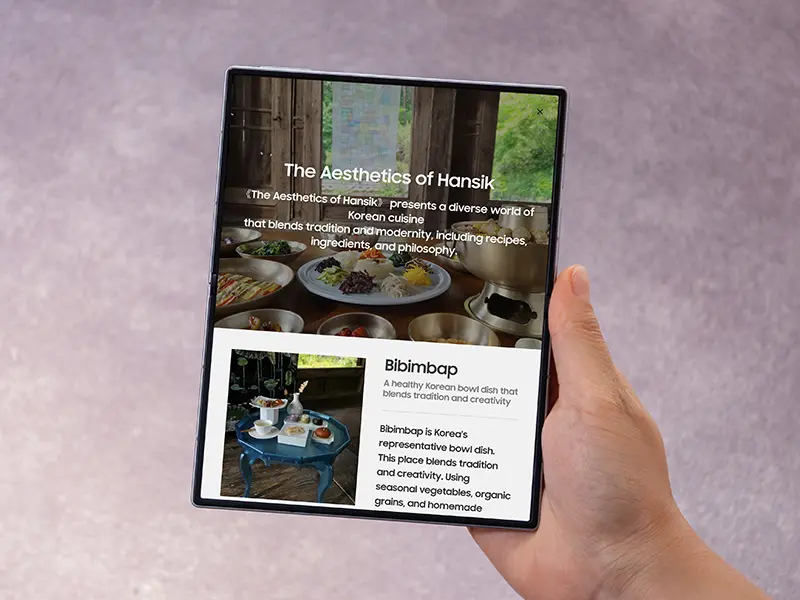
The Galaxy Fold8 Wide folds down to roughly the size of a passport and opens into a 4:3 screen, and that makes it a genuinely new shape.
Per Samsung’s official materials it weighs 201g, the lightest Galaxy Z Fold ever built, and it costs $200 less than the Ultra.
That lower price comes with things left out.
Specs, price, colors, camera, and exactly what separates it from the Ultra: everything you need to settle the choice between these two models is here.
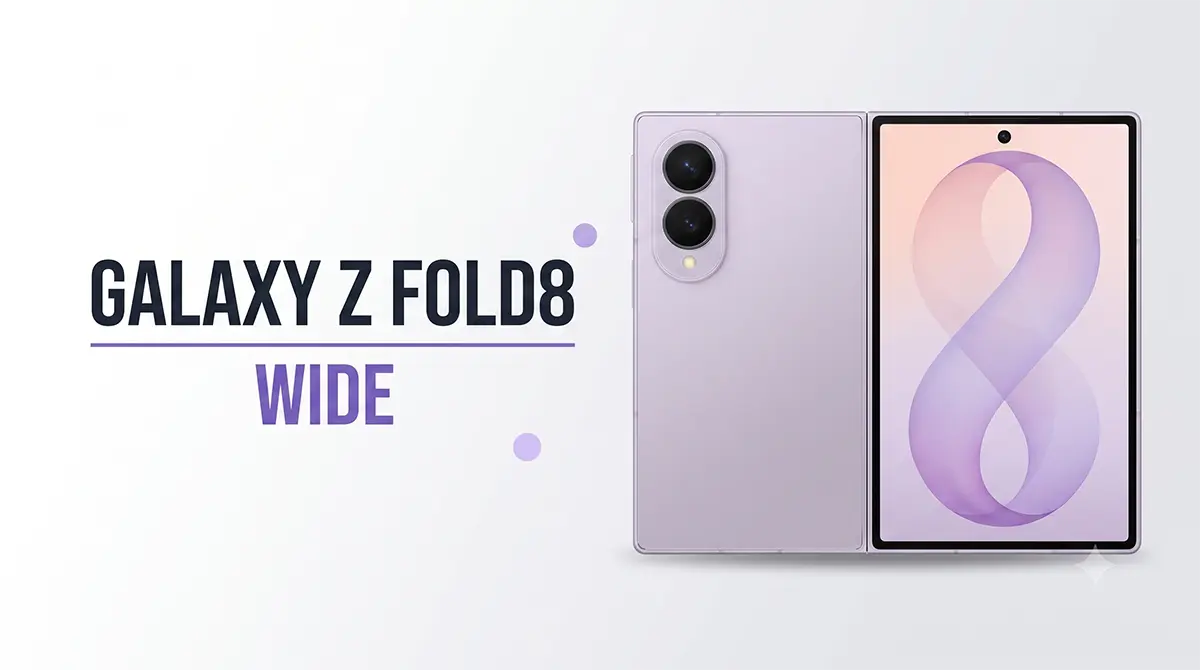
ℹ️ This post includes information graphics based on official specs as well as AI-generated concept images. Concept images may differ from the actual product.
※ Every price and configuration comparison in this article is based on the 12GB RAM / 256GB model.
📌 Key Takeaways
[Officially confirmed]
- Snapdragon 8 Elite Gen 5 for Galaxy, 3nm
- 7.6-inch 4:3 main screen / 5.5-inch 10:16 cover, 3,000 nits on both
- 4,800mAh, 45W wired and 20W wireless
- 201g, the lightest Galaxy Z Fold to date
[Differences vs the Ultra]
- No optical telephoto (the Ultra gets 3x optical)
- No Flex Mode support
- 14g lighter, 0.8mm thicker
- $200 cheaper
[Release date, price, configurations]
- Official release on August 7
- 256GB $1,899.99, 512GB $2,099.99
- 9.5% below the Ultra
[Still unknown]
- How visible the crease gets and how the hinge holds up over the long haul
- How far app optimization for the 4:3 screen actually settles in
- Re-tested benchmark numbers on retail software
- A quantified camera score (not yet listed on DXOMARK)
[Bottom line] If you watch and read a lot on your phone, the Fold8 Wide fits. If the camera and Flex Mode matter to you, go Ultra.
- 📌 Key Takeaways
- 1. Galaxy Fold8 Wide vs Ultra differences: what sets them apart?
- 2. Galaxy Fold8 Wide 4:3 screen ratio: what does it change?
- 3. Galaxy Fold8 Wide specs: what actually matters?
- 4. Samsung Fold8 Wide camera: can it work without a telephoto?
- 5. Galaxy Z Fold8 Wide price: is it fair?
- 6. Galaxy Fold8 Wide colors: what are your options?
- 7. Galaxy Fold8 Wide or Ultra: which way does the scale tip?
- 💡 FAQ
- ✨ Wrapping Up
1. Galaxy Fold8 Wide vs Ultra differences: what sets them apart?
The Galaxy Fold8 Wide isn’t a step down from the Ultra.
It’s a separate form factor that didn’t exist before this year.
Samsung stated in its official materials that the existing Z Fold line continues as the Galaxy Z Fold8 Ultra, while the Fold8 is a completely redesigned shape.
So the direct successor to the Fold7 isn’t the Fold8 that shares its number.
It’s the Fold8 Ultra. These two phones chase different jobs.
The Fold8 Ultra targets people who want the best camera and multitasking Samsung can build, while the Fold8 goes after people who spend hours watching and reading.
☑️ Let’s get the official name straight first
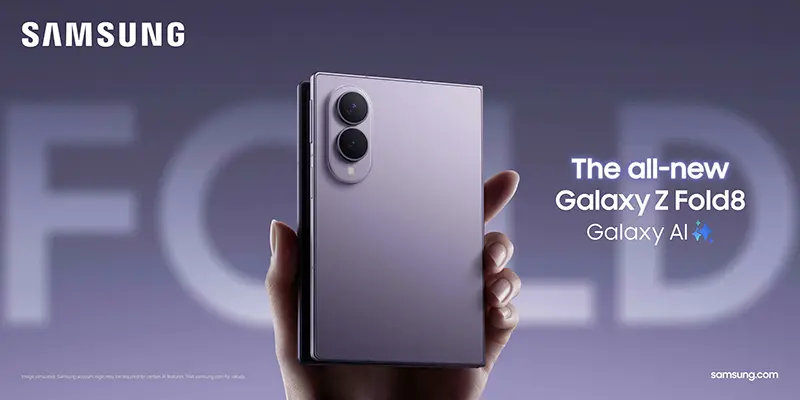
The official name is the Galaxy Z Fold8. “Wide” isn’t a product name at all, it’s the widely used shorthand people adopted to tell the new form factor apart.
That said, some outlets abroad write it as the Galaxy Z Fold Wide, and the Fold Wide label was already circulating during the leak phase before the announcement.
Throughout this article, “Fold8 Wide” is what you’ll see, purely to keep it distinct from the Ultra.
☑️ The four differences between the Fold8 Wide and the Ultra
It boils down to four things.
- Screen ratio — the Fold8 Wide runs 4:3 inside and 10:16 on the cover, while the Ultra runs roughly 1.1:1 inside and 21:9 on the cover
- Weight and thickness — the Fold8 Wide is 14g lighter but 0.8mm thicker when folded
- Camera — the Fold8 Wide has two rear lenses and no optical telephoto, while the Ultra has three including a 3x optical telephoto
- Flex Mode — not supported on the Fold8 Wide, supported on the Ultra
The price gap comes to $200.
Here it is laid out.
| Spec | Galaxy Z Fold8 (Wide) | Galaxy Z Fold8 Ultra |
|---|---|---|
| Main display | 7.6-inch 4:3 / 3,000 nits | 8.0-inch approx. 1.1:1 / 3,000 nits |
| Cover display | 5.5-inch 10:16 | 6.5-inch 21:9 |
| Rear camera | 50MP + 50MP | 200MP + 50MP + 10MP telephoto |
| Battery | 4,800mAh | 5,000mAh |
| Weight | 201g | 215g |
| Folded thickness | 9.7mm | 8.9mm |
| Flex Mode | Not supported | Supported |
| Price (256GB) | $1,899.99 | $2,099.99 |
Performance is missing from the table because both phones run the same chip.
That doesn’t mean there’s no difference, and the reason gets its own section later.
☑️ Why Flex Mode didn’t make the cut
Flex Mode is the feature that lets you half-fold a foldable so it stands like a tiny laptop, then splits the screen into a top half and a bottom half.
Video plays up top while playback controls or the comment section sit underneath, and YouTube is the textbook case.
The camera splits the same way, with the preview above and the shutter area below.
Since the phone becomes its own stand, it stands in for a tripod to a degree in group shots and night photography.
Worth noting: this is not the same thing as running two apps side by side in multi-window.
Flex Mode has a single app divide its own interface around the fold angle, while multi-window places two different apps on the unfolded screen.
The Fold8 Wide doesn’t support Flex Mode.
The hinge is the reason.
SamMobile summed it up this way: the Fold8 Wide uses a simpler hinge than the Ultra and was never designed with Flex Mode in mind.
Engadget got more specific.
Because of how the hinge springs behave, leaving it half-folded makes the phone snap shut on its own, and only fully closed or fully open holds steady.
Tent mode, where you flip it screen-out and prop it up, still works.
Put both explanations together and the picture is clear: the Fold8 Wide was built from the start without Flex Mode in the plan.
Whether the simpler hinge came down to cost or to some other design goal, Samsung hasn’t said.
2. Galaxy Fold8 Wide 4:3 screen ratio: what does it change?
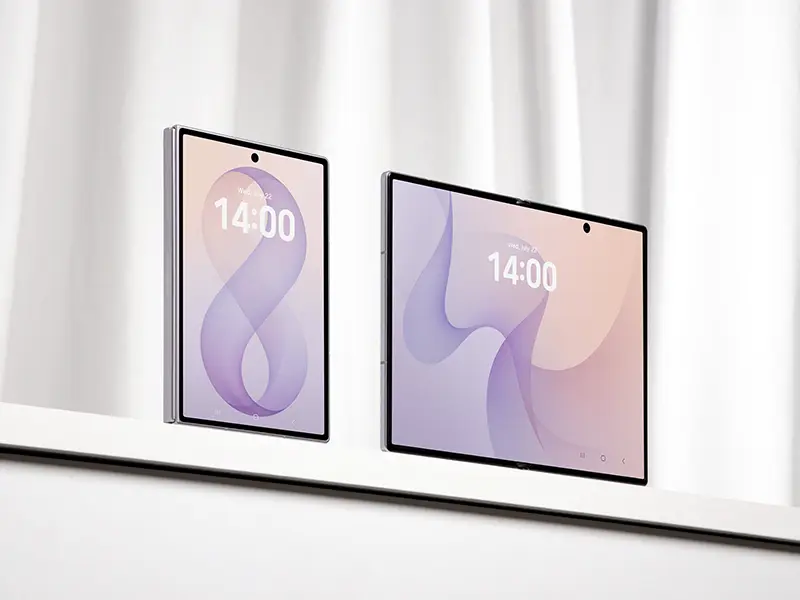
4:3 open, 10:16 closed.
That combination is the whole reason this phone exists as its own model.
Samsung explained that the 4:3 main screen cuts down unused empty space, which suits video, gaming immersion and long-form reading, while the 10:16 cover screen when folded matches the short, repeated bursts of messaging, social and short-form video.
Here’s the fun part: the two screens each borrowed a tablet ratio, one from Apple and one from Samsung.
Unfolded, 4:3 is the ratio the iPad has stuck with for years.
Folded, turn that 10:16 cover on its side and you get the 16:10 of the Galaxy Tab line.
☑️ Open it up and the letterboxing shrinks
Watch a 16:9 video on the older Fold models and you get thick black bars above and below.
That’s what happens when the screen ratio sits close to a square.
4:3 shrinks those black bars, the letterbox margins. Engadget found that when playing 16:9 content, the Fold8 Wide actually shows a slightly larger image area than the Ultra despite the Ultra’s bigger diagonal.
The reason the bigger screen loses here is that the extra area doesn’t go into making the video larger, it gets eaten by black margin at the top and bottom.
So the difference comes down to wasted space, not screen size.
Stand that same screen upright and you land near 3:4, a shape Samsung says it intended for reading articles and ebooks.
☑️ Fold it and you get a 10:16 cover screen
Folded is how you’ll spend most of your time with this phone.
The 5.5-inch cover screen is short and wide, giving it more width than a typical smartphone.
That width pays off in input and control. Gizmodo called out thumb reach to the far corners while folded as the single biggest win, and said two-thumb typing produced fewer typos because the keys got bigger.
Firing off a message or checking a map is something you finish without ever opening the phone.
GSMArena pushed back on one point, noting that set next to an iPhone 17 Pro, the iPhone fits more information on a single screen.
Scroll a long feed and you’ll be scrolling more here.
Opinions on how it feels in the hand are split. Some outlets said the folded width is simply too much.
Personally, if you have smaller hands, I’d hold one in a store before committing.
This isn’t something a spec sheet can settle for you.
3. Galaxy Fold8 Wide specs: what actually matters?
The Galaxy Fold8 Wide specs come down to the Snapdragon 8 Elite Gen 5 for Galaxy, a 7.6-inch 3,000-nit screen when opened, a 4,800mAh battery, 45W wired charging, 12GB of RAM and 256GB of storage.
Here’s the full rundown. (Based on the official spec sheet published by the Samsung Newsroom.)
| Spec | Galaxy Z Fold8 (Wide) |
|---|---|
| Chipset | Snapdragon 8 Elite Gen 5 for Galaxy (3nm), 4.74GHz / 3.6GHz |
| Main display | 7.6-inch 1848×2448 4:3 / 1–120Hz / 3,000 nits |
| Cover display | 5.5-inch 1972×1248 10:16 / 1–120Hz / 3,000 nits |
| Camera | 50MP F1.8 wide with OIS + 50MP F1.9 ultra-wide (no telephoto) |
| Battery & charging | 4,800mAh / 45W wired, 20W wireless, reverse wireless supported |
| Size & weight | 4.5mm unfolded, 9.7mm folded / 201g |
| Water & dust resistance | IP48 |
| Materials | Armor Aluminum frame / Gorilla Glass Ceramic 3 cover / Gorilla Glass Victus 2 back / Flex Titanium |
| Software | 7 generations of OS upgrades, security updates through July 31, 2033 |
The software support window is the line worth staring at.
Security updates are confirmed through July 31, 2033, and press reports point to seven generations of OS upgrades.
Since it ships on Android 17, that takes it to Android 24.
Samsung bumped OS upgrades from three generations to four in February 2022, and seven generations first arrived with the Galaxy S24 series in 2024.
If you plan to keep a phone for years, that’s a big deal. IP48, on the other hand, is a letdown.
In an IP rating, the first digit covers dust and the second covers water.
The 4 means it blocks objects larger than 1mm, and the 8 means it survives 30 minutes in 1.5m of fresh water.
In plain terms: strong against water, vulnerable to dust and sand.
That stands in contrast to the Galaxy S26 Ultra, the top bar-type phone of the same generation, which is IP68.
A few other items belong on your checklist.
There’s no microSD slot, the fingerprint reader is built into the side power button rather than under the display, and there are no Qi2 magnets in the body, so magnetic accessories require a separate case.
On connectivity you get Wi-Fi 7 and Bluetooth 6.0, and DeX carries over unchanged.
☑️ How much brighter did the screen get?
Measurements from GSMArena came in a touch above Samsung’s official 3,000-nit figure.
| Measurement | Fold8 Wide main | Fold8 Ultra main |
|---|---|---|
| Manual max (75% window) | 747 nits | 724 nits |
| Auto + high brightness (75% window) | 1,525 nits | 1,432 nits |
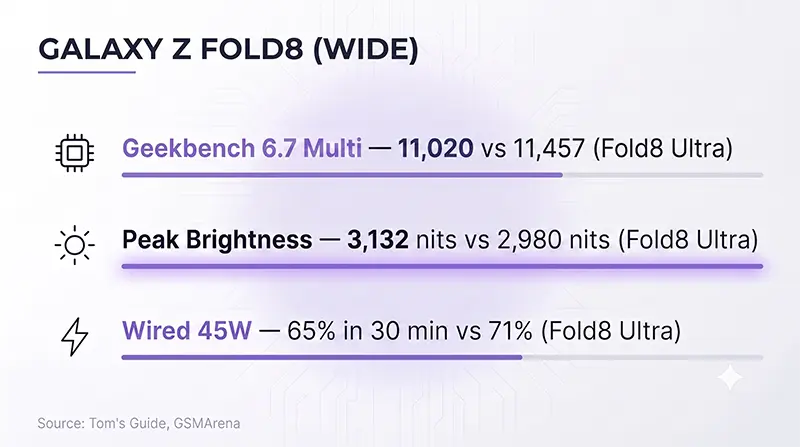
| Peak (10% window) | 3,132 nits | 2,980 nits |
The Fold8 Wide came out ahead of the Ultra in all three conditions.
Screen brightness is one of the few boxes where this phone doesn’t lose to the Ultra.
Keep in mind that 3,000 nits applies when only 10% of the screen lights up.
Push most of the display bright and you’re looking at roughly 1,500 nits, and that’s the number closer to what you’ll feel outdoors.
☑️ What about performance and heat?
CPU performance is effectively a tie with the Ultra, and the gap opens up in graphics and sustained load.
There’s a reason the same chip lands differently.
These are the Geekbench 6.7 results measured by Tom’s Guide.
| Device | Single-core | Multi-core |
|---|---|---|
| Galaxy Z Fold8 Ultra | 3,733 | 11,457 |
| Galaxy Z Flip8 | 3,627 | 11,215 |
| Galaxy Z Fold8 (Wide) | 3,659 | 11,020 |
| Galaxy Z Fold7 (reference point) | 3,052 | 9,735 |
Single-core lands 2.0% below the Ultra and multi-core 3.8% below.
Against the previous-generation Fold7, it’s 13.2% ahead in multi-core. Bottom line, the CPU gap with the Ultra is too small to pick out in daily use.
Graphics is where the split gets obvious.
In Tom’s Guide testing, 3DMark Wild Life Unlimited scored 26,608 on the Fold8 Wide, 30,980 on the Ultra and 20,529 on the Fold7.
That’s 14.1% below the Ultra and 29.6% above the Fold7. Sustained performance is the real issue.
In GSMArena’s stress test the Fold8 Wide lost roughly half its initial performance after an extended load, and surface temperatures climbed clearly higher than on the S26 Ultra.
That said, halving under sustained load happens to the S26 Ultra too, so the size of that drop isn’t a Fold8 Wide problem specifically.
Temperature is where they part ways.
GSMArena’s read is that because a foldable body makes heat hard to shed, Samsung tuned performance conservatively from the outset, and that’s why the same chip posts lower scores here.
And even dialed back like that, surface temperatures still run higher. A folded structure simply leaves heat fewer ways out.
Launching apps, browsing the web, firing up the camera: you’ll almost never notice a difference.
Run a demanding game for 30 minutes straight or shoot long video sessions, and frame stability and heat will show you the gap.
Personally, unless you’re a long-session gamer, I expect the difference you actually feel to be close to nothing.
☑️ How’s the battery and charging?
The battery is 4,800mAh (4,660mAh rated), smaller than the Ultra’s 5,000mAh.
Charging specs are identical on both, at 45W wired and 20W wireless.
Here are the charging results GSMArena measured with a 45W adapter and the bundled cable, folded.
| Charging time | Fold8 Wide | Fold8 Ultra | Fold7 (reference point) |
|---|---|---|---|
| 15 minutes | 39% | 41% | 28% |
| 30 minutes | 65% | 71% | 53% |
| Full charge | 1 hr 9 min | 1 hr | 1 hr 27 min |
The Wide has the smaller battery of the two and still charges slower than the Ultra.
For the record, the 45W charger is sold separately.
☑️ Galaxy Z Fold8 Wide weight: 201g at 9.7mm thick
At 201g, this is the lightest Galaxy Z Fold ever made.
The table below makes it click. A foldable weighing less than the flagship bar-type phone is a first for this lineage.
| Spec | Fold8 Wide | Fold8 Ultra | S26 Ultra |
|---|---|---|---|
| Weight | 201g | 215g | 214g |
| Folded thickness | 9.7mm | 8.9mm | 7.9mm (single body) |
| Unfolded thickness | 4.5mm | 4.1mm | N/A |
Here’s the odd part: the weight goes down while the thickness goes the other way.
Folded or unfolded, it’s thicker than the Ultra.
4. Samsung Fold8 Wide camera: can it work without a telephoto?
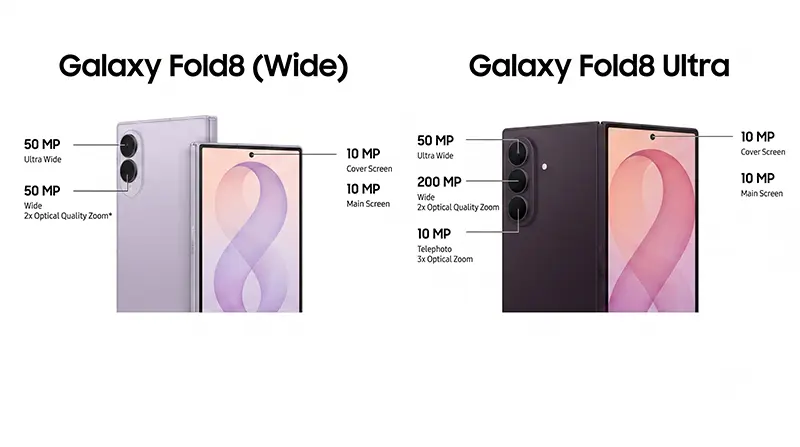
The Samsung Fold8 Wide camera is a two-lens setup: a 50MP wide and a 50MP ultra-wide. There is no optical telephoto lens.
It’s the single most criticized thing about this model.
Lens by lens, here’s how it breaks down.
| Lens | Fold8 Wide | Fold8 Ultra |
|---|---|---|
| Wide | 50MP F1.8, OIS | 200MP F1.7, OIS |
| Ultra-wide | 50MP F1.9 | 50MP F1.9 |
| Telephoto | None (2x sensor crop) | 10MP F2.4, 3x optical |
| Max zoom | 10x digital | 3x optical + digital |
That “2x sensor crop” line in the table deserves a closer look.
The Fold8 Wide’s camera UI does show a 2x option, but it isn’t optical zoom.
It crops the center out of the 50-megapixel sensor. With that many pixels to spare, results hold up fine in good light.
Once the light drops, the limits of a cropped area show through immediately.
Video goes up to 8K 30fps.
That said, the Cine LUT presets that apply film-style color at capture, the APV codec and 8K editing are all exclusive to the Galaxy Fold8 Ultra.
Personally, if a lot of your shooting happens at distance, this isn’t the phone for you.
Flip that around, and if everyday snapshots and wide landscapes are most of what you shoot, you won’t feel short-changed often.
☑️ The ultra-wide is the same class as the Ultra’s
The Fold8 Wide uses the same 50MP F1.9 ultra-wide as the Ultra.
It’s the one place in the camera setup where the two are on equal footing. There’s a reason that matters. The ultra-wide is the first lens to fall apart in the dark.
A wider field of view means smaller individual pixels, which makes gathering light in dim conditions that much harder.
With both the resolution and the aperture covered the way they are here, indoor group shots and night scenes hold up at a decent level of quality.
5. Galaxy Z Fold8 Wide price: is it fair?
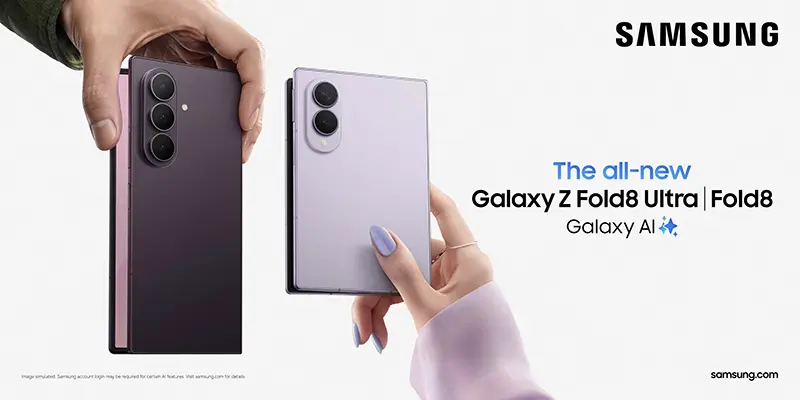
The Galaxy Z Fold8 Wide price is $1,899.99 for the 12GB / 256GB configuration.
Line it up against the Fold8 Ultra and you give up some features and specs, gain the 4:3 screen ratio, and pay $200 less.
Line it up against the bar-type Galaxy S26 Ultra, and the price of getting a screen that folds is $600.
Here’s how the three foldables price out.
| Model (12GB/256GB) | Price |
|---|---|
| Galaxy Z Fold8 Ultra | $2,099.99 |
| Galaxy Z Fold8 (Wide) | $1,899.99 |
| Galaxy Z Flip8 | $1,199.99 |
☑️ What do the storage steps cost?
Stepping up the configuration doesn’t cost the same amount each time.
| Configuration (RAM · storage) | Price | Step up from the tier below |
|---|---|---|
| 12GB · 256GB | $1,899.99 | — |
| 12GB · 512GB | $2,099.99 | +$200 |
| 16GB · 1TB | $2,499.99 | +$400 |
Going from 256GB to 512GB costs $200, while 512GB to 1TB costs $400.
Keep in mind the 1TB configuration also bumps RAM to 16GB, so you’re not paying purely for storage.
Personally, unless you stockpile the video you shoot on the phone itself or edit high-resolution footage directly on it, stopping at 512GB is the sensible call.
Final pricing may vary by retailer and available promotions.
6. Galaxy Fold8 Wide colors: what are your options?
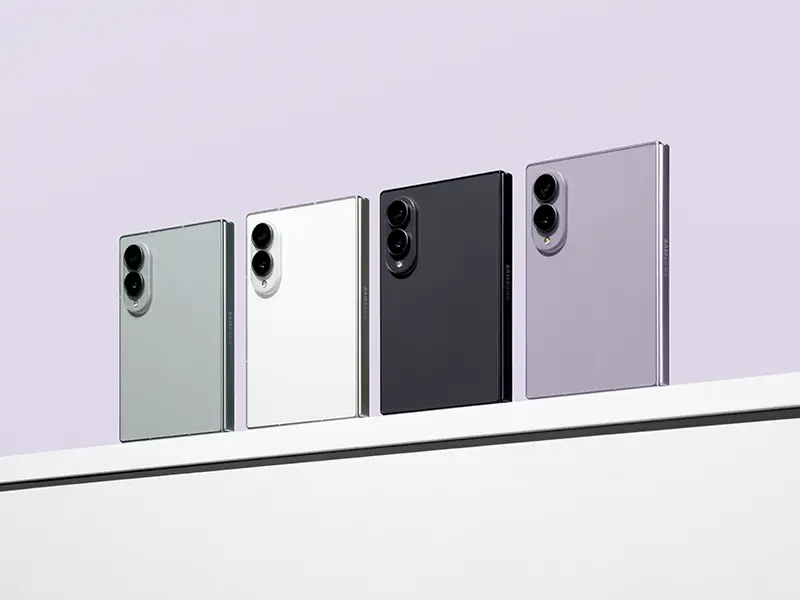
Galaxy Fold8 Wide colors run to four in total: Graphite, Cream and Lavender, plus an online-channel exclusive Pistachio.
- Graphite — shared across all three models in the lineup
- Cream — shared across all three models in the lineup
- Lavender — Wide only
- Pistachio — Wide only (available exclusively at Samsung.com and Samsung Experience Stores)
Lavender and Pistachio are exclusive to the Fold8 Wide, while Violet Shadow and Green Shadow belong to the Ultra, and Pink and Mint belong to the Flip8.
The materials are identical no matter which color you pick.
Armor Aluminum frame, Gorilla Glass Ceramic 3 cover screen, Gorilla Glass Victus 2 back.
☑️ Release date and warranty coverage
The official release date is August 7.
Samsung’s standard limited warranty runs one year from the date of purchase. Set that against software support that stretches to 2033 and the gap is wide.
Foldables carry parts that bend, which makes repair access matter more than it does on a regular smartphone.
If you’re planning to keep this phone for the long run, factor that difference in.
7. Galaxy Fold8 Wide or Ultra: which way does the scale tip?
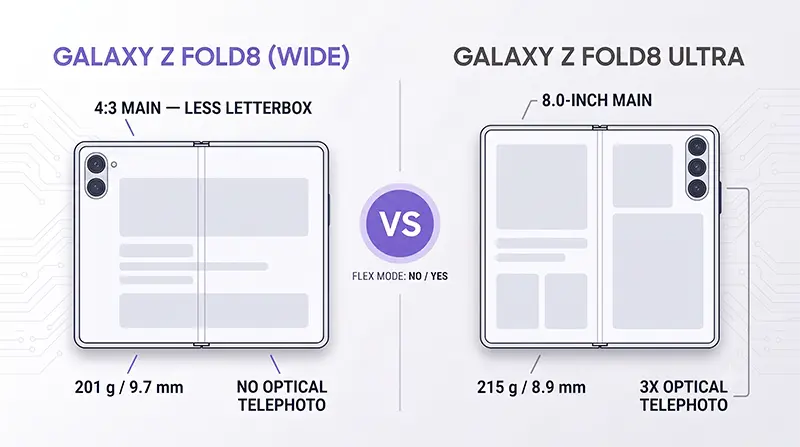
What you trade away and what you get back for $200 is the whole question.
| Category | Fold8 Wide | Fold8 Ultra |
|---|---|---|
| Display | 7.6-inch 4:3 (less letterboxing) | 8.0-inch, better for two apps side by side |
| Weight & thickness | 201g / 9.7mm | 215g / 8.9mm |
| Camera | 50MP wide + 50MP ultra-wide | 200MP + ultra-wide + 3x telephoto |
| Sustained performance | 14.1% behind in graphics | Expanded cooling structure |
| Flex Mode | Not supported | Supported |
| Price | $1,899.99 | $2,099.99 |
Pick the Fold8 Wide over the Ultra and you get 14g off the weight, the 4:3 screen ratio and a $200 lower price.
You give up the telephoto camera and Flex Mode, and graphics performance sits 14.1% lower.
Personally, the first filter is simple: do the three missing things sting more than the two you gain?
If you lean on telephoto, Flex Mode and graphics headroom regularly, the Ultra is your phone.
Flip it around, and if you watch a lot of video and put real value on the 4:3 ratio, that’s reason enough to take the Wide even if you use those three features often.
The 14g and the screen ratio hit you every single day, while the telephoto only stings when you’re shooting.
The $200 difference belongs in the calculation too. If the scale is close to level, that amount can tilt it.
💡 FAQ
Q1. I’m using a Fold7. Is this worth switching to?
The direct successor to the Fold7 is the Ultra, and the Fold8 Wide is a separate product with a different shape.
Approach it as a generational upgrade and your judgment will be off. The first question is whether the 4:3 screen ratio suits you.
If that ratio doesn’t appeal, the Wide isn’t a candidate and you should be comparing against the Ultra instead. If 4:3 does suit you, the camera is next.
It’s a two-lens setup with no optical telephoto, so if photography is a big part of your use, that’s where this one may be a sticking point.
Q2. Can you use the S Pen with the Galaxy Fold8 Wide?
No. Neither the Fold8 Wide nor the Ultra supports the S Pen. Thickness is the reason.
Using an S Pen requires a digitizer layer beneath the display to handle pressure sensitivity and palm rejection, and Samsung removed that layer to cut thickness.
The only device in Samsung’s current lineup with a built-in S Pen is the Galaxy S26 Ultra.
✨ Wrapping Up
The Galaxy Fold8 Wide is a foldable redesigned around how it feels folded and what it weighs.
A record-low 201g, the 4:3 main screen, the 10:16 cover screen when closed, and a price $200 under the Ultra are the reasons to pick it.
In exchange, the optical telephoto is gone, Flex Mode isn’t there, and it runs relatively hot under long loads.
On top of that, how the crease evolves over time, how long the hinge holds up, and how quickly app optimization for the 4:3 screen settles in are all things only time will answer.
In the end, the case for this phone narrows to one question.
Does the 4:3 screen ratio mean something real to you?
Drop your take in the comments, and bookmark this one before launch day.