This is Sanghoon Jeon, editor at Smartleader, where we cut straight to what actually matters in tech.
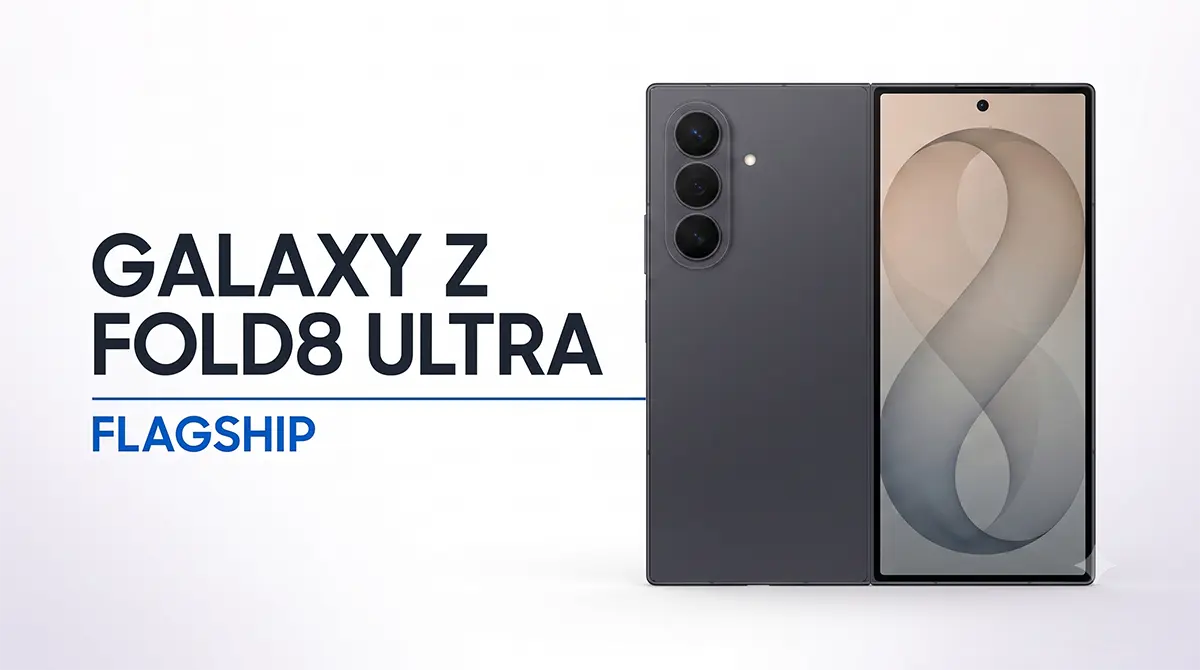
The Galaxy Fold8 Ultra holds the line at 215g while pushing its battery up to 5,000mAh.
Samsung managed that while keeping the thinnest unfolded body it has ever shipped, at 4.1mm.
The catch: the S Pen sits this generation out again, and the price climbs to $2,099.99.
Specs and pricing, the S Pen situation, the cameras, and how it stacks up against the Fold7 — everything you’d want to know if you’re on the fence is below.
ℹ️ This post includes informational graphics based on official specs as well as AI-generated concept images. Concept images may differ from the actual product.
📌 Key Takeaways
[Confirmed]
- Snapdragon 8 Elite Gen 5 for Galaxy, 8.0-inch panel at 3,000 nits
- 5,000mAh, 45W wired and 20W wireless
- Ultrawide bumped to 50MP, telephoto stays at 10MP
- No S Pen support
[Changes vs. the Fold7]
- Battery 4,400 → 5,000mAh (weight unchanged at 215g)
- Wired charging 25W → 45W
- Peak brightness 2,600 → 3,000 nits
- Unfolded thickness 4.2 → 4.1mm
[Release Date, Price & Configurations]
- General availability August 7
- 256GB $2,099.99, 512GB $2,299.99
- $100 more than the Fold7’s launch price at 256GB
[Still Unknown]
- Heat and sustained performance under long loads
- Real-world camera quality, especially in low light
- Long-term crease visibility and the durability of the titanium structure
[Bottom Line] Coming from a Fold5 or Fold6, the upgrade is well worth it. Coming from a Fold7, the case is weak.
- 📌 Key Takeaways
- 1. The Galaxy Fold8 Ultra lineup is confusing before you even reach the specs
- 2. Galaxy Fold8 Ultra specs: just the essentials
- 3. Fold7 vs Fold8: is it worth switching?
- 4. Galaxy Fold8 Ultra camera: how good is it in practice?
- 5. Samsung Fold8 S Pen: why was it left out?
- 6. Galaxy Z Fold8 Ultra price: how much did it go up?
- 7. Galaxy Fold8 Ultra: should you buy it?
- 💡 FAQ
- ✨ Final Thoughts
1. The Galaxy Fold8 Ultra lineup is confusing before you even reach the specs
☑️ Which one is the actual Fold7 successor?
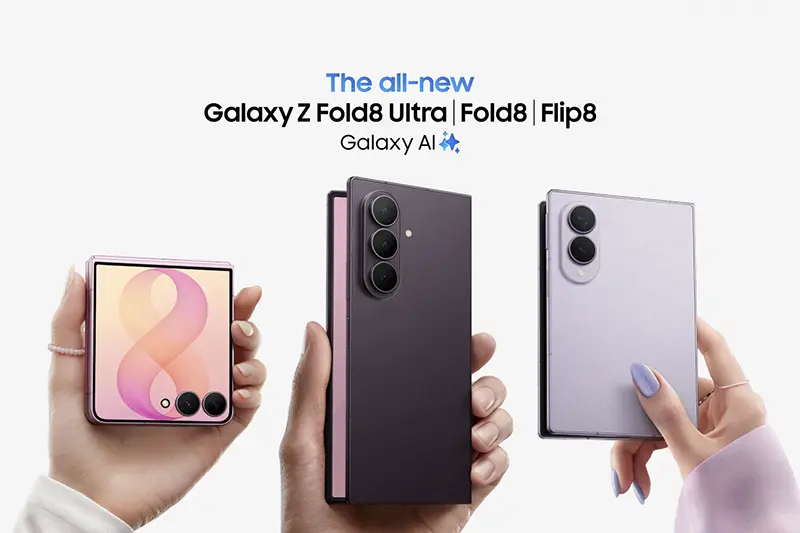
Go by the number in the name and the Fold8 looks like the Fold7’s follow-up, but the real successor is the Galaxy Z Fold8 Ultra.
The official Samsung.com page says as much directly: with the lineup expanding, what used to be the Galaxy Z Fold became the Fold8 Ultra.
So the Samsung Fold8 Ultra succeeds the Fold7 and takes over the top slot in the Fold family, while the Fold8 is a brand-new, separate form factor.
People commonly call it the “Fold8 Wide,” but the official name is Galaxy Z Fold8, and throughout this article I’ll tag on “Wide” to keep it distinct from the Ultra.
The Galaxy Z Fold8 (Wide) is broader when closed and opens into a new shape that’s closer to 4:3.
The two models are also built quite differently.
The Ultra gets a titanium structure and a 3x optical telephoto, while the Wide has no telephoto camera at all.
Folded thickness differs too, at 8.9mm versus 9.7mm.
☑️ What Flex Titanium changes
The biggest structural change this generation sits underneath the display.
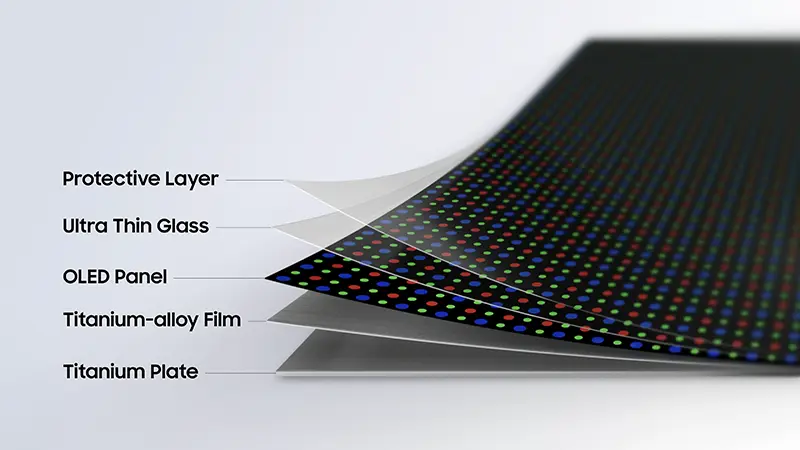
It’s a new layered stack called Flex Titanium.
A titanium alloy film and a reinforced titanium plate are stacked together, with the goal of supporting the screen more firmly while making the crease less visible.
Here’s the principle behind it.
A crease on a foldable stands out when the support under the folding zone is weaker than it is elsewhere.
Lay a titanium plate under the panel and the surface flattens out more.
The problem is that a solid metal sheet won’t bend, and Samsung solved that by machining fine patterned holes into the folding zone to get the flexibility it needed.
Samsung Newsroom explains that the structure absorbs pressure and impact while also cutting crease visibility.
PhoneArena argues the real mechanism behind the reduction is the titanium plate flattening the surface from below the panel.
Assessments of how well it works don’t line up completely.
Most reactions said the crease had become hard to spot head-on, though some noted that you can still feel the dip when you run a finger across the screen.
Keep in mind those verdicts came from short demos, and personally I’d say the visual improvement is clear but it’s too early to go as far as “the crease is gone.”
2. Galaxy Fold8 Ultra specs: just the essentials
Look at the Galaxy Fold8 specs on the Ultra and the core of it is an 8-inch main display peaking at 3,000 nits, the Snapdragon 8 Elite Gen 5 for Galaxy, a 5,000mAh battery, and 45W wired charging.
At 215g and 8.9mm folded, it keeps the same footprint as its predecessor.
Here are the key items in one place.
| Item | Galaxy Z Fold8 Ultra |
|---|---|
| Chipset | Snapdragon 8 Elite Gen 5 for Galaxy (3nm) |
| Main display | 8.0-inch 2,504×2,256 / 1–120Hz / 3,000 nits |
| Cover display | 6.5-inch 2,520×1,080 / up to 120Hz |
| Cameras | 200MP + 50MP ultrawide + 10MP telephoto (3x) |
| Battery & charging | 5,000mAh / 45W wired, 20W wireless |
| Size & weight | 4.1mm unfolded, 8.9mm folded / 215g |
| Water & dust resistance | IP48 |
| Software | 7 Android OS upgrades, 7 years of security updates |
Based on the spec sheet published by Samsung Mobile Press.
Display brightness is the standout.
At 3,000 nits it goes higher than the 2,600 nits on the Galaxy S26 Ultra released the same year, making it the brightest screen on any Samsung phone.
IP48, on the other hand, is a letdown. In an IP rating, the first digit covers dust and the second covers water.
That leading 4 means it blocks objects larger than 1mm, and the trailing 8 means it survives 30 minutes in 1.5m of fresh water.
In other words, it’s strong against water but vulnerable to dust and sand.
That’s where it parts ways with the same-generation Galaxy S26 Ultra and its IP68 rating.
Software support is a genuine strength.
Security updates run seven years, through July 31, 2033, and seven OS upgrades are guaranteed.
Given a price north of $2,000, being able to plan on a long ownership window carries real weight.
☑️ How much faster is it?
Performance is clearly up over the previous generation.
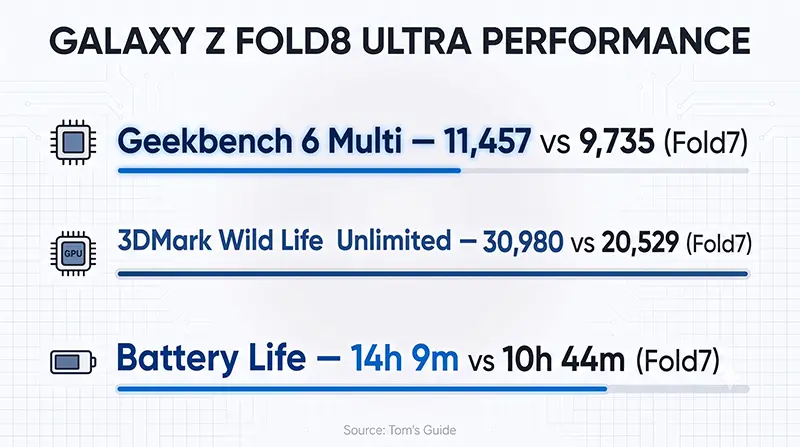
In testing at its own lab, Tom’s Guide recorded 3,733 single-core and 11,457 multi-core in Geekbench 6.7.
Those numbers don’t mean much in isolation, so let’s put them next to the competition.
| Device | Geekbench single | Geekbench multi |
|---|---|---|
| Galaxy Z Fold8 Ultra | 3,733 | 11,457 |
| Galaxy Z Fold7 (previous gen) | 3,052 | 9,735 |
| Motorola Razr Fold | 2,711 | 9,134 |
| Google Pixel 10 Pro Fold | 2,344 | 6,332 |
That’s 22.3% ahead in single-core and 17.7% ahead in multi-core versus its predecessor.
The gap over rival foldables is wider still — against the Pixel 10 Pro Fold, the multi-core difference is close to double.
It also comes out ahead of other devices running the same Snapdragon 8 Elite Gen 5, and the Samsung-specific version clocking its prime core at 4.74GHz against 4.6GHz on the standard part looks like a factor in that margin.
The graphics gains are bigger.
In 3DMark Wild Life Unlimited it hit 30,980, running 50.9% higher than the Fold7’s 20,529.
That said, the test resolution and graphics settings weren’t disclosed, so it’s more accurate to read this as a generational gap measured under matching conditions.
So what does that mean when you’re actually using it?
A CPU bump of around 20% is hard to feel when you’re launching apps or browsing, but a GPU gain in the 50% range makes a meaningful difference in how well demanding games hold their frame rate.
It’s the kind of difference that lets you move a game up a settings notch from where you had to run it on the Fold7.
☑️ What about battery and charging?
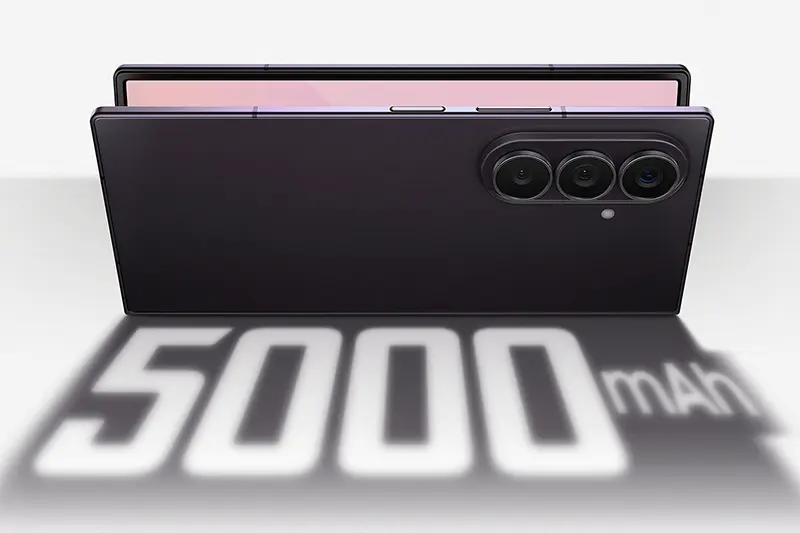
The battery is the most substantive change this generation.
It grows 13.6%, from 4,400mAh to 5,000mAh, while weight stays at 215g — identical to the Fold7.
That’s possible because the battery chemistry changed. This is the first Galaxy phone with a silicon-carbon anode battery.
Conventional batteries use graphite for the anode. Mix silicon into it and you can pack more energy into the same volume.
The problem is that silicon is highly reactive, so it swells and contracts repeatedly through charge and discharge cycles.
Because of that, Samsung has said it didn’t simply swap the material: the electrolyte, the separator, the cell structure, and swelling control were all redesigned across the entire battery system.
Charging changed a lot too.
Per figures compiled by Android Authority, wired went from 25W to 45W and wireless from 15W to 20W.
There are measured results too.
In Tom’s Guide‘s own testing it reached 49% in 15 minutes and 76% in 30 minutes.
The Fold7 managed 54% at the 30-minute mark under the same conditions, so the gap is obvious.
Battery life in that same test came to 14 hours 9 minutes, 31.8% longer than the Fold7’s 10 hours 44 minutes.
Keep in mind this is an in-house test result with screen brightness and network conditions undisclosed, so it’s hard to compare against numbers from other outlets.
3. Fold7 vs Fold8: is it worth switching?
Starting with the verdict on Fold7 vs Fold8 Ultra: battery, charging, ultrawide, and screen brightness all clearly moved up, while weight, folded thickness, and the cover display are effectively unchanged.
Look at them from the outside and the two are hard to tell apart.
☑️ The generational gap in a table
| Item | Galaxy Z Fold7 | Galaxy Z Fold8 Ultra | Change |
|---|---|---|---|
| Battery | 4,400mAh | 5,000mAh | +13.6% |
| Wired charging | 25W | 45W | +20W |
| Wireless charging | 15W | 20W | +5W |
| Peak brightness | 2,600 nits | 3,000 nits | +15% |
| Main resolution | 1,968×2,184 | 2,504×2,256 | Higher |
| Cover resolution | 2,520×1,080 | 2,520×1,080 | Same |
| Ultrawide | 12MP F2.2 | 50MP F1.9 | 4x the pixels |
| Cover glass | Ceramic 2 | Ceramic 3 | Upgraded |
| Unfolded thickness | 4.2mm | 4.1mm | −0.1mm |
| Weight | 215g | 215g | Same |
The reasons to switch are clustered at the top of that table.
A 20W jump in charging and 600mAh more capacity are the kind of changes you notice every single day.
On the flip side, cover display resolution, the 215g weight, and the 8.9mm folded thickness are all carried over.
Unfolded thickness dropped by 0.1mm, which isn’t a difference your hands can register.
☑️ What stayed put — or moved backward
This generation wasn’t all improvements.
There are three items worth checking. First, water and dust resistance stalled at IP48.
The name says Ultra, but this spec matches the Fold7 and trails rival foldables that carry IP68.
Second, there are still no Qi2 magnets in the body.
If you want to use magnetic wireless chargers or battery packs, you’ll need a genuine Samsung case with magnets built in.
The Fold7 was the same, so nothing got worse — but this was an item people expected to improve.
Third, charge cycles.
The EU regulatory filing spotted by 9to5Google lists 1,200 cycles to 80% capacity retention, where the Fold7 was rated at 2,000.
Samsung, for its part, has said charge cycle performance and battery longevity hold at a level equivalent to the previous generation.
The two accounts don’t match, so for now it’s hard to call either one settled.
4. Galaxy Fold8 Ultra camera: how good is it in practice?
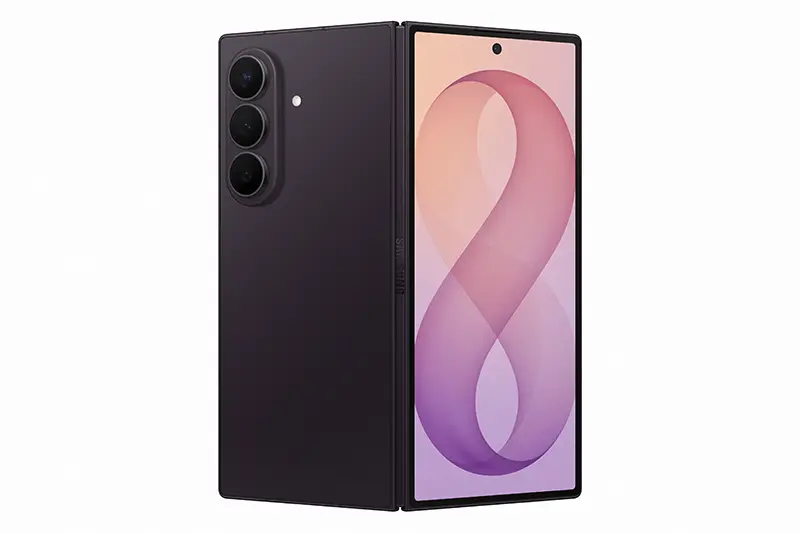
Changes to the Galaxy Fold8 Ultra camera are concentrated in one place: the ultrawide.
The ultrawide climbs from 12MP to 50MP and the aperture opens from F2.2 to F1.9.
The 200MP main and the 10MP telephoto are identical to the previous generation.
Lens by lens, it breaks down like this.
| Lens | Fold7 | Fold8 Ultra |
|---|---|---|
| Wide | 200MP F1.7 | 200MP F1.7 |
| Ultrawide | 12MP F2.2 | 50MP F1.9 |
| Telephoto | 10MP F2.4 3x | 10MP F2.4 3x |
Samsung US states the ultrawide’s lens brightness improved 34% over the Fold7.
☑️ What the ultrawide promotion actually means
The ultrawide is the first lens to fall apart in dim conditions.
Its wide field of view makes it hard to take in light evenly, and when the pixel count is low, the edges of the frame go soft first.
That’s exactly why upgrading resolution and aperture together matters here.
It’s the area where you can expect gains shooting indoors or capturing scenery at night.
Video changed as well.
HDR is newly supported in 200MP mode, and 8K capture using the APV codec plus a feature that applies film-like color at the point of shooting are both in.
Techniques that used to live on professional video gear have trickled down to a phone.
PetaPixel concluded that this camera setup overlaps substantially with the Galaxy S26 Ultra, narrowing the photo performance gap to the point where it’s no longer large.
☑️ The 10MP telephoto is unchanged five years running
This is the most disappointing item.
The telephoto is a 10MP F2.4 with 3x optical zoom — the same configuration since the Galaxy Z Fold3, five years ago.
Android Authority called it the hardest decision to justify this generation: leaving the telephoto untouched for five years on a device in this price bracket.
It supports up to 30x zoom, but that’s 3x optical plus digital enlargement.
Real telephoto capability stops at 3x. Samsung’s other flagship, the S26 Ultra, adds a 5x periscope telephoto on top.
So this isn’t Samsung being unable to fit the part — it’s Samsung choosing not to put a periscope assembly inside a 4.1mm body.
To sum up, this camera got much better at shooting wide and hasn’t budged at shooting far.
Personally, I think anyone who shoots a lot at distance will keep bumping into this setup.
5. Samsung Fold8 S Pen: why was it left out?
![Technical blueprint revealing the 4.1mm thickness cross-section of the Fold8 Ultra and the absence of a digitizer layer [AI Concept]](https://smartleadertech.com/wp-content/uploads/2026/07/fold8-ultra-blueprint-thickness-digitizer-06.webp)
The Samsung Fold8 S Pen isn’t supported on either the Ultra or the Wide.
The reason is thickness.
Using an S Pen requires a layer beneath the display called a digitizer, which handles pressure sensitivity and palm detection.
According to Android Central, Samsung stripped that layer out of the Fold7 to cut thickness, and the Galaxy Fold8 Ultra carried the same choice forward to protect its 4.1mm figure.
The bottom line is that 4.1mm and the S Pen couldn’t coexist with current technology, and Samsung picked thinness.
What made the controversy louder is the model name.
At Samsung, “Ultra” has been the line that carries an S Pen — and here that name is attached to a device that doesn’t have one.
☑️ What if you really need to write?
In Samsung’s current lineup, the only device with a built-in S Pen is the Galaxy S26 Ultra.
To write on an unfolded screen, you’d have to give up the foldable entirely. The door isn’t closed on the future.
Tom’s Guide reported that Samsung EVP Moon Sung-hoon said the company is exploring technology to integrate a digitizer and S Pen into a thinner form factor.
No specific timeline was mentioned, though.
One thing to watch out for: a footnote on Samsung.com still says the S Pen for the Galaxy Z Fold series is sold separately.
That refers to the Fold3 through Fold6 and does not indicate compatibility with the Samsung Fold8 Ultra.
What that line tells you is that the Fold3 through Fold6 did have a digitizer layer in the display.
6. Galaxy Z Fold8 Ultra price: how much did it go up?
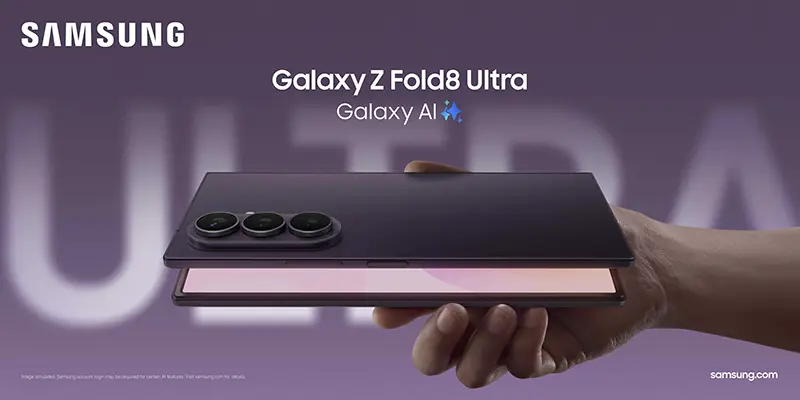
The Galaxy Z Fold8 Ultra price is $2,099.99 for the 256GB configuration at official Samsung.com pricing.
That’s $100 above the Fold7’s $1,999.99 launch price, a 5.0% increase.
Break it down by configuration and the increases diverge.
| Configuration (RAM · Storage) | Fold8 Ultra | Fold7 launch price | Difference |
|---|---|---|---|
| 12GB · 256GB | $2,099.99 | $1,999.99 | +$100 (5.0%) |
| 12GB · 512GB | $2,299.99 | $2,119.99 | +$180 (8.5%) |
| 16GB · 1TB | $2,699.99 | $2,419.99 | +$280 (11.6%) |
The higher the configuration, the steeper the increase.
That said, the 1TB tier also steps RAM up to 16GB, so that gap isn’t storage alone.
Those increases are measured against the Fold7’s launch pricing.
One thing worth flagging is that moving from 512GB to 1TB on the Z Fold8 Ultra costs $400.
Personally, unless large video projects are part of your daily routine, stopping at 512GB is the sensible call.
Final pricing may vary by retailer and available promotions.
☑️ Samsung Fold8 release date, sorted out
The Samsung Fold8 release date is August 7, when general availability begins across major markets.
Pre-orders are already open.
Per Samsung Newsroom, you can reserve one now at Samsung.com, with devices arriving on the August 7 availability date.
7. Galaxy Fold8 Ultra: should you buy it?
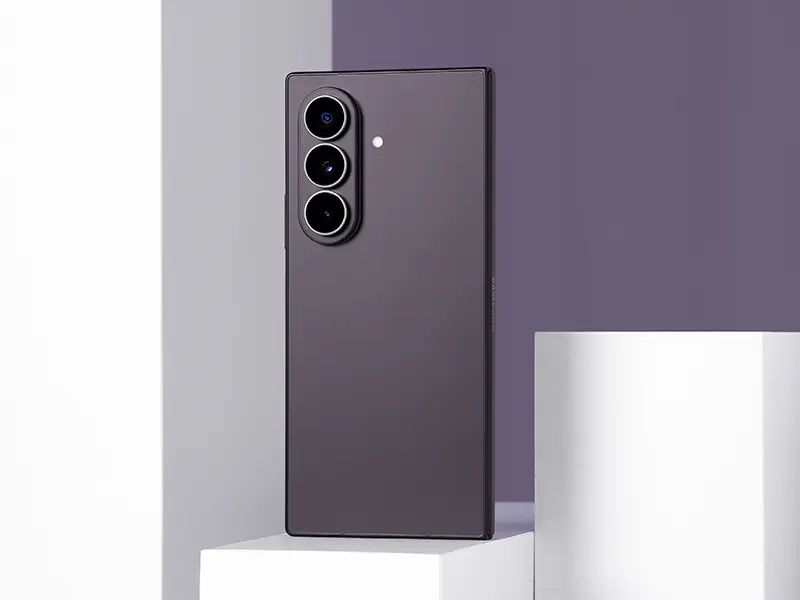
Here’s the summary.
Performance and display are a clear win, battery capacity and water resistance are a clear loss, and the price stings.
- Performance: top of the foldable class. Up 17.7% in multi-core and 50.9% in graphics over the previous generation
- Battery & charging: charging takes a big step to 45W, capacity still trails rival foldables
- Cameras: a major ultrawide improvement, a telephoto stuck for five years
- Price: $2,099.99 at 256GB, the most expensive Galaxy foldable ever
The answer splits by which generation you’re coming from.
On a Fold5 or Fold6, battery, charging, cameras, and display all move up two steps or more, so the upgrade clearly pays off.
On a Fold7, weight, thickness, and the cover display are unchanged and the S Pen is still missing, so there’s little reason to rush.
Personally, I think it’s well worth buying.
If the Samsung Fold8 Ultra is on your shortlist, you’re the kind of buyer who values an unfolded 8-inch screen enough to absorb a $2,000-plus price.
Folded thickness and weight already got close to a regular phone back in the Fold7 generation, and the S Pen was gone from that point too, so nothing new is being lost here.
Seen from that starting point, this generation went straight at the weaknesses that were left.
A 31.8% gain in battery life and 45W charging solve the problem of making it through a day, and the ultrawide upgrade fills in the softest spot in the camera system.
That said, heat and real-world camera quality won’t be settled until full reviews land, so waiting for those before you commit is a reasonable move.
☑️ How does it compare to the Galaxy S26 Ultra?
Comparing Samsung’s two flagships is the real dilemma here.
At 256GB, the Fold8 Ultra runs $2,099.99 against $1,299.99 for the S26 Ultra — an $800 gap.
| Item | Fold8 Ultra | S26 Ultra |
|---|---|---|
| Price (256GB) | $2,099.99 | $1,299.99 |
| Display | 8.0-inch foldable | 6.9-inch slab |
| S Pen | Not supported | Built in |
| Telephoto | 3x | 3x + 5x periscope |
| Water & dust resistance | IP48 | IP68 |
| Wired charging | 45W | 60W |
Performance is effectively a tie since they share the same chip.
That $800 difference is the price of one thing — a screen that opens to 8 inches — and the trade is giving up the S Pen, the periscope telephoto, and IP68.
Personally, I don’t think that combination is an easy sell to anyone who depends on handwriting or long-range shooting.
Flip it around, though, and if you spend hours working through documents and video on a big canvas, nothing else replaces that screen.
☑️ How does it compare to rival foldables?
Samsung’s line about “the thinnest Galaxy Z Fold ever at 4.1mm” is accurate, but its scope is limited to inside the series.
It doesn’t mean thinnest in the world.
Per official specs from HONOR Global, the HONOR Magic V6 in white is thinner still, at 4.0mm unfolded and 8.75mm folded.
And its battery is 6,660mAh — 33% larger than the Z Fold8 Ultra’s.
That contrast matters.
The Samsung Fold8 Ultra’s smaller battery isn’t an unavoidable consequence of building thin; it’s the result of Samsung choosing differently at the same thickness.
The price difference is large too, of course.
The Magic V6 runs around $1,350 globally for 256GB, roughly $750 less than the Fold8 Ultra — but HONOR doesn’t sell it through official channels here.
So on paper, the Magic V6 is thinner, has a bigger battery, and costs less.
But 0.1mm is a difference no hand can detect, and the decisive gap is price.
What offsets that price gap is everything else on Samsung’s side of the table: generational experience accumulated since its first foldable in 2019, seven guaranteed OS upgrades, and DeX.
Personally, for a phone you’ll use every day, I think those factors carry as much weight as the $750 gap.
Foldables have moving parts, which makes service access matter more than it does on a regular phone — and a device with no official sales channel isn’t starting from the same line.
💡 FAQ
Q1. Is it worth switching if I’m already using a Fold7?
The improvements you’ll notice are concentrated in battery and charging. Runtime going up by more than three hours and charging speed nearly doubling are unambiguous gains.
That said, the 215g weight, the thickness, and the cover display resolution are all unchanged and the S Pen is still absent, so if you don’t feel short on battery through the day, personally I think staying on the Fold7 a while longer is perfectly reasonable.
Q2. Between the Samsung Fold8 Ultra and the Fold8, which is the higher-tier model?
By price and specs, the Fold8 Ultra sits above. But the Fold8 (Wide) isn’t the Fold7’s successor — it’s a separate form factor, and the real difference between the two models is usability rather than tier.
The Ultra’s 8-inch screen and telephoto camera suit document and photo work, while the Wide is 14g lighter at 201g and has a broader screen when folded, which suits video watching.
✨ Final Thoughts
![Stylized isometric illustration depicting both unfolded and folded states of the Galaxy Fold8 Ultra in a unified composition [AI Concept]](https://smartleadertech.com/wp-content/uploads/2026/07/galaxy-fold8-ultra-isometric-render-09.webp)
The Galaxy Fold8 Ultra is the most improved foldable Samsung has shipped in several generations when it comes to battery, charging, and the ultrawide.
The silicon-carbon cell that grew capacity without adding weight, 45W charging, and a 3,000-nit display are changes you’ll register while using it day to day.
The missing S Pen, the IP48 rating, a telephoto untouched for five years, and a $100 price bump are the items to weigh before you buy.
More than anything, sustained performance, real-world camera quality, and long-term crease visibility can only be confirmed once full reviews are out.
Personally, I think this is the most sensible moment for anyone moving up from a Fold5 or Fold6.
If you’re on a Fold7, skipping this generation and waiting for the one that brings the S Pen back is an equally defensible call.
So where do you land — worth upgrading now, or better to hold out for the next generation? Drop your thoughts below.