At the bottom of this post, a two-minute video explains it in an easy-to-follow way, with illustrations and side-by-side comparisons. Watch the video ▶
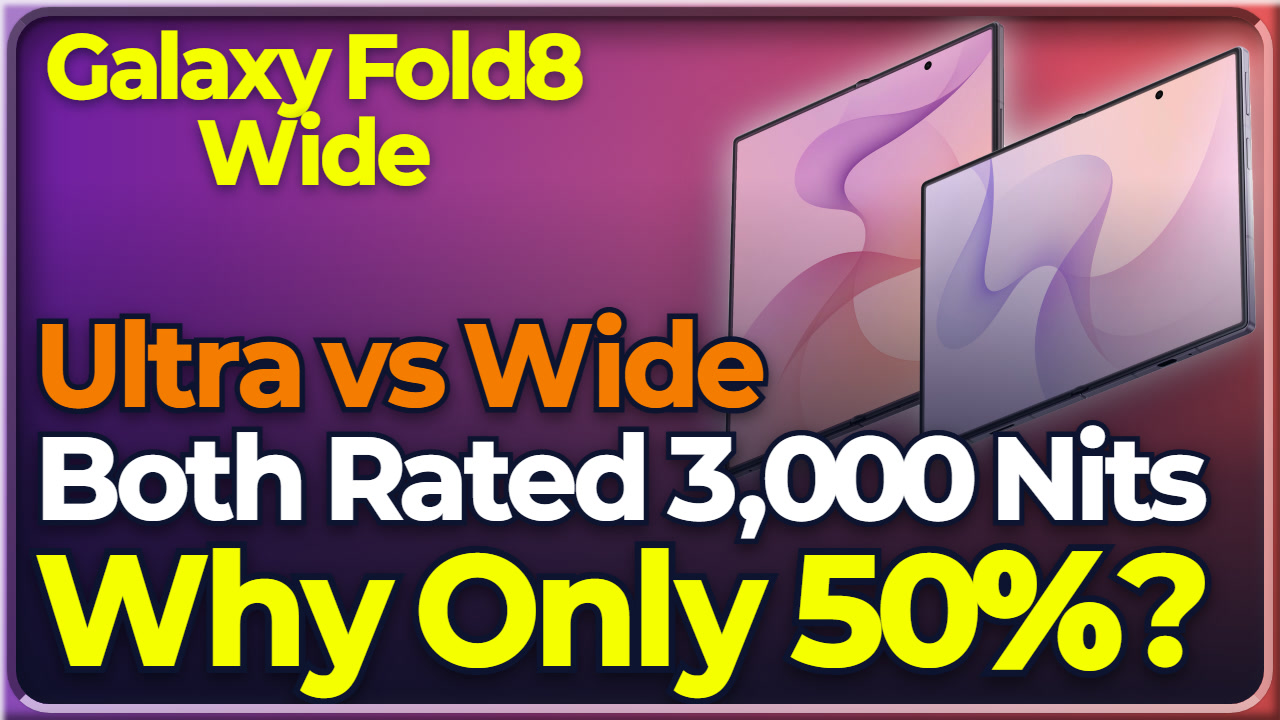
Galaxy Fold8 Wide brightness is rated at 3,000 nits. A nit is a unit of screen brightness, and a higher number means a brighter screen. But outdoors, the brightness you actually get is closer to 1,500 nits. Why is the real brightness so different from the spec? Is the spec wrong?
3,000 nits is the value with only 10% of the screen lit. This is called peak brightness. In real use, you almost never light up only 10% of the screen.
Usually most of the screen is bright, and in that condition the brightness is around 1,500 nits. That is closer to what you get outdoors.
GSMArena, a phone review site, measured these. Manual maximum is 747 nits on the Wide against 724 on the Ultra. Auto brightness plus high brightness mode, 1,525 against 1,432. Peak brightness, 10% of the screen lit, 3,132 against 2,980.
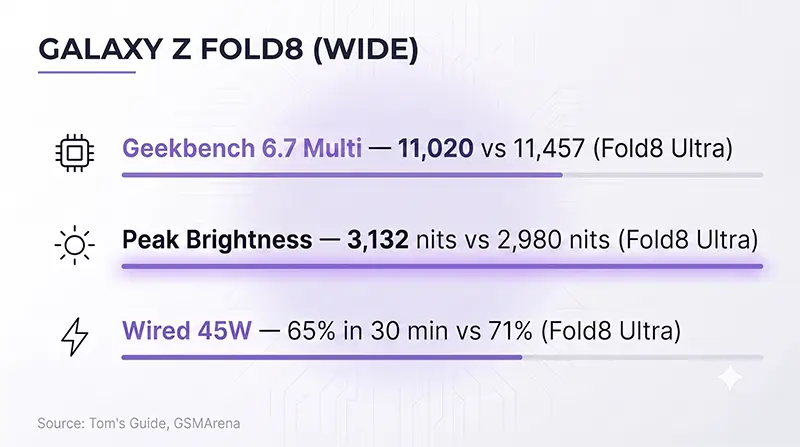
High brightness mode works like this. When auto brightness is on and the phone detects strong sunlight, it pushes the screen brighter than the manual maximum allows. That is how the manual maximum of 747 nits rises to 1,525 in high brightness mode.
So is the more expensive Ultra brighter? The opposite. On Samsung’s official specs, both are 3,000 nits. But in all three measured conditions, the Wide came out ahead of the Ultra. Galaxy Fold8 Wide brightness is one of the few areas where the Wide does not lose to the Ultra.
Personally, when you read a brightness spec, the peak value matters, but I recommend checking the high brightness mode value as well. That is the number you meet outdoors at midday. For more on the Galaxy Fold8 Wide, watch the full videos.
Galaxy Fold8 Wide brightness Key numbers
- Manual max (75% window): Fold8 Wide 747 nits / Ultra 724 nits
- Auto + high brightness (75% window): 1,525 nits / 1,432 nits
- Peak (10% window): 3,132 nits / 2,980 nits (official spec: 3,000 nits on both)
💡 FAQ
Q1. What does the 3,000-nit figure measure?
3,000 nits applies when only 10% of the screen lights up. Push most of the display bright and you’re looking at roughly 1,500 nits, and that’s the number closer to what you’ll feel outdoors.
Q2. Is the cover screen just as bright?
On the official spec sheet, both the 7.6-inch main display and the 5.5-inch cover display are rated at 3,000 nits. The measurements above are GSMArena’s, taken on the main screen.
Q3. Is it really brighter than the Ultra?
In GSMArena’s measurements, the Fold8 Wide came out ahead of the Ultra in all three conditions: manual max, auto plus high brightness, and peak. Screen brightness is one of the few boxes where this phone doesn’t lose to the Ultra.
Watch next
- 📝 Full specs and details 👉 Galaxy Fold8 Wide Specs In Depth, 4 Differences from the Ultra
- Full video (11 min) 👉 Galaxy Fold8 Wide: Brighter Than the Ultra, Slower to Charge? Brightness, Heat, Battery, Real Tests