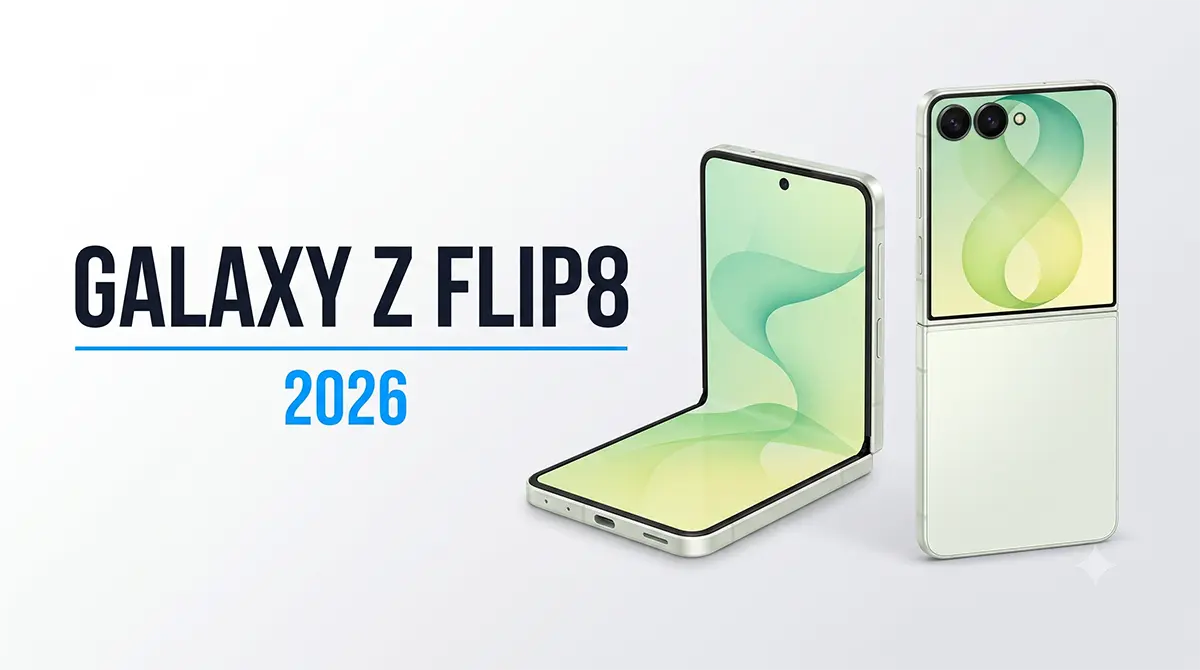
Four things actually changed on the Galaxy Z Flip8 compared to the Flip7.
It’s 8g lighter than last year’s model, and 6.1mm thick unfolded — 0.4mm slimmer.
The chip switched to the Snapdragon 8 Elite Gen 5, and the battery moved to silicon-carbon.
Everything else carries over. Same screens, same cameras, same battery capacity, same charging speeds.
And yet the price on Samsung.com is $1,199.99 — a $100 jump.
So let’s break down the price, the specs, the camera, the colors, and the chip inside the unit you’d actually buy — and figure out what this generation of the Galaxy Z Flip8 really amounts to.
ℹ️ This post includes information graphics based on official specs, along with AI-generated concept images. Concept images may differ from the actual product.
※ Every price and configuration comparison in this article is based on the 12GB RAM / 256GB model.
📌 Quick Summary
[Price] 256GB $1,199.99 / 512GB $1,399.99
[Key Specs] 6.9-inch 120Hz, 4,300mAh, 25W wired, 180g
[Pros]
- 8g lighter and 0.4mm thinner than the Flip7
- Chip switched to the Snapdragon 8 Elite Gen 5 — a first for the Flip line
- Horizon Lock added, keeping the frame level without a gimbal
[Cons]
- Camera specs identical for a third straight generation, still no optical telephoto
- 4,300mAh battery and 25W wired charging carried over untouched
- Anti-reflective coating from the Fold8 line didn’t make it over
- $100 price hike on the 256GB config
[Bottom Line] If you’re on a Z Flip7, sit this one out. If you’re on a Flip5 or older, or this is your first clamshell, it’s a real candidate.
- 📌 Quick Summary
- 1. Galaxy Z Flip8 vs Flip7: what actually changed?
- 2. Galaxy Z Flip8 specs: the parts that matter
- 3. Galaxy Z Flip8 Exynos or Snapdragon: which chip is in your unit?
- 4. Galaxy Z Flip8 camera: unchanged for a third generation?
- 5. Galaxy Z Flip8 price: why it's $100 higher
- 6. Galaxy Z Flip8 colors: what are your options?
- 💡 FAQ
- ✨ Final Thoughts
1. Galaxy Z Flip8 vs Flip7: what actually changed?
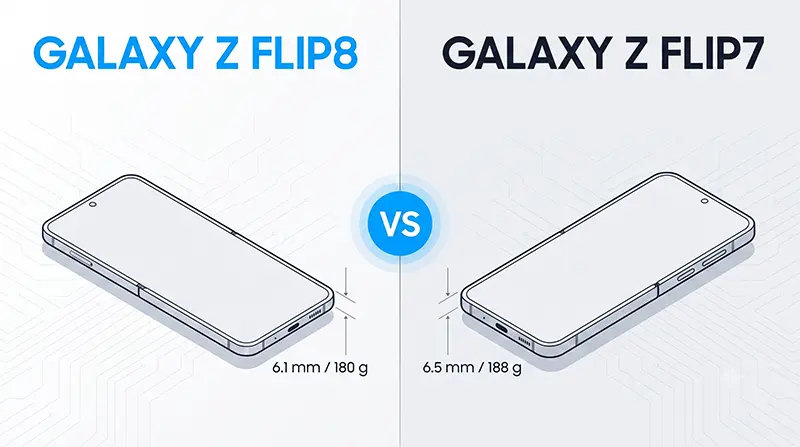
Four things separate the Galaxy Z Flip8 from its predecessor: weight (188g→180g), unfolded thickness (6.5mm→6.1mm), the chipset, and the battery chemistry.
GSMArena called it essentially the same phone apart from being 0.4mm thinner folded and 8g lighter.
☑️ Galaxy Z Flip8 vs Flip7: the changes that are real
The list of changes is clear enough.
The problem is how small each one is.
| Spec | Galaxy Z Flip7 | Galaxy Z Flip8 | Change |
|---|---|---|---|
| Weight | 188g | 180g | −8g (−4.3%) |
| Unfolded thickness | 6.5mm | 6.1mm | −0.4mm (−6.2%) |
| Folded thickness | 13.7mm | 13.1mm | −0.6mm (−4.4%) |
| Chipset | Exynos 2500 (3nm) | Snapdragon 8 Elite Gen 5 | Supplier switch |
| Chip strategy | Exynos across all regions | Split by region | Policy change |
| Battery chemistry | Lithium-ion | Silicon-carbon | Brand first |
| Back panel | Glass | Fiberglass-reinforced polymer | Material change |
| OS | Android 16 / One UI 8 | Android 17 / One UI 9 | One generation |
| Price (256GB) | $1,099.99 | $1,199.99 | +$100 (+9.1%) |
Eight grams is roughly a quarter and a dime sitting in your palm, and 0.4mm is not a number your hand registers.
Tom’s Guide said that if you set the Flip8 next to a Flip7, telling them apart is genuinely hard.
☑️ What carried over from the Galaxy Z Flip7
Screens, cameras, battery, charging — most of the core hardware is identical to the Flip7.
More stayed the same than changed.
| Spec | Identical across both generations |
|---|---|
| Main display | 6.9-inch 2,520×1,080, 1–120Hz, 2,600-nit peak |
| Cover display | 4.1-inch 1,048×948, 60/120Hz, 2,600-nit peak |
| Rear cameras | 50MP (f/1.8, OIS) + 12MP (f/2.2), no telephoto |
| Front camera | 10MP (f/2.2) |
| Battery capacity | 4,300mAh (4,174mAh rated) |
| Charging | 25W wired / 15W wireless |
| Memory | 12GB |
| Water and dust resistance | IP48 |
| Software support | 7 OS upgrades + 7 years of security patches |
SamMobile reported that the Flip8 uses the same OLED panel as the Flip7, with no brightness improvement either.
It isn’t just the size and refresh rate matching up — it’s the same panel.
☑️ Galaxy Fold8 comparison: what the Z Flip8 doesn’t get
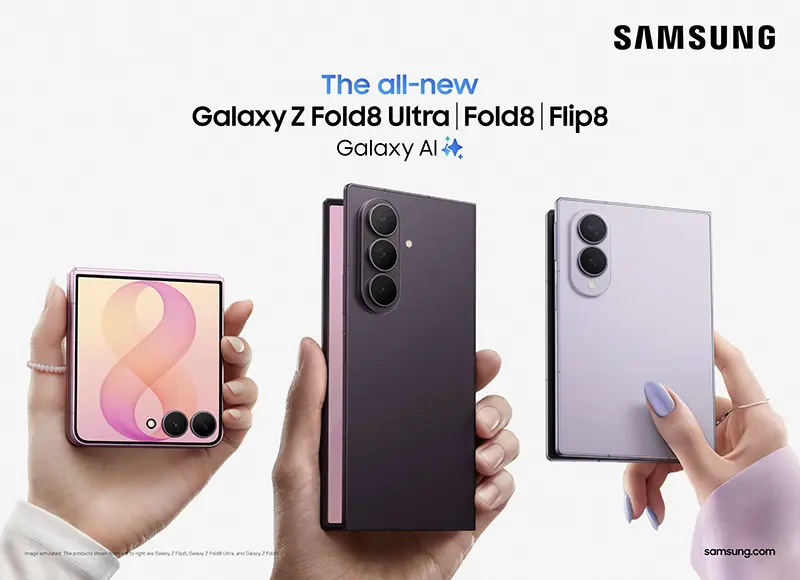
The Flip8 was announced the same day as the Fold8 Ultra and Fold8 Wide, but this generation’s new tech landed almost entirely on the Fold side.
- Anti-reflective coating — applied to the inner screens on the Fold8 models; neither Flip8 display gets it
- Cover glass grade — the Gorilla Glass Ceramic 3 used on the Fold8 models is absent, and the Flip8 cover screen sticks with the same Victus 2 as last year
- Wired charging — 45W on the Fold8 models, still 25W on the Flip8
- Wireless charging — bumped to 20W on the Fold8 models, still 15W on the Flip8
2. Galaxy Z Flip8 specs: the parts that matter
The Galaxy Z Flip8 specs come down to four numbers: a 6.9-inch 120Hz display when open, a 4.1-inch cover screen when closed, a 4,300mAh battery, and 25W wired charging.
Here’s the full rundown. (Based on official specs from Samsung.com)
| Spec | Galaxy Z Flip8 |
|---|---|
| Chipset | Snapdragon 8 Elite Gen 5 (3nm) |
| Main display | 6.9-inch 2,520×1,080, Dynamic AMOLED 2X, 1–120Hz, 2,600-nit peak |
| Cover display | 4.1-inch 1,048×948, Super AMOLED, 60/120Hz, 2,600-nit peak |
| Cameras | 50MP f/1.8 OIS wide + 12MP f/2.2 ultrawide (no telephoto) / 10MP front |
| Video | 4K 60fps recording, 8K 60fps playback |
| Battery and charging | 4,300mAh (4,174mAh rated) / 25W wired, 15W wireless, reverse wireless |
| Dimensions and weight | 6.1mm unfolded, 13.1mm folded / 180g |
| Water and dust resistance | IP48 |
| Materials | Armor Aluminum frame / Gorilla Glass Victus 2 cover / fiberglass-reinforced polymer back |
| Storage | 12GB RAM, 256GB (226.6GB usable) / 512GB |
| Software | Android 17 / One UI 9, security updates through July 31, 2033 |
On software, you get security updates through July 31, 2033 and seven OS upgrades.
Since it ships on Android 17, that covers you through Android 24. This isn’t a new perk, though.
Samsung has applied the policy to its foldables since the Fold6 and Flip6, and every Galaxy S, Z, and Tab S device released from 2024 onward falls under it.
The Flip8 is the third generation to qualify. Why bother spelling out the history?
Because it’s easy to mistake this for a new benefit of the current generation — and just as easy to not realize your current phone is already covered.
If you’re carrying a Galaxy S24, a Fold6, or a Flip6 right now, you’re inside that same seven-year window.
Water and dust resistance stays at IP48, same as last year.
The first digit covers dust and the second covers water: 4 means it blocks objects larger than 1mm, and 8 means it survives 30 minutes in 1.5m of fresh water.
Strong against water, weak against dust and sand.
☑️ Why are the battery and charging identical to last year?
The 4,300mAh battery, 25W wired, and 15W wireless figures are carried over exactly.
Even measured charging speed only moved 4 percentage points at the 30-minute mark.
The closest comparison is the Motorola Razr Ultra 2026.
It’s effectively the only other product that matches the clamshell form and the premium price bracket at the same time.
| Charge time | Galaxy Z Flip8 | Galaxy Z Flip7 | Motorola Razr Ultra 2026 |
|---|---|---|---|
| 15 minutes | 35% | 29% | — |
| 30 minutes | 59% | 55% | 74% |
In Tom’s Guide testing, the Flip8 hit 59% in 30 minutes, edging past the Flip7’s 55%.
The Motorola Razr Ultra 2026 reached 74% in the same lab — a 15-point lead.
Neither Samsung nor testers have published a full 0-to-100% charge time.
PhoneArena pointed out that 25W wired charging has been unchanged for four years now, going back to the Flip4 in 2022.
Over that stretch the Fold8 climbed to 45W wired and 20W wireless, while the Flip8 stayed at 15W.
Wired or wireless, it sits a rung below its same-generation sibling.
Battery life actually went backward.
In CNN Underscored’s looped 4K video test, the Flip8 lasted 22 hours and 19 minutes — 2 hours and 1 minute short of the Flip7.
Add it up: charging is 4 points faster, video playback is two hours shorter.
The odd part is that the capacity is identical, yet the measured results clearly diverged.
One thing worth knowing: all of those measurements were run on Snapdragon units, which is the same configuration you’d be buying.
☑️ Silicon-carbon battery: what you gain and what you give up
The silicon-carbon battery is a first for Samsung phones, debuting across all three Galaxy Z models this generation.
It mixes silicon-based material into the battery anode to pack more energy into the same volume.
Usually that headroom goes toward a bigger capacity.
The Flip8 instead held at 4,300mAh and spent the gain on trimming folded thickness from 13.7mm to 13.1mm.
That trade isn’t free.
9to5Google checked EU regulatory filings and found the Flip8 battery rated at roughly 1,200 charge cycles before dropping to 80% capacity — down sharply from about 2,000 cycles on the Flip7 generation.
At one charge a day, that works out to about 3.3 years.
Set that against security updates running through 2033, and your battery hits 80% of its original capacity with roughly half the software support window still ahead of you.
And like most phones these days, the battery isn’t user-replaceable.
Personally, if you’re the type to keep a phone past the three-year mark, I think losing 800 charge cycles stings more than gaining 0.6mm of thinness.
3. Galaxy Z Flip8 Exynos or Snapdragon: which chip is in your unit?
The Galaxy Z Flip8 ships with different silicon depending on where you buy it.
Units sold here, along with Canada, China, and Japan, run the Snapdragon 8 Elite Gen 5, while Korea and several other markets get the Exynos 2600 for Galaxy.
Last year, every Flip7 worldwide ran the Exynos 2500 — no exceptions.
This is the first time the Flip line has split chips by region.
☑️ Exynos 2600 vs 2500: what improved?
On the Exynos side of that split, the process shrank from 3nm to 2nm and peak clock speed rose from 3.3GHz to 3.8GHz.
The 10-core layout stayed, but the distribution shifted — the small low-power cores are gone, and the lower tiers moved up to higher-grade cores.
| Spec | Exynos 2500 (Flip7) | Exynos 2600 (Flip8) |
|---|---|---|
| Process | 3nm | SF2 2nm GAA |
| CPU | 10-core (1 prime + 7 performance + 2 efficiency) | 10-core (1 prime + 3 performance + 6 efficiency) |
| Peak clock | 3.3GHz | 3.8GHz |
| GPU | Xclipse 950 | Xclipse 960 |
Samsung’s own numbers put the gains over the Exynos 2500 at up to 39%, with AI performance up 113% on the NPU and ray tracing up as much as 50%.
☑️ Snapdragon vs Exynos: how big is the score gap?
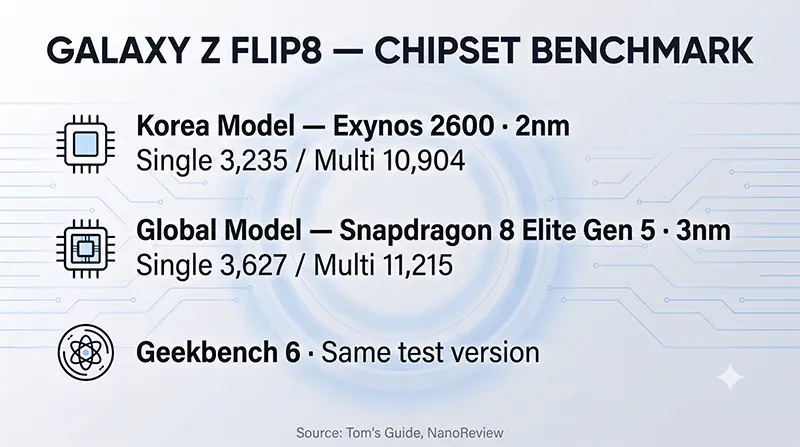
The two versions post different benchmark numbers.
For context, here they are next to the Motorola Razr Ultra 2026 — the other premium clamshell — and the iPhone 17 Pro.
| Geekbench 6 | Flip8 (Snapdragon) | Flip8 (Exynos) | Motorola Razr Ultra 2026 | iPhone 17 Pro |
|---|---|---|---|---|
| Single-core | 3,627 | 3,235 | 2,886 | 3,834 |
| Multi-core | 11,215 | 10,904 | 8,982 | 9,988 |
The Snapdragon version — the one you’d be buying — comes out ahead of the Exynos build on both single-core and multi-core, with the single-core gap the wider of the two at about 10.8%.
Against the other two phones, it holds up well.
Single-core trails the iPhone 17 Pro, but multi-core comes out on top, and it beats the Razr Ultra 2026 on both counts.
One caveat: the two Flip8 figures weren’t measured under the same conditions.
The Snapdragon numbers and the other two phones come from Tom’s Guide lab testing, while the Exynos figures are aggregated from public database submissions.
So the version sold here is the one with verified lab results behind it.
4. Galaxy Z Flip8 camera: unchanged for a third generation?
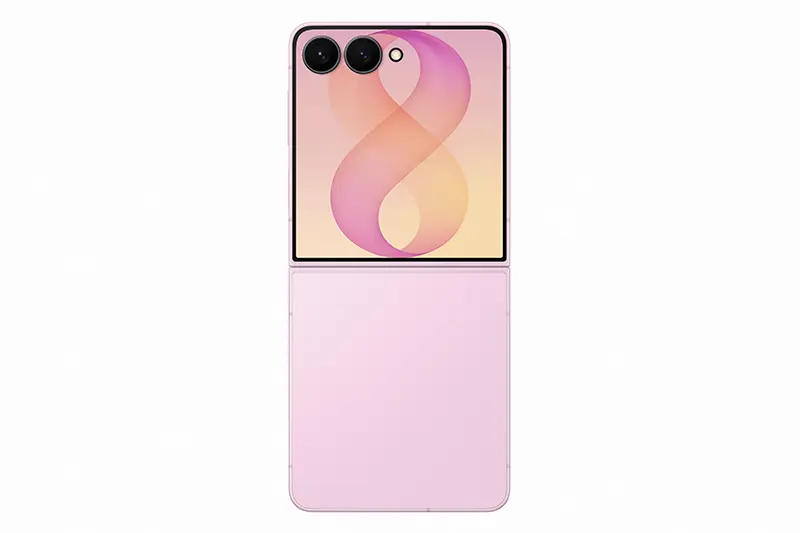
The Galaxy Z Flip8 camera is a two-lens setup: a 50MP wide and a 12MP ultrawide.
That combination has now run for three straight generations since the Flip6.
There’s still no optical telephoto.
| Lens | Galaxy Z Flip8 | Galaxy Z Flip7 | Galaxy Z Fold8 Wide |
|---|---|---|---|
| Wide | 50MP f/1.8, OIS | 50MP f/1.8, OIS | 50MP f/1.8, OIS |
| Ultrawide | 12MP f/2.2 | 12MP f/2.2 | 50MP f/1.9 |
| Telephoto | None (2x sensor crop) | None (2x sensor crop) | None |
| Front | 10MP f/2.2 | 10MP f/2.2 | 10MP f/2.2 |
(Based on official specs from Samsung.com)
That 2x figure in the telephoto row deserves a closer look.
The 2x you see in the official specs and in the camera UI isn’t optical zoom — it’s a crop from the center of the 50MP sensor.
There are enough pixels to make that work in good light, but as the light drops, the limits of a cropped frame start showing.
The 12MP ultrawide is the weakest link in this setup.
The same-generation Fold8 Wide and Fold8 Ultra both moved their ultrawide up to 50MP f/1.9, while the Flip8 sits at 12MP f/2.2.
A lower f-number means the lens takes in more light.
Ultrawide is widely considered the first lens on any phone to fall apart in dim conditions, since it typically pairs a smaller sensor with a narrower aperture.
That makes it the obvious candidate for a generational upgrade — and once again, it didn’t get one.
One area did improve: low-light shooting. Tom’s Guide found gains only in dim conditions.
With the hardware unchanged, that comes down to reworked image processing.
☑️ What’s new for video on the Z Flip8
The camera hardware stood still, but shooting with it got easier.
New software features arrived, and the folding design backs them up.
According to the Samsung Global Newsroom, the headline change on the video side is Horizon Lock.
Horizon Lock is an option added to Super Steady stabilization that keeps your frame level even as the phone tilts or rotates up to a full 360 degrees.
No extra gear needed to get stable footage while running or shooting a vlog.
Tom’s Guide reported that the frame stays level no matter how you hold it, and that while there’s a slight crop, you get gimbal-grade stability without a gimbal.
The zoom rocker, available since the Flip6, works alongside it.
Hold the on-screen slider while gripping the phone sideways like a camcorder, and the zoom moves at a steady rate instead of lurching the way it does when you pinch with two fingers.
Then the folding design adds its own edge.
Fold it halfway and stand it on a flat surface and you have a tripod, with the cover screen letting you frame yourself as you shoot.
That’s why Tom’s Guide still calls the Flip8 one of the best portable vlogging setups around, even with camera specs that barely moved.
5. Galaxy Z Flip8 price: why it’s $100 higher
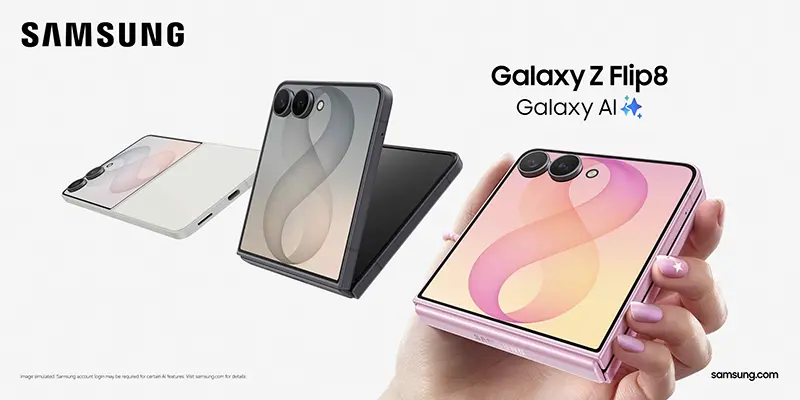
At 12GB / 256GB, the Galaxy Z Flip8 price is $100 higher than last year’s model — a 9.1% increase.
| Model (12GB/256GB) | Price |
|---|---|
| Galaxy Z Flip8 | $1,199.99 |
| Galaxy Z Flip7 | $1,099.99 |
| iPhone 17 Pro (256GB) | $1,099 |
The reason isn’t a better product — it’s component costs.
CNBC reported that Samsung raised foldable pricing because of rising memory chip prices.
Memory jumped more than 300% in a single quarter during the first half of 2026, and manufacturers across the board are pushing handset prices up.
The iPhone 17 Pro sitting at $1,099 for 256GB is worth weighing here too.
It means the folding screen now costs you about $100 more, not less.
☑️ How far apart are the storage tiers?
The Flip8 comes in just two configurations, 256GB and 512GB, separated by $200.
Unlike the higher-end foldables, there’s no 16GB RAM or 1TB option.
| Configuration | Galaxy Z Flip8 | Difference from tier below |
|---|---|---|
| 12GB · 256GB | $1,199.99 | — |
| 12GB · 512GB | $1,399.99 | +$200 |
Personally, unless you’re stockpiling video on the device itself, I’d stop at 256GB.
That $200 buys storage and nothing else — RAM is 12GB either way.
Final pricing may shift from these pre-order figures once the phone goes on sale, and can vary by retailer and available promotions.
6. Galaxy Z Flip8 colors: what are your options?
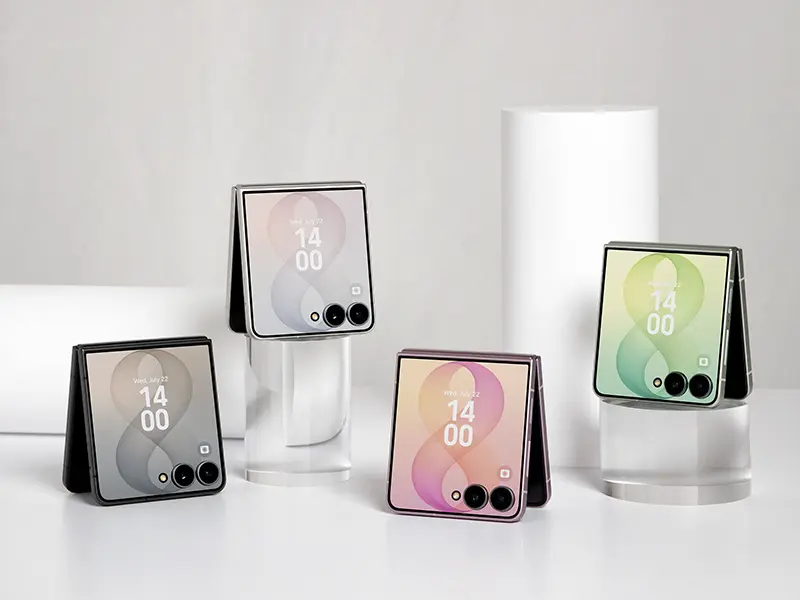
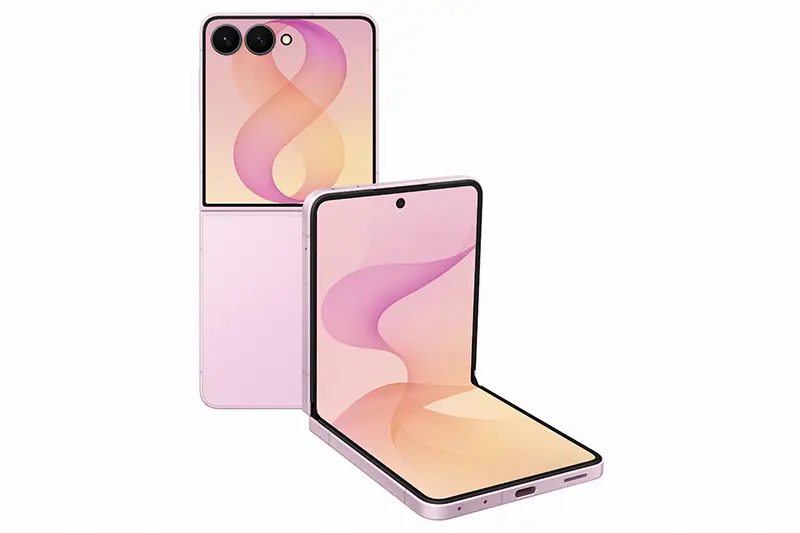
Galaxy Z Flip8 colors run to four in total: Pink, Graphite, and Cream, plus the online-exclusive Mint.
Pink — Flip8 exclusive
Graphite — shared across all three Galaxy Z models
Cream — shared across all three Galaxy Z models
Mint — Flip8 exclusive, online only
The Fold8 Ultra gets Violet Shadow and Green Shadow as its exclusives, while the Fold8 Wide gets Lavender and Pistachio.
Materials are identical regardless of which color you pick: Armor Aluminum frame, Gorilla Glass Victus 2 cover screen, and a fiberglass-reinforced polymer back.
☑️ Where can you buy the Mint?
Running one color as an online exclusive is a global pattern for Samsung, and Mint follows it here.
If Mint is the one you want, online is the only channel that carries it.
💡 FAQ
Q1. I’m using a Galaxy Z Flip7 — is the Galaxy Z Flip8 worth upgrading to?
The case for switching is thin this generation. The displays, cameras, battery capacity, and charging speeds are all the same, and what changes is 8g of weight, 0.4mm of thickness, and the chip.
Multiple outlets advised Flip7 owners to hold off. The Flip7 is getting the One UI 9 update with six years of support still ahead of it, so there’s almost nothing new to gain on the software side.
If you’re on a Flip6 or older, though, two generations of chip improvement plus the larger cover screen add up to a difference you’d feel.
Q2. Which chip does the Galaxy Z Flip8 use here, and does it matter?
Units sold here run the Snapdragon 8 Elite Gen 5, while Korea and some other markets get the Exynos 2600 for Galaxy. Based on public database aggregates, the Snapdragon build leads the Exynos build by about 10.8% in single-core.
Personally, I don’t think a gap that size is something you’d notice in daily use. And the process node actually runs the other way — the Exynos 2600 is 2nm against the Snapdragon’s 3nm, which could favor power efficiency.
Whether that translates into real results, though, isn’t clear yet. Sustained performance and thermal data for the Exynos build haven’t been published, and measurements of the Galaxy S26 lineup running the Exynos 2600 drew mixed verdicts across outlets.
Q3. Is it true that the Galaxy Z Flip8 will be the last Flip?
Nothing is confirmed. But the speculation isn’t baseless.
Phone development typically starts about a year ahead of launch, with parts supply locked in around the same time, and analysts note that no Flip9 activity has surfaced.
The other points raised: the cover screen has hit a physical size limit, battery and charging have stalled for years, and the market is drifting toward big-screen foldables. Samsung has neither confirmed nor denied any of it.
✨ Final Thoughts
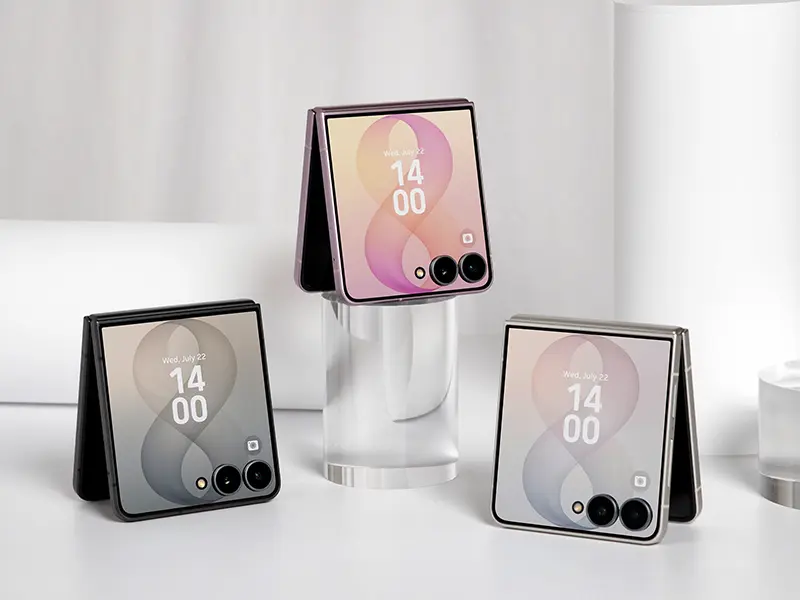
The Galaxy Z Flip8 inherits nearly all of its predecessor’s hardware and shaves off only thickness and weight.
Displays, cameras, battery capacity, and charging carry over untouched, the charge cycle rating went down, and the price went up $100.
Read only that far and it sounds like a negative verdict. But specs aren’t why anyone picks this phone.
The point is a shape that shrinks to roughly half its size when you close it — and the fact that it’s the cheapest way into this generation’s foldable lineup.
Personally, I’d argue that specs standing still and specs falling short are two different things.
A 50MP camera, a 6.9-inch 120Hz display, and 4,300mAh are not a weak loadout for everyday use.
Three generations of the same setup is a fair thing to be annoyed about. But better specs push the price up right along with them.
When component costs spike the way they have, holding a lower price means giving something up.
Seen that way, frozen specs are hard to read as a straightforward negative.
In the end, this phone is built for people who care more about what fits in a pocket and want to live with a folding design — not for people counting spec sheet wins.
So where do you land — specs or the fold? Drop your take in the comments.