![Split-screen comparison banner featuring Tesla Model Y and Hyundai Ioniq 5 electric SUVs side by side [AI Concept]](https://smartleadertech.com/wp-content/uploads/2026/06/model-y-ioniq-5-comparison-banner.webp)
The Model Y vs Ioniq 5 comparison is one of the most-searched questions for anyone shopping an electric SUV around the $50,000 mark in 2026.
Start with the lay of the land, and Tesla’s dominance is hard to miss.
The Model Y is the best-selling EV in the United States, while the Ioniq 5 came in fifth among US EVs in 2025 with roughly 47,000 units sold — trailing the Mustang Mach-E, Equinox EV, and Tesla’s own Model 3 and Model Y, according to Electrek.
In other words, the Model Y outsells the Ioniq 5 by a wide margin.
But “best-seller” and “best car for you” are two very different things.
This guide breaks down the dual-motor all-wheel-drive (AWD) long-range trims point by point — price, range, self-driving, options, and cons — so you can see which one actually fits your life.
We’ve also folded in rear-wheel-drive (RWD) figures along the way, so if you’re leaning toward the more affordable single-motor versions, you’ll find what you need too.
ℹ️ This post contains spec-based informational images and AI-generated concept images. Concept images may differ from the actual product.
📌 Quick Summary
[Tesla Model Y AWD — Pros]
- 327 miles of EPA range and class-leading efficiency
- More cargo room, including a usable frunk
- Lighter and more agile — genuinely fun to drive
- Native Supercharger access, strong resale value, broad OTA updates (plus available FSD Supervised)
[Tesla Model Y AWD — Cons]
- No Apple CarPlay or Android Auto, and the built-in nav is weak on routing and speed alerts
- No instrument cluster — everything lives on a single center screen
[Hyundai Ioniq 5 AWD — Pros]
- 800V architecture — 10–80% in about 18 minutes
- Wireless Apple CarPlay and Android Auto, plus V2L as standard
- Built in the US (Georgia) with a wide Hyundai dealer and service network
[Hyundai Ioniq 5 AWD — Cons]
- 269 miles of EPA range (Limited AWD), trailing the Model Y’s 327
- A track record of ICCU issues
[The Bottom Line] If efficiency, range, driving dynamics, and cargo matter most, go Model Y. If charging speed, standard features, trim choice, and dealer service top your list, the Ioniq 5 is the better fit.
- 📌 Quick Summary
- 1. Model Y vs Ioniq 5: The Key Differences at a Glance
- 2. Model Y vs Ioniq 5 Price: What Do You Actually Pay?
- 3. Model Y vs Ioniq 5 Range: Who Goes Farther?
- 4. Model Y vs Ioniq 5 Self-Driving: Where Each One Stands
- 5. Model Y vs Ioniq 5 Options and Interior
- 6. Model Y vs Ioniq 5 Cons: The Trade-Offs
- 7. Model Y vs Ioniq 5: The Final Call
- 💡 FAQ
- ✨ Final Thoughts
1. Model Y vs Ioniq 5: The Key Differences at a Glance
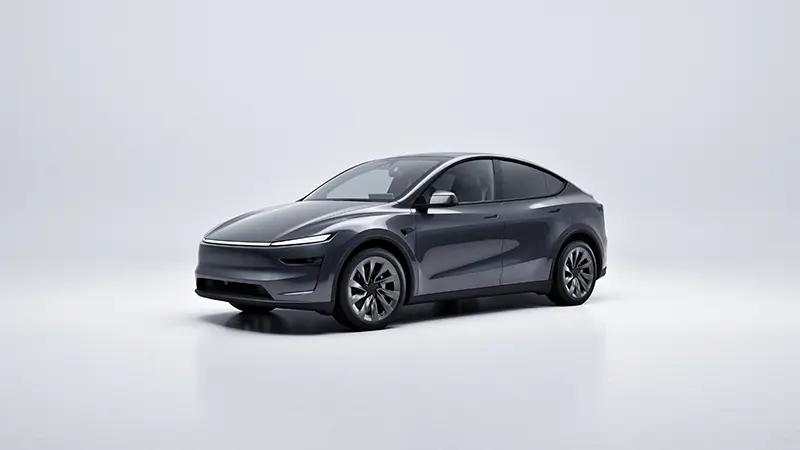
Both are mid-size electric SUVs that start from a similar place, but they split sharply: the Tesla Model Y wins on range, efficiency, power, and cargo, while the Hyundai Ioniq 5 leads on charging speed, standard features, and trim choice.
Interestingly, these two have already gone head-to-head right here in the US.
In Edmunds’ four-EV group test, summarized by InsideEVs, the refreshed Model Y and the Ioniq 5 finished in a dead heat.
That’s a sign the Model Y is no longer the automatic, runaway pick in this segment.
And “tied” here doesn’t mean the two are interchangeable — it means their strengths sit on opposite ends, which makes picking a clear winner tough.
We compare them on four fronts: ① price, ② range (EPA) and charging, ③ self-driving and options, and ④ cons and resale value.
Instead of rattling off specs, we focus on what you actually get — and give up — when you spend the same money.
☑️ How Did We Match the Trims?
Before we dig in, let’s pin down the contenders.
This comparison uses the Model Y Long Range AWD against the Ioniq 5 Limited AWD (84 kWh) — the closest match on both price and equipment.
RWD figures show up where they’re useful for reference.
The Tesla Model Y Long Range AWD (Premium AWD) lists at $49,990.
Our matched Hyundai trim, the Ioniq 5 Limited, starts at $45,075, and adding AWD (a $3,900 option) brings it to $48,975 — landing just under the Model Y.
On sticker, they’re closely matched, with a slight price edge to the Ioniq 5.
And both are dual-motor AWD long-range models, so they’re squarely in the same weight class.
2. Model Y vs Ioniq 5 Price: What Do You Actually Pay?
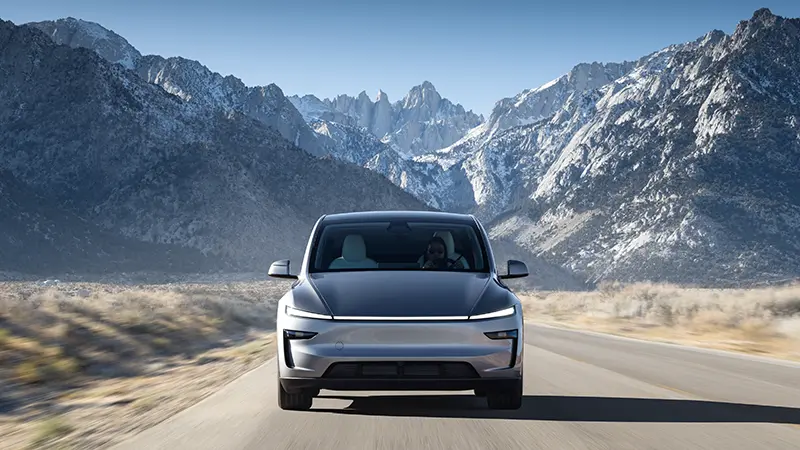
On price, the Model Y vs Ioniq 5 race is close — and on our matched trims, the Ioniq 5 actually slips in just under the Model Y.
The Model Y Long Range (Premium) AWD starts at $49,990.
The Ioniq 5 spans roughly $35,000 (SE Standard Range) to $45,075 (Limited, before AWD), depending on trim.
Our head-to-head trim, the Ioniq 5 Limited AWD ($48,975 with the $3,900 AWD option), lands just under the Model Y’s $49,990 — close, with a small edge to Hyundai.
The recent price trends, though, have moved in opposite directions.
Hyundai cut 2026 Ioniq 5 prices across the board — by as much as $9,800 on some trims — making an already strong value play even sharper.
Tesla, meanwhile, reshuffled its 2026 lineup, adding a new sub-$40K Standard trim and renaming the Long Range to Premium, with the Premium (Long Range) AWD landing at $49,990.
| Item | Model Y LR AWD | Ioniq 5 Limited AWD |
|---|---|---|
| MSRP (excl. destination) | $49,990 | $48,975 |
| Recent move | 2026 lineup restructured; new Standard trim under $40K | 2026 prices cut up to $9,800 |
| RWD reference | Premium RWD $45,990 (Standard from $39,990) | SE $37,500 / SEL $39,800 |
Final pricing can vary with options, wheels, and destination charges.
3. Model Y vs Ioniq 5 Range: Who Goes Farther?
On range, the Model Y vs Ioniq 5 matchup goes to Tesla — by EPA estimates, the Model Y pulls clearly ahead.
Compare AWD to AWD and the Model Y Long Range AWD is rated at 327 miles, while the Ioniq 5 Limited AWD comes in at 269 miles (on its larger 20-inch wheels).
Every long-range Ioniq 5 uses the 84 kWh pack.
In AWD form, the SE and SEL are EPA-rated at 290 miles, the Limited at 269 miles, while RWD trims reach up to 318 miles.
At 327 vs 269 miles, the Model Y leads by 58 miles.
And even the longest-range Ioniq 5 (318 miles, RWD) trails the Model Y’s RWD figure of 357 miles.
Neither brand publishes an official US cold-weather rating, so we’ve left a low-temp row out of the table and tackle winter separately below.
| Basis | Model Y LR AWD (19″) | Ioniq 5 Limited AWD (20″) |
|---|---|---|
| EPA combined (AWD) | 327 mi | 269 mi |
| RWD reference | 357 mi | 318 mi (19″) |
One caveat for a fair read: the Limited AWD’s 269-mile figure is set on its standard 20-inch wheels, while the Model Y AWD’s 327 miles is rated on 19-inch wheels — so part of that gap is wheel size, not just efficiency.
Both packs are NCM-based, so the chemistry is similar — yet efficiency diverges, and the reason is the body.
The Model Y’s sleek, aerodynamic shape gives it one of the lowest drag coefficients (Cd) among production SUVs, and at about 4,473 lb it’s roughly 190 lb lighter than the Ioniq 5’s 4,662 lb.
Lower drag and less weight mean less energy to cover the same distance.
That’s why the boxier Ioniq 5 uses more juice — in Edmunds testing, the Model Y consumed 26.8 kWh per 100 miles versus 32.4 for the Ioniq 5 Limited — even with similar battery chemistry.
The body shape is doing the talking.
☑️ What About Winter Range?
Cold-weather range is worth a closer look.
Like most EVs, both of these lose a chunk of range when temperatures drop. Real-world data fills in the gaps.
In InsideEVs testing, an AWD Ioniq 5 lost about 28.5% versus its EPA figure at roughly 16°F, and across various winter tests, sub-freezing daily driving typically trims 20–30%, climbing past 35% in bitter cold and at highway speeds.
That said, in large-scale studies the Ioniq 5’s cold-weather retention runs slightly above the segment average, so it’s not an unusually big loser here.
Both cars pair NCM batteries with a heat pump, so their cold-weather retention is roughly comparable.
Just keep in mind that neither publishes an official US cold rating, which makes a precise side-by-side tricky.
Personally, I wouldn’t call either one a poor winter performer.
But if you rack up a lot of highway and long-distance miles in winter, don’t bank on the sticker number — plan your charging around something like 20–30% below the rated range, the way real-world tests suggest.
☑️ Model Y vs Ioniq 5 Charging Speed
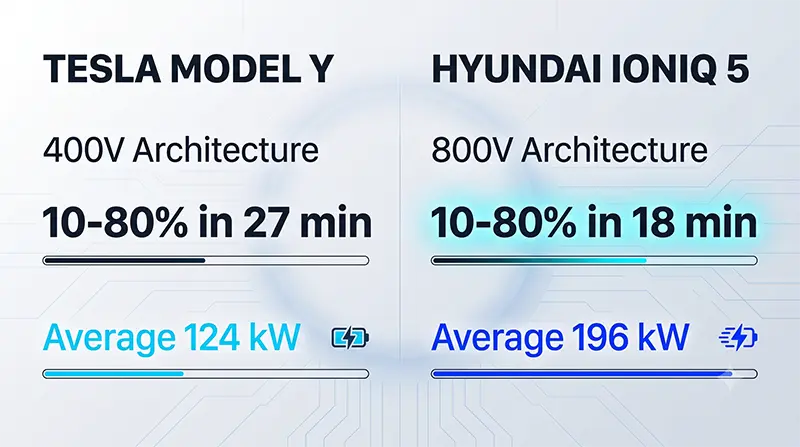
The Tesla Model Y wins on range, but the Hyundai Ioniq 5 is clearly the faster charger — thanks to its 800V architecture.
Using real-world figures from EV-Database, the Ioniq 5 84 kWh AWD knocks out 10–80% in about 18 minutes on a 350 kW charger (peak 263 kW, average 196 kW).
The Model Y covers the same window in about 27 minutes (peak 250 kW, average 124 kW).
Look at peak power alone and it’s close: 250 vs 263 kW.
And 800V doesn’t mean the Ioniq 5 pulls the full 350 kW either — its real ceiling is around 263 kW.
The difference shows up in how long each holds that power.
The Ioniq 5 sustains high output through most of the session for a 196 kW average, while the 400V Model Y spikes to 250 kW briefly, then tapers fast, averaging just 124 kW.
That gap in averages (roughly 1.6x) is what splits 10–80% into 18 minutes versus 27.
One US wrinkle worth knowing: for 2026, both cars use a native NACS port, so both can plug straight into Tesla Superchargers.
But the Ioniq 5’s 800V advantage only fully shows on a 350 kW DC charger — on 400V Superchargers (around 250 kW), its 10–80% stretches to roughly 24–30 minutes, much closer to the Model Y.
Bottom line: the Model Y is your pick for going far on a single charge, while the Ioniq 5 shines if you’d rather top up quickly and often.
| Item | Model Y LR AWD | Ioniq 5 LR AWD |
|---|---|---|
| Architecture | 400V | 800V |
| Average charging power | ~124 kW | ~196 kW |
| 10–80% time | ~27 min | ~18 min |
4. Model Y vs Ioniq 5 Self-Driving: Where Each One Stands
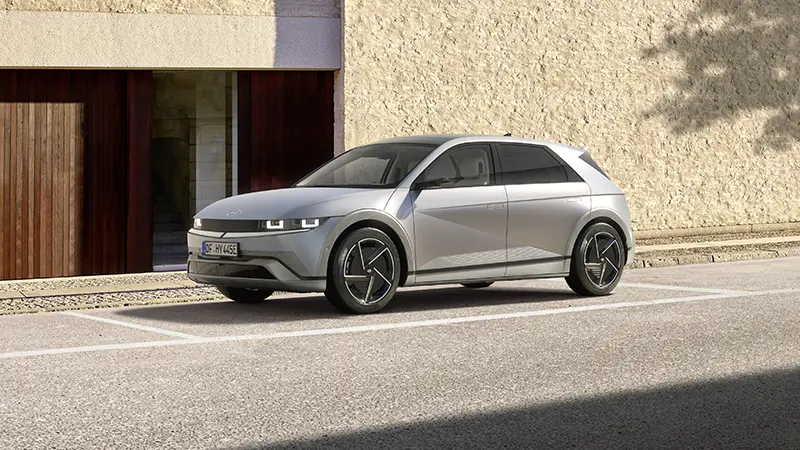
On self-driving, the Model Y vs Ioniq 5 gap is real — and in the US, it favors Tesla.
Full Self-Driving (Supervised) is available right now.
FSD (Supervised) is offered as a $99/month subscription (the one-time purchase option ended February 14, 2026), and new orders typically include a free trial.
Under your supervision, it changes lanes, takes turns, handles on- and off-ramps, and drives on both highways and city streets, improving over the air.
Because the US Model Y is built domestically, there’s no regulatory hold on the feature, and per Tesla, it works out of the box.
Just don’t mistake the name for autonomy.
FSD is “Supervised” for a reason: it still requires a fully attentive driver ready to take over at any moment.
The Ioniq 5 counters with Highway Driving Assist 2 (HDA 2), lane centering, and a blind-spot view monitor (BVM) — a polished Level 2 suite.
It’s genuinely useful, especially for highway commuting, and the included driver aids are generous.
Where the two diverge is scope: the Ioniq 5’s system is built around highway assistance, while FSD attempts the full city-street picture.
For now, both still keep you firmly in the loop. And the longer view tilts further toward Tesla.
Because the capability is largely software-defined, Tesla keeps pushing FSD forward over the air, edging it toward less-supervised operation over time — so this is one area where the Model Y’s lead could widen.
5. Model Y vs Ioniq 5 Options and Interior
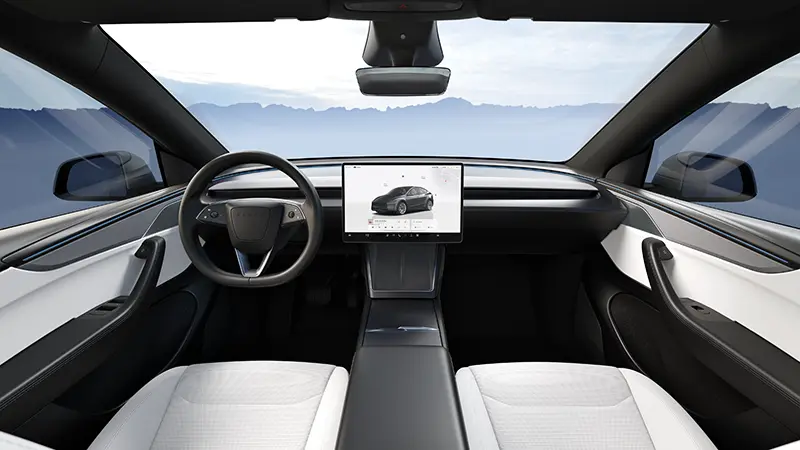
On standard equipment and creature comforts, the Ioniq 5 comes out ahead.
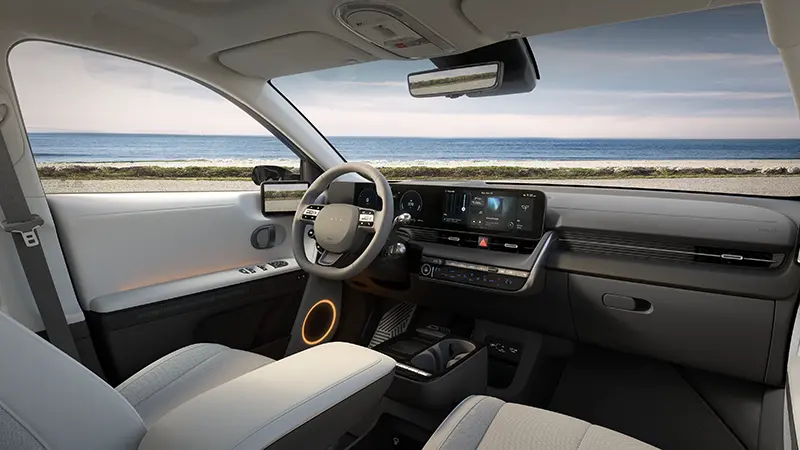
cinch noted that the refreshed Ioniq 5 includes wireless Apple CarPlay and Android Auto as standard and brings back physical buttons, making everyday controls more intuitive.
Our matched Limited trim comes standard with ventilated and heated front seats, dual 12.3-inch displays, a head-up display, and interior/exterior V2L — so the feature count you actually feel is plenty deep.
The Model Y also includes ventilated and heated front seats, and its 15-speaker premium audio and 16-inch central touchscreen still give it the multimedia edge — though the Ioniq 5 Limited’s standard Bose system is no slouch.
The catch: the Model Y leans on a single center screen with no instrument cluster, and it doesn’t support Apple CarPlay or Android Auto — a real sticking point if you live in your phone’s navigation.
Here’s how the two stack up on standard equipment at a similar (~$49K) price point.
| Item | Model Y LR AWD | Ioniq 5 Limited AWD |
|---|---|---|
| Display | 16″ center + 8″ rear (no cluster) | 12.3″ center + 12.3″ cluster |
| CarPlay / Android Auto | Not supported | Wireless (standard) |
| Ventilated / heated front seats | Standard | Standard |
| Audio | 15-speaker premium + subwoofer | Bose 8-speaker + subwoofer |
| V2L | Not supported | Interior + exterior (standard) |
| OTA updates | Broad (incl. performance & UI) | Infotainment-focused |
If phone mirroring, a familiar gauge cluster, and V2L matter to you, the Ioniq 5 is the call.
If you value the audio and a tightly integrated, self-built software experience, the Model Y fits.
☑️ Cargo and Frunk Comparison
Cargo goes to the Model Y.
But there’s a catch in that 854L trunk figure.
Tesla measures its trunk floor-to-ceiling, whereas most automakers — Hyundai included — measure only up to the cargo cover (the shelf below the window line).
That 854L is a packed-to-the-roof number; converted to the cargo-cover (VDA) standard, it’s closer to about 650L.
To compare fairly, you have to line them up on the same yardstick.
| Item | Model Y | Ioniq 5 |
|---|---|---|
| Trunk (to ceiling, Tesla method) | ~854 L | — |
| Trunk (cargo-cover, VDA) | ~650 L | 531 L |
| Frunk | 117 L | 24 L (AWD) |
Even on the same VDA yardstick, the Model Y leads on both trunk (about 650L vs 531L) and frunk, and once you add the under-floor storage, it’s the more practical hauler.
Roominess, though, flips the other way.
The Ioniq 5’s 3,000 mm wheelbase is 110 mm longer than the Model Y’s 2,890 mm, and that extra space translates into more second-row legroom and a more open feel.
Call it this way: the Model Y is roomier for your stuff, the Ioniq 5 is roomier for your passengers.
☑️ Ride and Driving Feel
Both cars are noticeably more refined than the versions they replaced.
The Model Y Juniper uses frequency-selective dampers to tame the firmness it was known for, and the Ioniq 5 facelift beefed up its shocks and body rigidity.
What Car? found the Ioniq 5 soaks up high-speed bumps well on its 19-inch wheels and rides more comfortably than the firmer Model Y.
As for acceleration, 0–60 mph is essentially a tie — both land around 4.6 seconds.
So in a straight line it’s a wash, but the lighter Model Y (about 4,473 lb vs 4,662 lb) with more power on tap feels a touch more eager through corners.
| Item | Model Y LR AWD | Ioniq 5 LR AWD |
|---|---|---|
| Peak power | 331–378 kW (varies by source) | 239 kW (320 hp) |
| 0–60 mph | 4.6 sec | 4.6 sec |
| Curb weight | 2,029 kg (4,473 lb) | ~2,115 kg (4,662 lb) |
| Wheelbase | 2,890 mm | 3,000 mm |
Power and handling go to the Model Y; long-wheelbase stability and rear-seat space go to the Ioniq 5.
For the record, Tesla doesn’t publish the Model Y’s output, so sources peg it anywhere from 331 to 378 kW.
6. Model Y vs Ioniq 5 Cons: The Trade-Offs
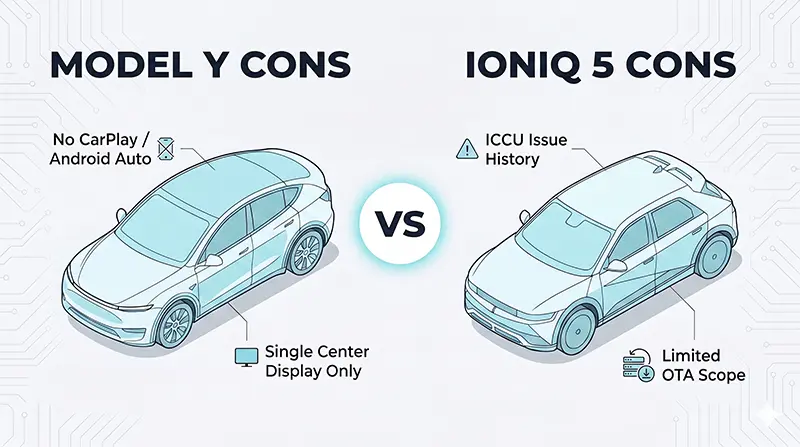
Every car asks you to live with something, and the Model Y and Ioniq 5 ask for different things.
The Model Y’s downsides:
- No CarPlay or Android Auto means no phone nav — and the built-in nav is weak on routing and speed-limit alerts
- No instrument cluster — you’re relying on a single center screen
The Ioniq 5’s are elsewhere:
- First-gen platform baggage, including the ICCU issue
- OTA updates are infotainment-focused, so narrower in scope than the Model Y’s
The ICCU issue was most associated with the 2022–2024 model years.
Hyundai addressed it through NHTSA recalls — software updates plus ICCU and fuse replacement where needed — covering roughly 145,000 Hyundai and Genesis EVs (with tens of thousands more Kia EV6s under a parallel action).
Estimated failure rates are low (around 1%), but some owners reported recurrences even after the fix, so it’s not entirely closed.
It’s not a fundamental flaw in the battery, motor, or chassis, but it’s something to factor in when choosing a first-gen E-GMP car.
The Model Y’s weak spots aren’t permanent either.
Its built-in nav can improve through updates, and with FSD (Supervised) already available, its software story only gets stronger over time.
7. Model Y vs Ioniq 5: The Final Call
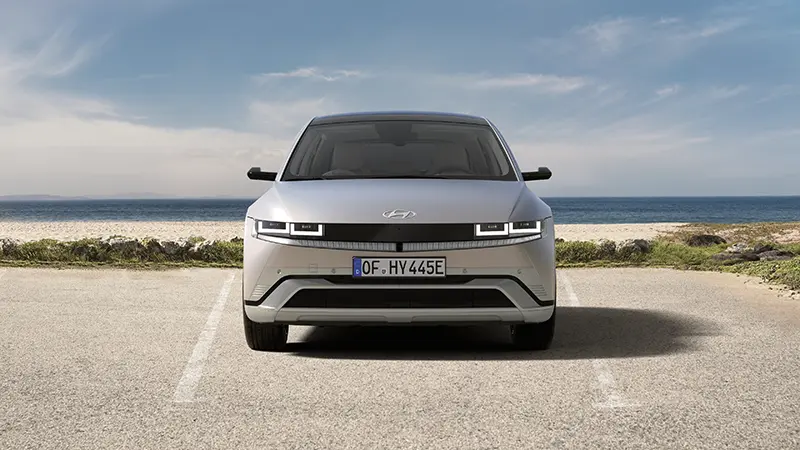
Put it all together and the Model Y takes range, driving fun, cargo, and software, while the Ioniq 5 takes charging speed, standard features, trim choice, and V2L.
Just as Edmunds scored these two even, the decision ultimately comes down to your priorities — and that holds true whichever way you slice it.
| Category | Edge |
|---|---|
| Efficiency & range | Model Y |
| Power & handling | Model Y |
| Cargo space | Model Y |
| Software & OTA | Model Y |
| Charging speed | Ioniq 5 |
| Features & comfort | Ioniq 5 |
| Value & trim range | Ioniq 5 |
| V2L | Ioniq 5 |
| Ride & quietness | Even |
☑️ Resale Value and Service
If you’re thinking long-term ownership and resale, value retention and service matter too.
The Model Y holds its value relatively well and benefits from the Supercharger network.
That said, Tesla’s frequent price changes help drive sales but also bring some resale-value and inventory-volatility risk.
The Ioniq 5 still carries the first-gen ICCU question, but Recharged notes that its long warranty acts as a meaningful safety net against those concerns.
In the US, the high-voltage battery is covered for 10 years/100,000 miles, and Hyundai’s wide dealer and service network helps take the edge off any reliability worries.
💡 FAQ
Q1. Model Y vs Ioniq 5 range — which goes farther by EPA estimates?
By EPA estimates, the Model Y Long Range AWD is rated at 327 miles.
That’s 58 miles more than the matched Ioniq 5 Limited AWD (269 miles), and even the Ioniq 5’s best RWD figure (318 miles) trails the Model Y’s RWD rating of 357 miles.
Q2. Can you use Tesla’s FSD on the US Model Y?
Yes. FSD (Supervised) is available now as a $99/month subscription (the one-time purchase ended in February 2026).
It handles highway and city-street driving under your supervision and keeps improving over the air — but it still requires an attentive driver and is not fully autonomous.
Q3. Which one charges faster?
The 800V Ioniq 5 does 10–80% in about 18 minutes (averaging ~196 kW) versus roughly 27 minutes (averaging ~124 kW) for the Model Y on a 350 kW DC charger.
Both use NACS, so both can tap Tesla Superchargers — though on 400V Superchargers the Ioniq 5’s advantage narrows.
✨ Final Thoughts
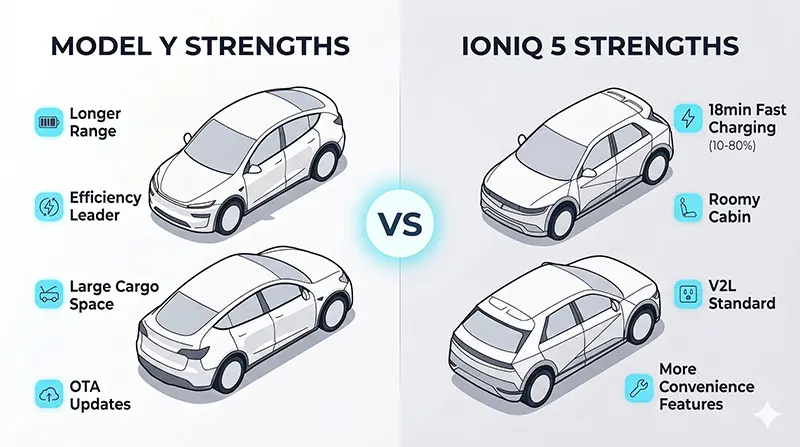
When you boil the Model Y vs Ioniq 5 comparison down, it’s not about better or worse — it’s about direction.
Want long range, driving fun, generous cargo, integrated software, and the next-level convenience of FSD (a paid subscription, but a game-changer)?
Go Model Y.
Want fast charging, a feature-rich cabin, broad trim choice, and a wide dealer network?
The Ioniq 5 is your car.
Personally, if you drive long distances daily and care about what the car’s worth when you sell, I’d point you to the Model Y.
If you want fast charging, a well-equipped cabin at a sharp price, and a satisfying first EV, the Ioniq 5 is the pick.
Just keep an eye on how both brands move on pricing — this matchup could shift again down the road.
So which way are you leaning — Model Y or Ioniq 5?
Drop your thoughts in the comments, and bookmark this page so you’ve got the numbers handy when you’re ready to buy.
![Hyundai IONIQ 5 electric SUV with parametric pixel LED light bar and grille-less front design [AI Concept]](https://smartleadertech.com/wp-content/uploads/2026/06/hyundai-ioniq-5-electric-crossover-marketing-visual-300x169.webp)
![Side-by-side comparison marketing banner featuring Tesla Model Y and BYD Sealion 7 electric SUVs with central VS graphic highlighting their distinct design philosophies [AI Concept]](https://smartleadertech.com/wp-content/uploads/2026/06/tesla-model-y-vs-byd-sealion-7-comparison-300x168.webp)