
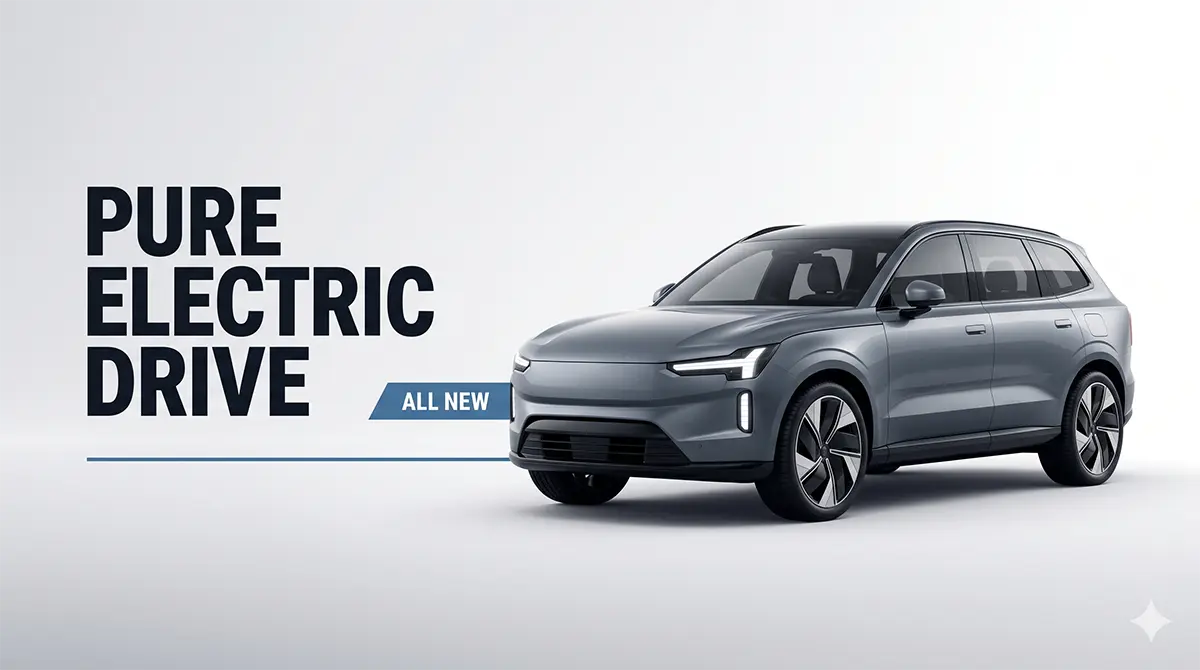
If you’ve been eyeing an EV lately, chances are the name “Volvo EX60” has popped up more than once.
Since its January 2026 reveal, Europe alone has logged over 3,000 orders in the first month — and this isn’t just “another electric SUV.”
This is the Volvo EV that replaces the XC60 — the all-electric successor to the XC60, Volvo’s best-selling nameplate for more than a decade, and the anchor of an entirely new Volvo electric lineup.
In this guide, we’ve packed everything you need to know about the Volvo EX60 — price, specs, release timing, and how it stacks up against the competition.
If you’re sitting on the question “Is this the one I won’t regret?” — you’re in the right place.
ℹ️ This post contains spec-based informational images and AI-generated concept images. Concept images may differ from the actual product.
📌 Key Takeaways
What’s confirmed:
- Up to 400 miles of EPA-estimated range (P12 trim), 810 km WLTP equivalent
- 800V native architecture with 10–80% charging in 18–19 minutes
- European deliveries start summer 2026; US orders open late spring 2026 with deliveries beginning summer 2026
- US starting price around $60,000 (well-equipped)
- Three powertrain variants: P6 / P10 / P12
- Native NACS port — direct access to 25,000+ Tesla Superchargers, no adapter required
Still unknown:
- Full US trim-by-trim pricing (coming in first half of 2026)
- Real-world range in everyday driving conditions
- Long-term software stability after launch
- 📌 Key Takeaways
- 1. Volvo EX60 — Why All the Buzz Right Now
- 2. Global Volvo EX60 Release Date and Rollout
- 3. Three Trims, Core EX60 Specs at a Glance
- 4. SPA3 Platform and Cell-to-Body — What's Actually New
- 5. 800V Architecture and Ultra-Fast Charging — The Real Story
- 6. Three Volvo Firsts
- 7. HuginCore + Google Gemini — A True Software-Defined Car
- 8. Autonomous Driving — Level 2, Hands-On Only
- 9. Volvo EX60 Price and Regional Release Info
- 10. How It Stacks Up — BMW iX3, Mercedes-Benz GLC EV, Tesla Model Y
- 11. Prototype Drives — What the Global Press Is Saying
- 12. Three Things to Check Before You Buy
- 💡 FAQ
- ✨ Final Thoughts
1. Volvo EX60 — Why All the Buzz Right Now
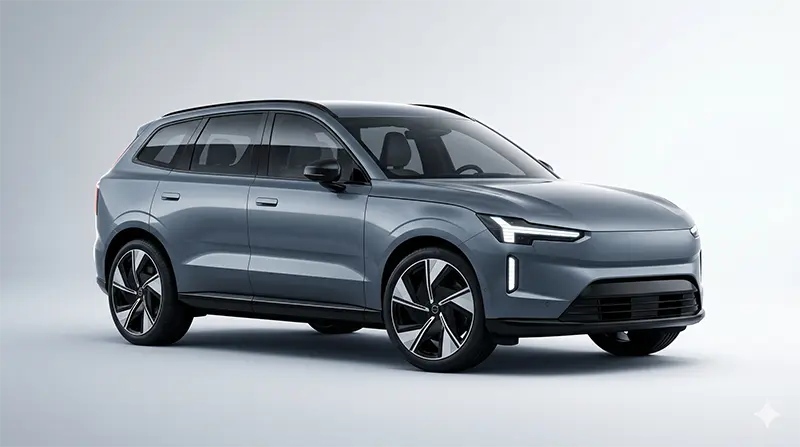
When Volvo calls the EX60 “the most important car in the brand’s lineup,” the reasoning is straightforward: this is the all-electric successor to the XC60.
The XC60 has been a pillar of Volvo’s global sales for over a decade, and handing that baton to the EX60 signals a full pivot into the Volvo electric era.
The shift is both technical and symbolic.
While the EX90 and ES90 ride on the SPA2 platform, the EX60 is the first Volvo built on the brand-new SPA3 architecture — and the first Volvo where the battery pack, electric motor, software, and platform were all developed in-house.
CTO Anders Bell told Autocar that the Volvo EX60 is Europe’s first genuine software-defined vehicle (SDV) — a claim grounded in exactly this kind of end-to-end control.
Europe’s initial response backed up the hype.
Sweden alone pulled in over 3,000 orders within a month of the reveal, and Volvo officially confirmed it’s ramping up 2026 production at the Torslanda plant in response.
2. Global Volvo EX60 Release Date and Rollout
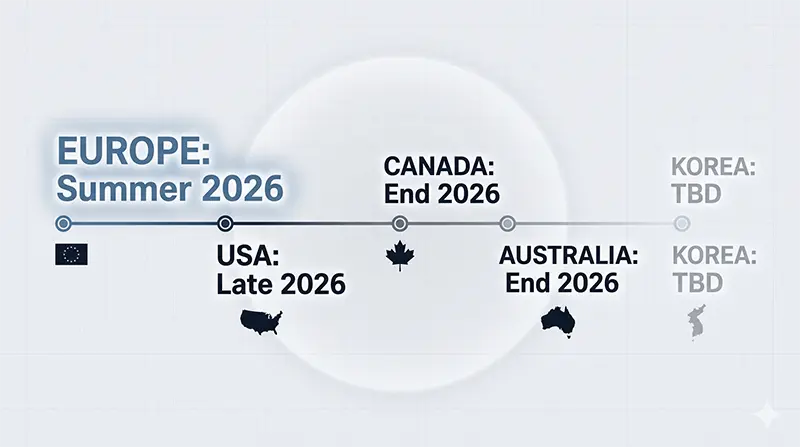
The Volvo EV lineup’s newest member follows a staggered global rollout:
- Europe: Production starts spring 2026, deliveries begin summer
- United States: Orders open late spring 2026, deliveries summer 2026
- Canada: Late 2026 launch
- Australia: Late 2026 launch
Volvo Cars USA has introduced the Volvo EX60 as the brand’s first mid-size, fully electric luxury SUV, with Europe getting first priority and the US launch following closely behind.
☑️ US Volvo EX60 Release Date — What to Expect
As of April 2026, the rollout timeline is clearer than ever: Volvo USA confirms orders open late spring 2026, with first customer deliveries this summer.
Test drives at US dealerships are slated to begin in the second half of 2026.
That’s an aggressive pace for a new platform — and it’s no accident.
The Volvo EX60 is the first Volvo to launch with a native NACS charging port, arriving just as the US Tesla Supercharger network has fully opened to non-Tesla EVs.
Put simply: you’ll be able to configure one in a matter of weeks, take delivery before the end of summer, and plug into more than 25,000 DC fast chargers on day one.
The EX60 will land squarely in the premium mid-size EV segment — where it has to answer to the BMW iX3, Mercedes-Benz GLC EV, Audi Q6 e-tron, and yes, a certain Tesla Model Y.
3. Three Trims, Core EX60 Specs at a Glance
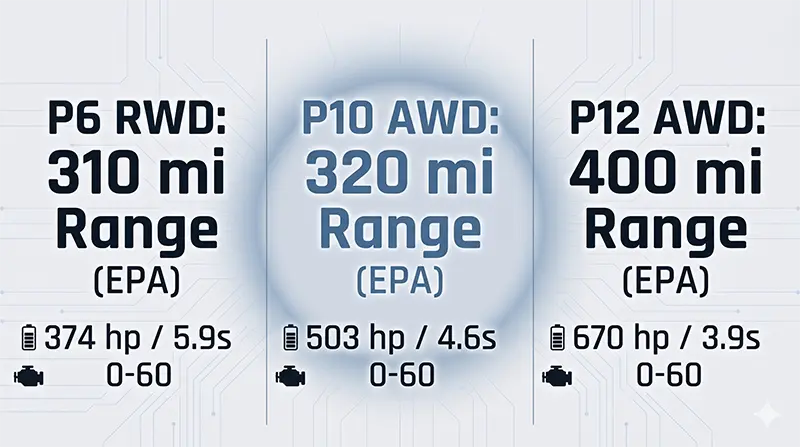
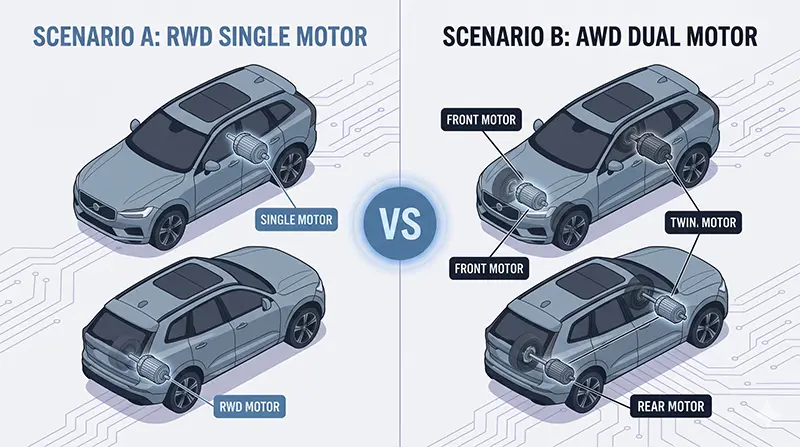
The Volvo EX60 launches with three powertrains: P6 RWD, P10 AWD, and P12 AWD.
Range and power scale cleanly across the lineup, which keeps the choice pretty simple.
| Spec | P6 RWD | P10 AWD | P12 AWD |
|---|---|---|---|
| Drivetrain | Rear-wheel drive | All-wheel drive | All-wheel drive |
| Battery (usable/total) | 80 / 83 kWh | 91 / 95 kWh | 112 / 117 kWh |
| Battery supplier | Sunwoda | Sunwoda | CATL |
| Power | 374 hp | 503 hp | 670 hp |
| Torque | 480 Nm (354 lb-ft) | 711 Nm (524 lb-ft) | 791 Nm (583 lb-ft) |
| 0–60 mph | 5.7 sec | 4.4 sec | 3.8 sec |
| Range (EPA) | 310 mi | 320 mi | 400 mi |
| Range (WLTP) | 620 km | 660 km | 810 km |
| Peak charging | 320 kW | 370 kW | 370 kW |
| 10–80% charge | 18 min | 18 min | 19 min |
| Top speed | 112 mph / 180 km/h (electronically limited, all trims) |
Source: InsideEVs
Note: US configurations typically pair these powertrains with Plus or Ultra option packages. Full trim-and-package pricing lands in the first half of 2026.
☑️ Range — What 400 Miles EPA Actually Means
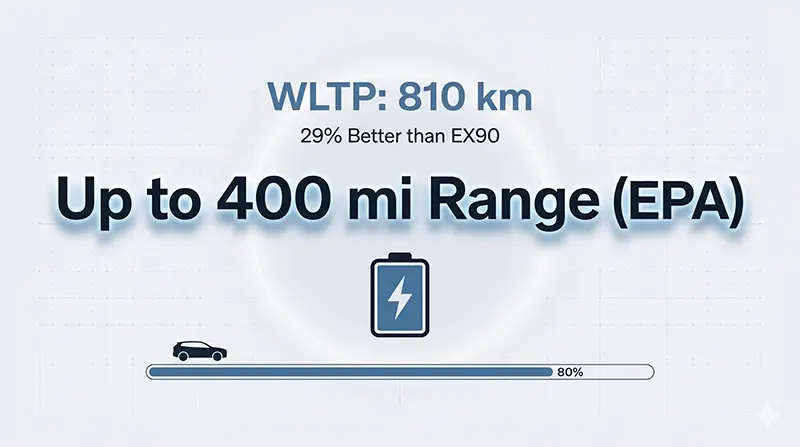
The EX60 P12’s 400-mile EPA-estimated range is the headline figure — and for context, that’s 810 km on the more generous WLTP cycle.
Here’s the sharper comparison: Volvo’s larger three-row EX90 tops out at around 310 miles EPA.
The EX60 P12 delivers roughly 29% more range than the bigger SUV, which is almost backwards from what you’d expect.
For road-trippers and anyone stretching between charging stops, that’s a real-world game-changer.
☑️ Charging Speed — Fast Enough Even on 350 kW Infrastructure
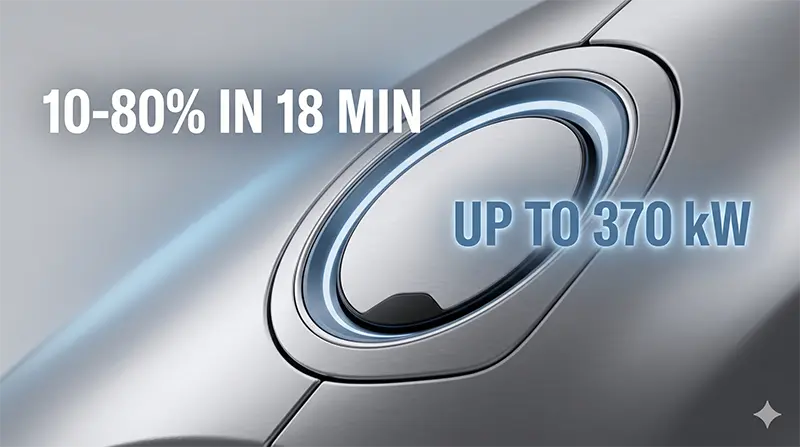
Volvo’s press materials state that with 400 kW DC fast charging, up to 210 miles (340 km) of range can be added in just 10 minutes.
Here’s the catch: each trim has a different maximum intake.
P6 tops out at 320 kW, while P10 and P12 hit 370 kW. That 400 kW headline figure is best understood as the ideal-case marketing number — not what you’ll see on every session.
The official 18–19 minute 10–80% charge times also assume a 400 kW environment.
On the more common 350 kW infrastructure across the US — think flagship Electrify America and EVgo stations — expect about 1–2 extra minutes beyond the official figures.
The 350 kW network is expanding fast stateside, with major providers pushing flagship stations onto interstate corridors.
Tesla Supercharger V4 stations are also hitting 250 kW+ — and the Volvo EX60’s NACS port means you plug in without an adapter.
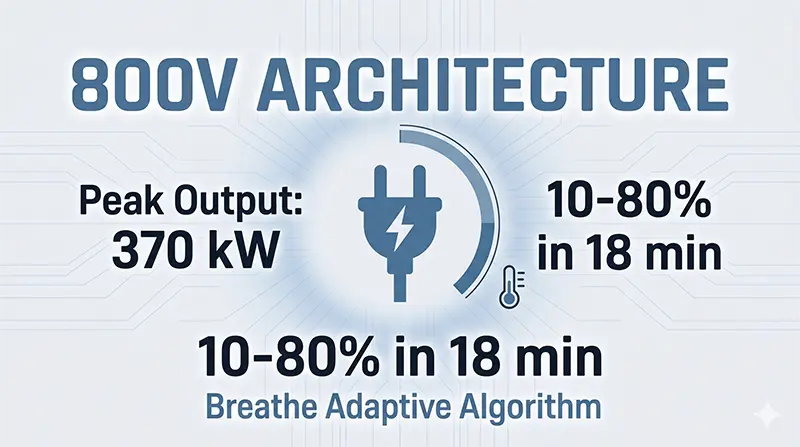
What really stands out is the adaptive charging algorithm developed by UK battery-software firm Breathe — a Volvo-first integration.
This algorithm reads battery health in real time and dynamically adjusts charging speed, cutting 10–80% charge times by 15–30% compared to traditional rule-based “step charging.”
The gains grow larger in cold weather, which is a meaningful advantage for drivers from Minnesota to Maine — anywhere winter charging performance tends to be a dealbreaker.
☑️ Power and Acceleration — 670 HP in a Family SUV
The P12’s biggest flex is straight-up power.
670 horsepower ties it with the ES90 Twin Motor Performance for Volvo’s most powerful model ever, and 0–60 mph in 3.8 seconds is sports-car territory.
That said, Volvo isn’t positioning this as a show-off number.
The framing is about “effortless highway passing and relaxed cruising” — practical rather than flashy. And honestly, even the P10 has all the juice most drivers will ever want.
One thing worth flagging: adaptive dampers are P10 and P12 only. The P6 gets passive FSD dampers instead.
4. SPA3 Platform and Cell-to-Body — What’s Actually New
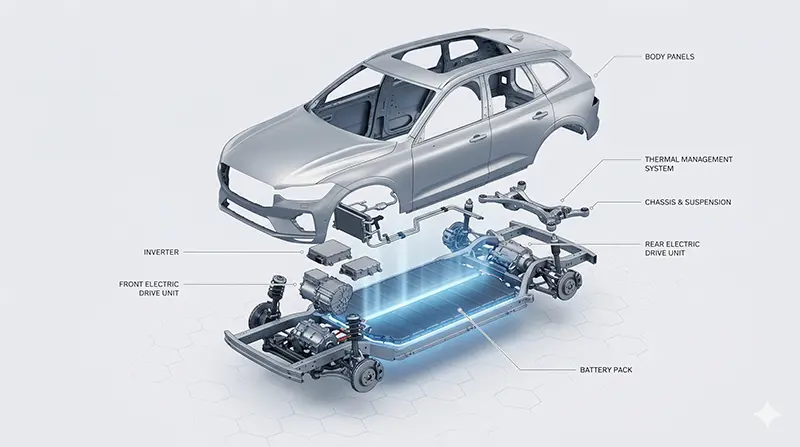
The biggest technical shift in the EX60 is the platform itself.
Previous Volvo EVs rode on SPA2, which was derived from a combustion-capable architecture. SPA3 was designed as an EV platform from day one.
Here’s what that means in practice:
- More interior space in the same D-segment footprint — 4,803 mm length and 2,970 mm wheelbase deliver E-segment-level interior room
- Mega-cast rear underbody — the rear section is cast as a single aluminum piece instead of welding together 60–100 smaller parts; a first for a European production vehicle
- Cell-to-body (CTB) integration — the battery pack becomes part of the vehicle’s structure, boosting energy density 20% and cutting CO2 footprint by 37%
- Native 800V architecture — simultaneously enables ultra-fast charging and higher efficiency
One thing worth considering: the tradeoff side of mega-casting.
When a single large cast component is damaged in a collision, repair costs could run higher than on traditional Volvo SUVs.
5. 800V Architecture and Ultra-Fast Charging — The Real Story
The EX60’s native 800V architecture matters in three practical ways.
First, ultra-fast chargers (350 kW and up) become dramatically more useful.
A 10–80% charge in 18–19 minutes is roughly the time it takes to grab a coffee and hit the restroom at a highway stop.
Second, there’s a catch on legacy 400V infrastructure.
When an 800V vehicle plugs into a 400V charger, the onboard converter has to step the voltage up — which drops charging power in the process.
Third, cold-weather charging is notably better.
The Breathe algorithm we mentioned earlier prevents the typical winter battery degradation while maintaining charging speed — a real deal for anyone logging long interstate drives through a New England or Midwest winter.
On charging hardware: the Volvo EX60 is the first Volvo EV with a native NACS port.
Owners of existing EX90 and EX40 models need a separate adapter (around $230) to use Tesla Superchargers.
EX60 owners just plug in — direct access to more than 25,000 Superchargers, no adapter required.
One caveat: Tesla V3 Superchargers run at 400V, so your 800V EX60 will be capped at 150 kW at those stations.
V4 chargers — which are rolling out now — support the full speed.
Battery sourcing: Sunwoda (China) supplies the P6 and P10 packs, while CATL handles the P12.
Volvo backs the battery with a 10-year warranty — two years longer than the BMW iX3’s 8-year coverage.
6. Three Volvo Firsts
The EX60 introduces three Volvo-first — and in one case, world-first — technologies.
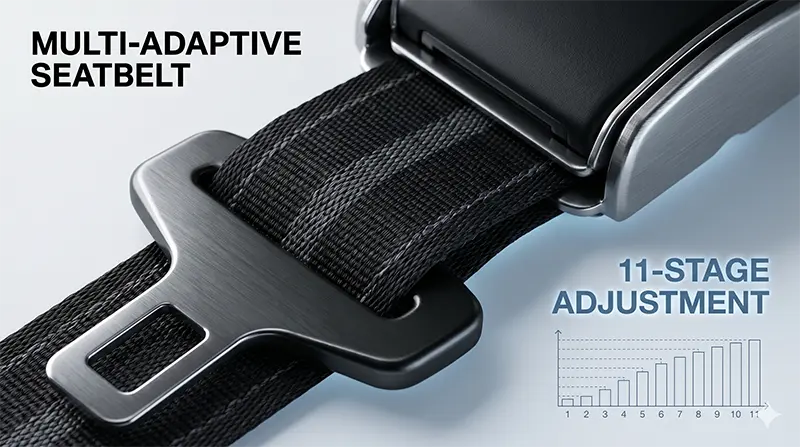
☑️ Multi-Adaptive Safety Belt (World-First Production Application)
Seatbelts restrain you in a crash, but grip too hard and they can cause injury on their own.
That’s why modern belts include load-limiting technology — the belt eases off slightly once force exceeds a threshold, reducing peak chest pressure.
Traditional belts adjust load limiting across 3 levels. The EX60 expands that to 11 levels, letting the system respond with far more precision to occupant size and crash conditions.
Behind the scenes: Volvo’s 50+ years of accident research and a dataset of over 80,000 real-world crashes feed the logic.
Here’s the genuinely wild part — OTA updates keep improving it over time.
A mechanical safety system that continues evolving through software is basically unprecedented in automotive history.
As more crash data gets collected, the protection logic gets smarter — and your car keeps benefiting throughout its entire lifespan.
Volvo’s head of safety called this “the biggest seatbelt upgrade since Volvo invented the three-point belt in 1959.”
The technology also earned a spot on TIME’s Best Inventions of 2025, landing external validation beyond the auto industry.
☑️ Wing-Grip Door Handle (Volvo’s First Electronic Design)
The EX60’s door handles skip the traditional pull-to-open mechanism. A light press is all it takes — an electronic signal opens the door.
When you press, you get a short haptic “zzzt” — like a game controller vibration — confirming the latch has released.
The handles also sit flush with the body for better aerodynamics.
Volvo says this one detail alone adds roughly 1.5 miles of range per full charge.
There is a debate worth knowing about. Electronic door handles raise concerns about access when power is cut, and the US SAFE Exit Act is currently being discussed to regulate this.
Volvo has engineered two backup layers.
First, redundant DC-DC converters.
DC-DC converters take high-voltage battery power (800V) and step it down to the 12V that powers your electronics — door handles, lights, computers, all of it.
The EX60 places two separate converters under the rear seats — one on each side. If one fails, the other provides backup 12V power.
That eliminates the “electronic handle fails when power is lost” failure mode at the source.
Second, the interior handles have mechanical backup.
In a true power-loss emergency, pulling the interior handle firmly releases the latch through a direct mechanical linkage — no electronics involved.
Normal operation: light pull, electronic release. Emergency: firm pull, mechanical release.
It’s a well-engineered setup.
The combination of redundant power and mechanical backup should effectively eliminate real-world access failures.
That said, with the SAFE Exit Act and similar electronic door handle regulations under discussion in the US, the specific implementation may evolve as the regulatory picture clarifies.
☑️ Active Noise Cancellation (Volvo’s First Detailed Deployment)
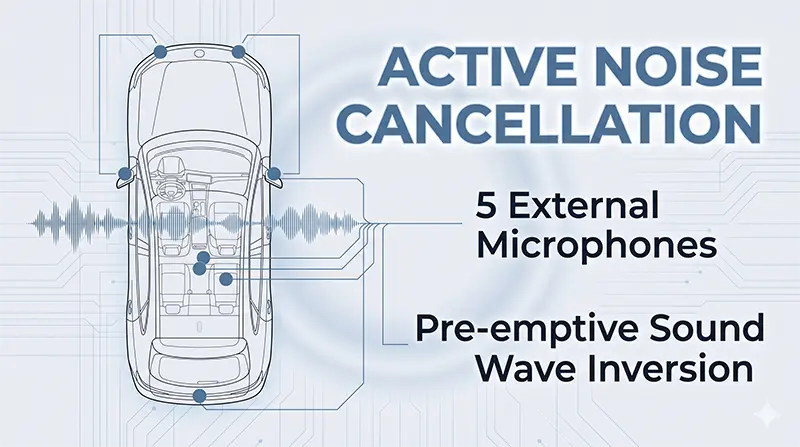
Active noise cancellation (ANC) isn’t new — BMW, Mercedes-Benz, Audi, and Lexus have all fielded variants for years.
Most competing systems use cabin-mounted microphones to detect noise, then cancel it with counter-phase sound waves.
The EX60 takes a different approach: five exterior microphones mounted on the outside of the car.
That lets the system catch noise at the source — wind turbulence, tire roar — before it enters the cabin, giving the interior speakers more precise cancellation data.
A Jalopnik reviewer tested it on a 3.7-mile high-speed banked oval in Sweden and described the cabin as “like being inside a church” — meaning wind noise was barely audible even at highway-plus speeds.
7. HuginCore + Google Gemini — A True Software-Defined Car
The EX60’s brain is HuginCore, Volvo’s in-house computing architecture.
It runs on NVIDIA Drive AGX Orin (254 TOPS of processing power) paired with Qualcomm Snapdragon Cockpit.
The EX60’s real differentiator is native Google Gemini AI integration.
“Native integration” here doesn’t mean “downloaded an app.” It means the hardware and AI were designed together from the start, operating as a single system.
Compared to competitors, the difference becomes obvious.
BMW iDrive X layers Alexa or ChatGPT on top of its own voice assistant as an external service.
Mercedes MBUX runs “Hey Mercedes” as the primary assistant with Google services partially layered on.
Volvo, meanwhile, has been working with Google for nearly a decade on Android Automotive OS.
The result: Gemini in the EX60 pulls data from vehicle sensors alongside your email, calendar, maps, and music — all at once.
Ask “find highly rated chargers near my meeting next week,” and Gemini reads your calendar for date and location, searches nearby chargers, and ranks them by review scores — in a single response.
No app-hopping, no copy-pasting addresses between tabs.
Real-world use cases include:
- Pull a hotel address from an email and drop it straight into navigation
- Check if something you just bought will fit in the trunk
- Find a charger along your route that also happens to be near great food
- Look up a song when you only remember part of the lyrics
Prototype test drivers have been consistent about one thing: “virtually no response lag.”
That said, Volvo had some rough patches with EX90’s early software, so long-term stability on production units will need real-world validation.
One more notable call: the EX60 does not include LiDAR.
Volvo terminated its contract with LiDAR supplier Luminar in November 2025, so the EX60 relies on a camera-and-radar-based ADAS architecture.
The most extreme version of this philosophy is Tesla.
Since 2021, Tesla has stripped out radar entirely, running “Tesla Vision” — autonomous driving on cameras alone.
Elon Musk argues sensor fusion creates more confusion than clarity.
On the other side, Waymo and Cruise maintain that camera + radar + LiDAR together deliver the safest outcome.
Volvo sits in the middle.
BMW iX3, Mercedes GLC EV, and Polestar are converging on the same approach, which means LiDAR is no longer a true differentiator in the premium EV segment.
8. Autonomous Driving — Level 2, Hands-On Only
The EX60’s autonomous capability stops at Level 2.
Volvo’s Pilot Assist delivers adaptive cruise and lane centering, but your hands have to stay on the wheel and your eyes on the road.
Unlike Tesla FSD or Mercedes Drive Pilot (Level 3), hands-free operation is not offered.
Hardware-wise, there’s headroom.
The EX60 uses the same NVIDIA Drive AGX Orin chip as the EX90, which means plenty of processing capacity in reserve.
OTA updates are lined up to push capability forward.
Volvo has stated plans to add hands-free Level 2+ functionality through future updates.
9. Volvo EX60 Price and Regional Release Info
Here’s the confirmed pricing picture across key markets:
| Market | Price |
|---|---|
| United States | Around $60,000 (well-equipped) |
| Sweden P6 | 689,000 SEK |
| Sweden P10 | 729,000 SEK |
| Sweden P12 | 809,000 SEK |
| UK P10 | £59,860 |
| UK P12 | £64,860 |
| Germany (starting) | From €62,990 |
| Canada | From CAD 77,500 |
Sources: Volvo Cars USA, Volvo UK, Reuters
The EX60’s real rivals aren’t the Tesla Model Y.
At this price point, it’s squarely in the premium mid-size EV bracket — trading punches with the BMW iX3, Mercedes-Benz GLC EV, and Audi Q6 e-tron.
☑️ What US Buyers Can Expect
Volvo Cars USA has confirmed a starting price of approximately $60,000 for a well-equipped EX60, with full trim-by-trim pricing landing in the first half of 2026.
The online configurator goes live this spring, with test drives opening in the second half of the year.
The “well-equipped around $60,000” figure is Volvo’s guidance — so entry configurations may dip slightly below that line, while fully-loaded P12 builds will push well above it.
For context, here’s how the Volvo EX60 price stacks up against the premium mid-size EV competition in the US:
- Tesla Model Y Premium AWD: $48,990 MSRP
- Tesla Model Y Performance: $57,490 MSRP
- BMW iX3 50 xDrive: ~$60,000 (launching summer 2026)
- Mercedes-Benz GLC EV (400 4Matic): mid-$60,000s expected (launching H2 2026)
- Audi Q6 e-tron: $65,095 and up (currently on sale)
Final pricing may vary based on destination charges, local taxes, and dealer fees. Your local Volvo retailer will have the latest quote.
10. How It Stacks Up — BMW iX3, Mercedes-Benz GLC EV, Tesla Model Y
When the EX60 arrives in US dealerships this summer, these are the vehicles it’ll be cross-shopped against.
| Spec | Volvo EX60 P10 | BMW iX3 50 xDrive | Mercedes-Benz GLC EV | Tesla Model Y Premium AWD |
|---|---|---|---|---|
| US price (est./MSRP) | ~$60,000 starting | From $60,000 | TBA (est. mid-$60Ks) | $48,990 |
| Range | 320 mi EPA | Up to 400 mi EPA | WLTP 713 km (EPA TBA) | 327 mi EPA |
| Peak charging | 370 kW | 400 kW | 330 kW | 250 kW |
| 10–80% charge | 18 min | 21 min | ~22 min | – |
| Positioning | Family-first premium, quietness | Driver engagement, new tech | Luxury comfort | Value, software ecosystem |
☑️ vs. Tesla Model Y
The EX60 sits roughly $11,000 above the Model Y Premium AWD — no contest on sticker price.
What the Volvo delivers instead: a step up in interior materials, cabin quietness, safety hardware, and family-oriented usability.
This isn’t a “better bang for the buck” play against the Tesla. It’s a “nicer daily life” upgrade. Different target, different shopper.
☑️ vs. BMW iX3
The iX3 50 xDrive punches hard on range and charging: up to 400 miles EPA and 400 kW peak charging.
It’s also the more engaging drive and packs BMW’s latest digital interface.
The EX60 counters with safety leadership (Multi-Adaptive Safety Belt) and cabin quietness (exterior-microphone ANC), plus a clearer family-SUV positioning.
Both start around the same $60K neighborhood, so this one really comes down to “driver’s car or family hauler.”
☑️ vs. Mercedes-Benz GLC EV
The GLC EV is on close specs: a 94 kWh battery, 483 hp, WLTP 713 km (roughly 443 miles, pending EPA confirmation), and 10–80% charging in about 22 minutes.
It arrives in the US in the second half of 2026.
Mercedes’ calling card is the interior — reviewers have praised the GLC EV’s ride comfort and S-Class-adjacent cabin materials.
Expected to land in the mid-$60K range, it’ll likely carry a slight price premium over the EX60.
☑️ vs. Audi Q6 e-tron
The Q6 e-tron starts at $65,095 with the rear-drive model and climbs into the SQ6 e-tron at $70K+, giving buyers more trim variety than the EX60 lineup.
The cabin goes hard on screens — an 11.9-inch driver display, 14.5-inch center touchscreen, and an optional 10.9-inch passenger display — making it one of the more visually tech-forward interiors in the segment.
The EX60 plays a different game: Volvo-signature restraint and livability over screen theater.
It’s also worth noting that Volvo’s 10-year battery warranty runs two years longer than Audi’s 8-year coverage.
11. Prototype Drives — What the Global Press Is Saying
Following the March 2026 prototype ride-along sessions at Volvo’s Swedish test track — where media sat shotgun in pre-production cars — reviewer takeaways have been remarkably consistent.
The common threads: “quietness” and “build quality.”
Jalopnik described the cabin as “library-quiet even above 100 mph (160 km/h).”
Carbuzz went further, with the reviewer noting the EX60 felt “more solid than any Volvo I’ve driven in the past 12 years.”
The shared conclusion across outlets: build quality matches or exceeds the EX90.
The one consistent critique: sparse physical buttons and heavy touchscreen reliance.
Hunting through menus for climate or volume while driving is a real-world frustration, and you’ll feel it during the first few weeks of ownership.
It gets easier with familiarity, but there’s a clear adjustment period.
12. Three Things to Check Before You Buy
☑️ Risk 1 — Software Reliability
The EX60’s biggest risk is software stability.
Volvo’s EX90 and EX30 both had rough launches — and the EX30 got recalled for over 40,000 units in February 2026 over battery fire concerns.
After the EX90 stumble, CTO Bell made a commitment: no more launching cars with brand-new software stacks dropped in all at once.
The EX60 reflects that shift, but real production performance needs long-term validation once early customers start reporting in.
☑️ Risk 2 — Real-World Range Efficiency
On paper, the EX60 leads.
In reality, the owner-community chatter is consistent: “BMW tends to overdeliver on its ratings, while Volvo sometimes underdelivers.“
How much of that EPA 400-mile P12 rating you actually see at 75 mph on I-95 in July won’t be clear until real-world data rolls in.
Winter matters especially — cold-weather range drop-off is a huge variable for buyers in northern states, and even more so if you’re clocking serious highway miles.
Volvo claims the Breathe algorithm improves cold-weather charging by 30%, but that’s another claim that’ll need validation once EX60s are on the road through a real winter.
☑️ Risk 3 — First Model Year Consideration
The question that keeps coming up in owner communities: “Do I jump on a first-year EX60, or wait for the second model year?”
SPA3 is a clean-sheet platform.
Mega-casting and cell-to-body are Volvo-firsts. This is genuinely uncharted territory for any Volvo EV buyer.
HuginCore + Gemini hasn’t been tested in the wild.
If you’re the early-adopter type, the first-year EX60 is right up your alley.
If stability is your top priority, waiting 6–12 months for real-world owner feedback is the safer move.
💡 FAQ
✨ Final Thoughts
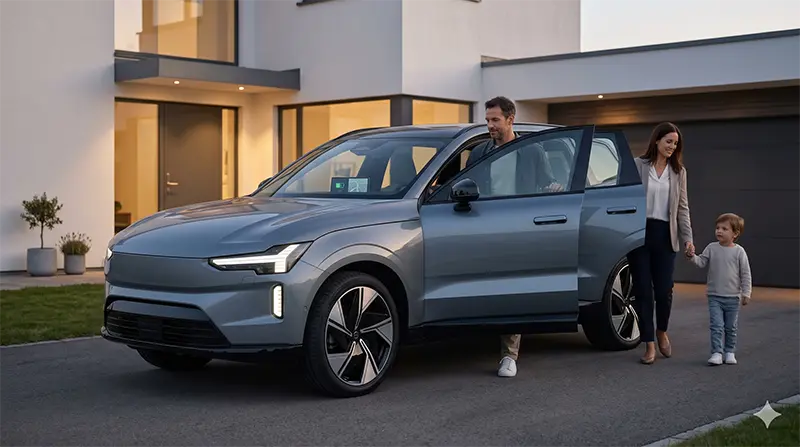
The Volvo EX60 is shaping up as one of the most anticipated Volvo electric launches in the 2026 premium mid-size segment.
A 400-mile EPA-estimated range (P12), 800V ultra-fast charging, the world-first Multi-Adaptive Safety Belt, and an entirely new SPA3 platform — the tech story is legit compelling.
That said, this isn’t a blind-order-it-now car.
With first US deliveries just months away, there’s real value in letting early European deliveries play out so software stability gets some real-world validation first.
Here’s who the EX60 makes the most sense for:
The Tesla owner looking to step up into something more premium and family-oriented.
The BMW iX3 shopper who wants something less aggressive and more family-friendly.
Once European deliveries kick in and real-world range, software stability, and ownership data accumulate, the EX60 has serious potential to become the definitive premium family EV.
If you need delivery in the next 3 months, want something under $50K, or prize proven reliability above all, a different EV is probably your better play right now.
Where do you land on this one? Drop your thoughts below — and if you’re eyeing a late-summer purchase, bookmark this page for launch day.
![Split-screen comparison banner featuring Tesla Model Y and Hyundai Ioniq 5 electric SUVs side by side [AI Concept]](https://smartleadertech.com/wp-content/uploads/2026/06/model-y-ioniq-5-comparison-banner-300x169.webp)
![Hyundai IONIQ 5 electric SUV with parametric pixel LED light bar and grille-less front design [AI Concept]](https://smartleadertech.com/wp-content/uploads/2026/06/hyundai-ioniq-5-electric-crossover-marketing-visual-300x169.webp)
![Side-by-side comparison marketing banner featuring Tesla Model Y and BYD Sealion 7 electric SUVs with central VS graphic highlighting their distinct design philosophies [AI Concept]](https://smartleadertech.com/wp-content/uploads/2026/06/tesla-model-y-vs-byd-sealion-7-comparison-300x168.webp)