
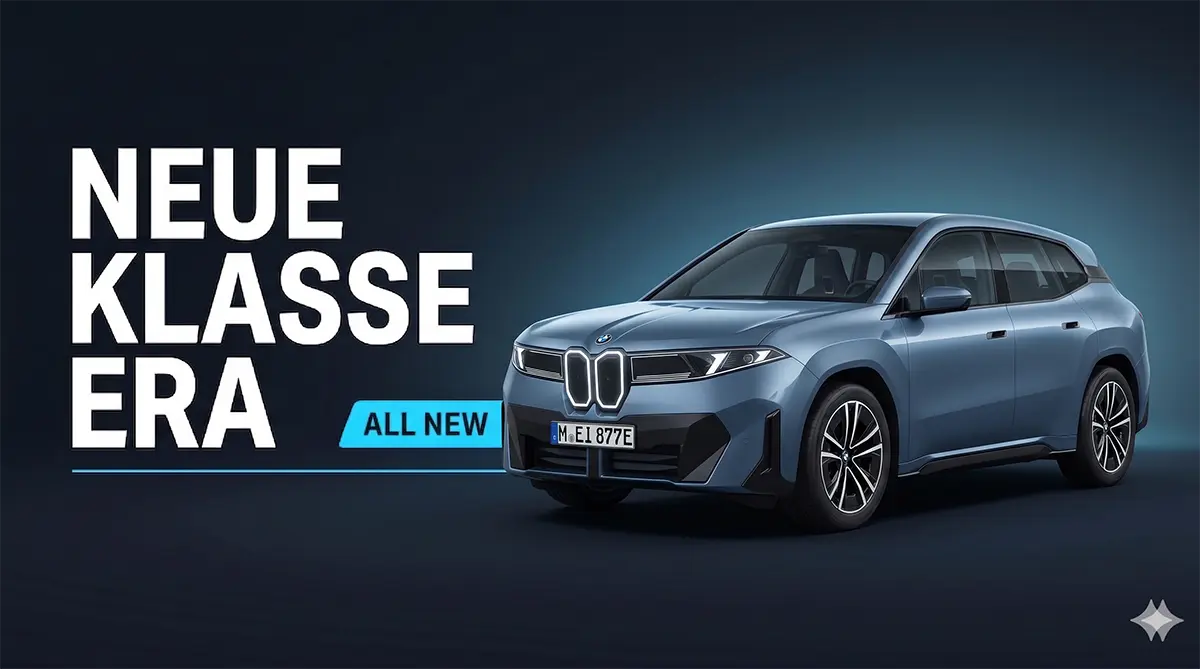
The phrase “BMW redesigned this electric vehicle from the ground up — for the first time in 60 years” isn’t marketing fluff.
The second-generation BMW iX3 picked up four global “Car of the Year” titles for 2026 and has racked up over 50,000 cumulative orders in Europe, pushing BMW’s Hungarian Debrecen plant onto a two-shift production schedule.
For US buyers, this is BMW’s first iX3 ever — the first-generation model was never sold stateside.
First US deliveries are slated for late September to early October 2026, ordering opens in June, and the BMW iX3 price is expected to start around $60,000 for the 50 xDrive.
For BMW USA, this isn’t just another launch — it’s the first Neue Klasse model to hit American driveways, and a litmus test for the entire BMW EV strategy.
Can the car actually live up to that weight of expectation? Here’s everything you need to know — specs, BMW iX3 price tiers, technology, and how it stacks up against the Volvo EX60, Mercedes GLC EV, and Audi Q6 e-tron — in one place.
ℹ️ This post contains spec-based informational images and AI-generated concept images. Concept images may differ from the actual product.
📌 Quick Summary
- Platform: Neue Klasse (NA5) — BMW’s first dedicated EV architecture, built at the Debrecen plant in Hungary on a two-shift schedule
- BMW iX3 range: Up to 400 miles EPA for the 50 xDrive (500 miles WLTP for context)
- Charging: 800V native, 400 kW peak DC, 10–80% in 21 minutes, ~230 miles added in just 10 minutes
- NACS: Native NACS port — direct access to Tesla Superchargers, no adapter required
- Awards: 4 global “Car of the Year” titles for 2026, plus the 2025 Goldenes Lenkrad Innovation Award
- US pricing: iX3 50 xDrive starts around $60,000 (preliminary). Pricing pages go live late April–early May 2026, ordering opens June 2026, US-spec production starts early September 2026, and first deliveries hit customers late September to early October 2026
- 📌 Quick Summary
- 1. Neue Klasse Platform — A 60-Year Reset From the Ground Up
- 2. Trim Comparison: iX3 40 RWD vs iX3 50 xDrive
- 3. 400 kW DC Fast Charging — 230 Miles in 10 Minutes
- 4. Heart of Joy and Panoramic iDrive — The Software Difference
- 5. 4-Time Global Car of the Year — What the Awards Mean
- 6. US Pricing and Launch Timeline
- 7. Competitor Comparison — Volvo EX60, Mercedes GLC EV, Audi Q6 e-tron
- 8. ADAS and Autonomous Driving — Highway Assistant
- 9. Global Test Drive Reviews — Praises and Concerns
- 💡 FAQ
- ✨ Wrap-Up
1. Neue Klasse Platform — A 60-Year Reset From the Ground Up
The first-generation iX3 — which was never sold in the US — shared its underpinnings with the gas-powered X3.
Its battery was bolted onto a chassis that was never designed for it, eating into ground clearance, killing any chance of a frunk, and limiting the car to rear-wheel drive.
It was, frankly, a combustion car forced into an EV body — a compromise from the start.
The second-gen BMW iX3 is a different animal.
Neue Klasse is BMW’s first ground-up platform built exclusively for every next-generation BMW EV.
That means a flat floor that opens up rear legroom, a 2-cubic-foot frunk, and a “pack-to-open-body” design that integrates the battery pack directly into the structure of the car.
According to BMW’s own data, the new architecture cuts energy losses by 40%, costs by 20%, and weight by 10% compared to the previous Gen5 electric drivetrain.
BMW CEO Oliver Zipse has called Neue Klasse “the single largest investment in BMW’s 100-year history.”
The platform is set to underpin more than 40 new models and updates by the end of 2027.
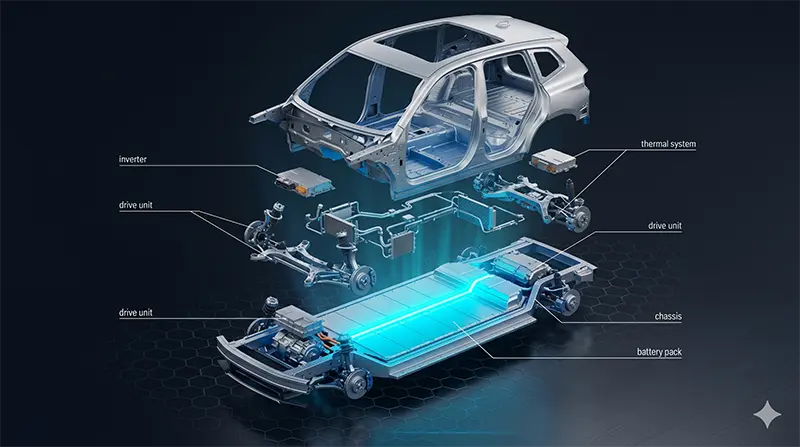
☑️ Three things a dedicated EV platform actually changes
First, space. The flat floor opens up rear legroom, and there’s now a 2-cubic-foot frunk under the hood for charging cables or a spare bag.
Top Gear summed it up neatly: the iX3 has X3-segment exterior dimensions but feels closer to an X5 inside.
Second, weight savings. The switch to 800V architecture means thinner wiring, and BMW reorganized the harness routing throughout the vehicle.
Total wiring length dropped by roughly 600 meters, and overall wiring weight came down 30%.
Third, efficiency. The iX3 runs roughly 14.6–17.9 kWh per 100 km on the WLTP cycle — about 3.5–4.3 mi/kWh in US terms, with peaks around 4.1 mi/kWh per BMW’s own figures.
The Audi Q6 e-tron, by comparison, sits at 18–20 kWh/100 km (roughly 3.1–3.4 mi/kWh). That efficiency advantage is what gives the iX3 its range edge.
2. Trim Comparison: iX3 40 RWD vs iX3 50 xDrive
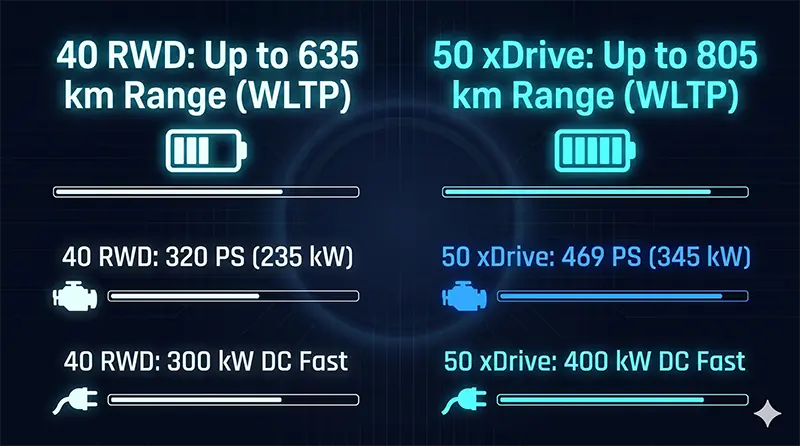
The second-gen iX3 launches in two trims globally: a lighter, more affordable 40 RWD for buyers who want efficiency and balance, and the 50 xDrive for shoppers who want long range and all-wheel drive.
| Spec | iX3 40 RWD | iX3 50 xDrive |
|---|---|---|
| Drivetrain | Rear-wheel drive | All-wheel drive |
| Usable Battery | 82.6 kWh | 108.7 kWh |
| Power | 316 hp (235 kW) | 463 hp (345 kW) |
| Torque | 369 lb-ft (500 Nm) | 476 lb-ft (645 Nm) |
| Acceleration | ~5.9 sec (0–100 km/h) | 4.7 sec (0–60 mph) |
| Range | Up to 635 km WLTP | Up to 400 mi EPA / 500 mi WLTP |
| Peak DC Charging | 300 kW | 400 kW |
| 10–80% Charging | 21 min | 21 min |
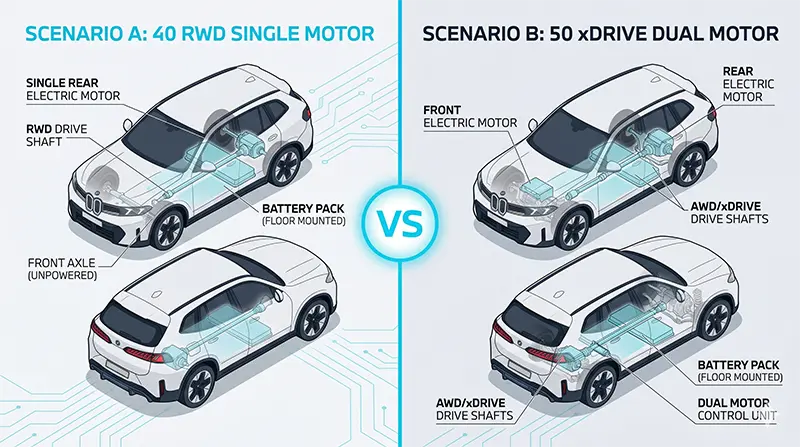
What’s worth noticing: the battery capacities differ by 26 kWh, but both trims charge from 10 to 80% in the same 21 minutes.
That’s because BMW tuned each pack with a matched peak rate — 400 kW for the bigger 50 xDrive, 300 kW for the smaller 40 RWD.
Personally, if you’re weighing driving feel and efficiency, the 40 RWD looks like the smarter buy. It’s about 200 kg (around 440 lb) lighter and meaningfully cheaper.
For US buyers, here’s the timing: only the iX3 50 xDrive lands first, with deliveries kicking off late September to early October 2026.
The 40 RWD is officially confirmed for the US market in early 2027, with an expected MSRP under $55,000 — potentially the value sweet spot of the lineup for buyers who don’t need 400 miles of range or all-weather grip.
3. 400 kW DC Fast Charging — 230 Miles in 10 Minutes
Beyond the long BMW iX3 range, the 50 xDrive’s most aggressive spec is how fast it refills.
Built on an 800V native architecture and capable of pulling up to 400 kW at peak, the iX3 goes from 10% to 80% in 21 minutes.
A 10-minute splash adds roughly 230 miles of EPA-equivalent range.
That’s not “stretch your legs” charging — that’s “grab a coffee and you’re back on the road” charging.
☑️ How long does the 400 kW peak actually hold?
Here’s a common misconception worth clearing up: 400 kW isn’t the rate the iX3 holds throughout the entire session.
At a workshop in Spain, BMW engineers explained that the peak hits when the battery is above 10% state of charge and holds 400 kW for about three minutes.
Even more useful for US buyers: the iX3 pulls speeds close to its peak even on 350 kW chargers — and 350 kW is the dominant fast-charging tier across most of the IONNA, Electrify America, and EVgo network in the US.
In a real-world test, ArenaEV measured 321 kW peak from a 45% starting state of charge, then averaged 250 kW for the next five minutes, banking 21 kWh in that window.
The bigger picture: the iX3’s peak is meaningfully higher than its rivals.
Tesla Model Y Long Range tops out at 250 kW, the Audi Q6 e-tron at 270 kW, and the Mercedes GLC EV at 330 kW.
The iX3’s 400 kW ceiling translates into shorter real-world charge times, especially for road-trip use cases.
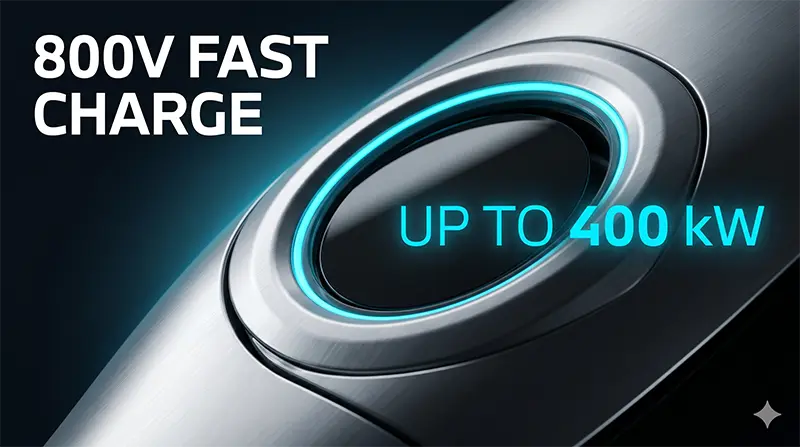
☑️ Native NACS and US charging infrastructure
This is the headline for US buyers: the iX3 is BMW’s first SUV with a native NACS port.
No adapter required at Tesla Supercharger stations — owners get direct access to roughly 25,000 Superchargers across North America, plus the IONNA network as it expands.
For non-Tesla stations, BMW USA includes a CCS adapter in the box, so you can use any Electrify America, EVgo, or ChargePoint Level 3 station as well.
The charge port sits on the left rear quarter panel — the same side as Tesla’s — so Supercharger pull-throughs work cleanly without taking up two stalls.
BMW USA has also confirmed the iX3 supports V2H, V2G, and V2L bidirectional charging, meaning the car can power your home, push energy back to the grid, or run external equipment as a mobile power bank.
4. Heart of Joy and Panoramic iDrive — The Software Difference
The iX3’s software story comes down to two things: a single central computer called Heart of Joy that runs powertrain, braking, regen, and steering as one unified system, and a redesigned cockpit display BMW calls Panoramic iDrive.
☑️ One central brain replaces four ECUs
In a conventional vehicle, the powertrain, brakes, regen, and steering are each managed by separate ECUs (electronic control units), often running supplier-built software.
That fragmentation introduces communication lag and scatters control across third parties.
Heart of Joy collapses four ECUs into one, and BMW says it’s roughly 10 times faster than the previous generation’s setup.
You feel the integration in two specific ways.
The first is smoother braking transitions.
EVs slow down primarily via regenerative braking — recovering energy back into the battery — and call on the friction brakes only when you need to stop hard.
If that handoff isn’t perfectly synced, you get a noticeable judder that often translates to motion sickness for rear passengers.
Heart of Joy unifies the timing, and the seam is essentially invisible.
The second is Soft Stop. EVs tend to lurch slightly right before they come to a complete stop. The iX3 nearly eliminates that quirk.
Top Gear put it this way: you genuinely can’t tell the exact moment the car stops moving.
According to BMW, regenerative braking handles about 98% of everyday stopping, with the friction brakes barely engaged in normal driving.
That means longer pad life and better efficiency on top of the smoother feel.
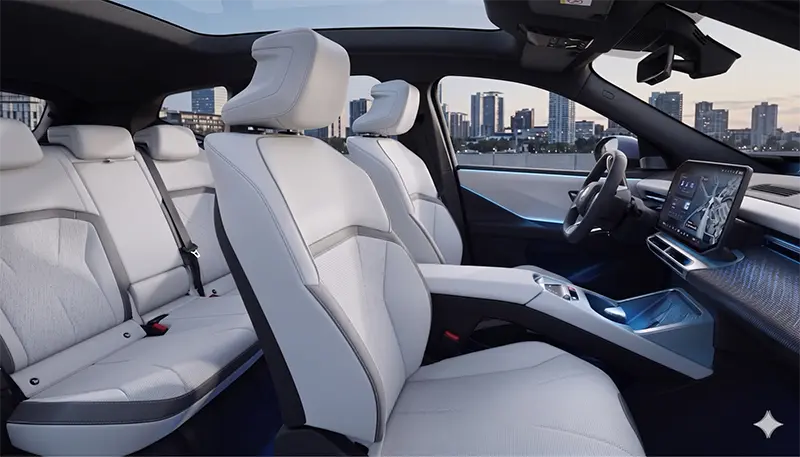
☑️ Panoramic iDrive — moving the cluster to the windshield
Panoramic iDrive replaces the traditional instrument cluster entirely.
Instead of a screen behind the steering wheel, BMW projects information onto a wide horizontal strip at the base of the windshield — running pillar to pillar.
The trick isn’t just that the strip is wide; it’s that the area is partitioned into zones showing different information at the same time.
The left side shows the basics you need most often — speed, drive mode, that sort of thing.
The right side hosts up to six configurable widgets for music, navigation, charging status, and so on.
Because the strip extends across the whole dash, your front passenger can see what’s happening too.
A 17.9-inch OLED touchscreen sits in the center, slightly canted toward the driver, handling navigation and vehicle settings.
For long stretches, you can switch to Silent Mode, which strips the display down to just the essentials.
And because the readout sits right at the windshield base, you barely have to drop your eyes.
Unlike the Volvo EX60, which ditched the head-up display entirely, the iX3 keeps a 3D HUD as an option.
Panoramic iDrive handles your everyday driving info; the 3D HUD is reserved for AR-style overlays floating above the road. It’s a deliberate division of labor.
One US outlet put it well: where the Mercedes Hyperscreen feels like it’s trying to cover every inch of the dash, BMW’s approach uses real estate only where it earns its place.
The voice assistant got an upgrade too.
At CES 2026 in Las Vegas, BMW announced it would be the first automaker to integrate Amazon’s next-gen “Alexa+” — a large language model–based assistant that handles natural conversation, weather, scheduling, restaurant suggestions, and the kind of casual queries you’d ask Alexa at home.
Importantly, vehicle controls still run through BMW’s own assistant.
Alexa+ is sandboxed for general queries only, so even if connectivity drops or there’s a cloud hiccup, your car’s actual functions keep working.
That said, the iX3 has its drawbacks.
Climate vent direction now lives inside the touchscreen, and the dedicated physical button for adaptive cruise distance has been deleted, making real-time adjustments while driving more fiddly than they should be.
5. 4-Time Global Car of the Year — What the Awards Mean
It’s not just hype. The iX3 cleaning up across multiple, very different judging panels is unusual:
- Top Gear Car of the Year 2026 — UK’s largest auto outlet, evaluating EVs and combustion cars together
- What Car? Car of the Year 2026 — UK buyer-focused publication weighing practicality and value
- Electrifying.com Car of the Year 2026 — EV-specialist outlet judging on EV-specific merit
- World Car Awards 2026 — World Car of the Year and World Electric Vehicle of the Year, voted on by 100+ journalists across 33 countries
- Goldenes Lenkrad 2025 “Best Innovation” — Germany’s AUTO BILD jury
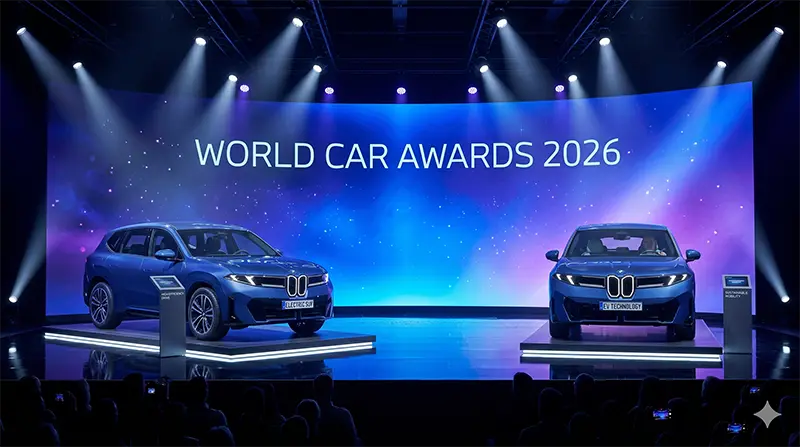
On top of that, Oliver Zipse — the CEO behind the Neue Klasse program — picked up the World Car Awards 2026 Person of the Year honor.
It’s hard to draw a clean cause-and-effect line between awards and sales, but the timing is suggestive.
European cumulative orders crossed 50,000 in this same window, and the Debrecen plant added a second shift earlier than originally planned.
The most striking data point: more than half of all X3-line orders are now for the iX3 rather than the gas-powered X3 — meaning the EV has overtaken its combustion sibling within the same model line.
6. US Pricing and Launch Timeline
Here’s where the BMW iX3 price stands for US buyers as of spring 2026:
- iX3 50 xDrive (AWD): MSRP starting around $60,000, per BMW USA’s preliminary estimate
- Online configurator and full pricing: Going live on BMW USA’s site in late April to early May 2026, with full trim, package, and option breakdowns reaching dealers shortly after
- Order books open: June 2026, when the “build your own” tool goes live and dealers begin taking deposits
- US-spec production: Starts early September 2026 at the Debrecen plant
- First US deliveries: Late September to early October 2026
- iX3 40 RWD: confirmed for early 2027, expected MSRP under $55,000
If you’re serious about ordering, plan to lock in a build sheet through your local dealer in May or June.
The iX3 sits squarely in premium EV territory.
It goes head-to-head with the Audi Q6 e-tron Quattro ($65,095–$71,895 MSRP) and the upcoming Mercedes GLC EV (industry estimates put it in the mid-$60K range).
Compared to the Tesla Model Y — which spans $41,630 (RWD) to $59,130 (Performance) — the iX3 is clearly playing one tier up.
That’s not a knock on the Model Y; it’s just a different segment.
In other words, the iX3 isn’t trying to win on a sticker-price war — it’s playing in the segment where buyers are paying for engineering, range, and charging speed.
If you can wait until 2027, the iX3 40 RWD will likely be the value play of the lineup. Until then, the 50 xDrive is the only option on the table.
Final pricing and trim configurations are subject to change; check BMWUSA.com or your local dealer for the latest details.
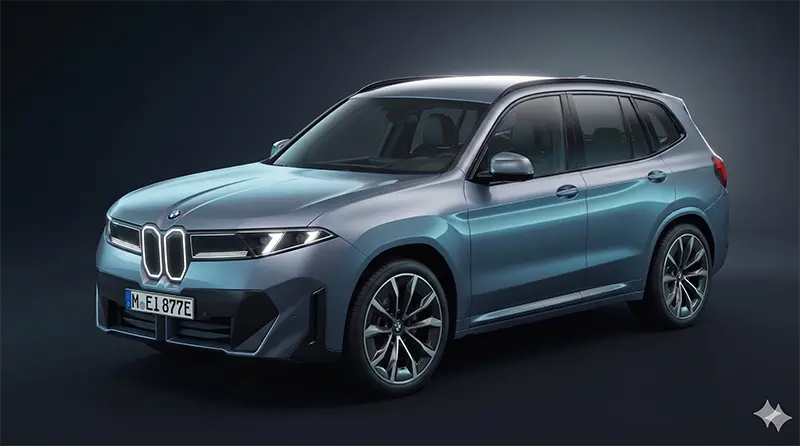
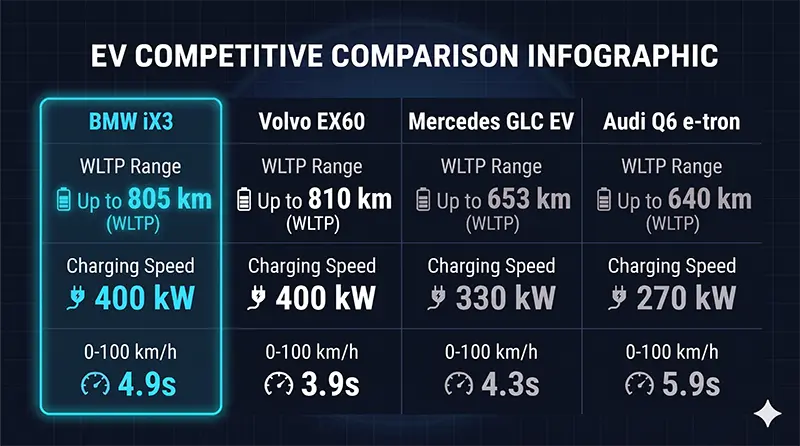
7. Competitor Comparison — Volvo EX60, Mercedes GLC EV, Audi Q6 e-tron
In the premium midsize electric SUV segment, the iX3 has three direct rivals — though only one of them is actually on US dealer lots right now.
| Spec | BMW iX3 50 xDrive | Volvo EX60 P12 | Mercedes GLC 400 EV | Audi Q6 e-tron Quattro |
|---|---|---|---|---|
| Range (EPA) | 400 mi | 400 mi (claimed) | 400+ mi (preliminary) | 307 mi |
| Battery | 108.7 kWh | 117 kWh | 94 kWh (usable) | 100 kWh (94.4 usable) |
| Peak Charging | 400 kW | 400 kW | 330 kW | 270 kW |
| 10–80% Charging | 21 min | 19 min | 22 min | ~21 min |
| Power | 463 hp | 670 hp | 483 hp | 456 hp |
| 0–60 mph | 4.7 sec | 3.8 sec | 4.2 sec | 4.9 sec |
| US Launch | Fall 2026 | Late spring/summer 2026 | H2 2026 | On sale now |
| Charge Port | NACS native | NACS native | TBD | CCS1 (NACS adapter) |
| Starting MSRP | ~$60,000 | ~$60,000 (P10) / TBD (P12) | mid-$60K (est.) | $65,095–$71,895 |
The Volvo EX60 is the iX3’s most aggressive challenger on paper — beating it on range, power, and acceleration.
Both have native NACS ports, both target around $60K for their volume trims.
That said, the iX3 has the awards and market validation already in hand, and reviewers consistently rate it ahead on driving feel and real-world efficiency.
The EX60 P12’s full US pricing still isn’t locked in, so a direct apples-to-apples comparison isn’t possible yet.
Mercedes-Benz GLC EV (GLC 400) is the segment’s most tech-forward play, with the optional Hyperscreen and a notably comfortable ride.
WLTP range numbers are competitive with the iX3, but US official EPA figures haven’t published yet. Pricing is also still TBD.
Audi Q6 e-tron Quattro ($65,095–$71,895 MSRP) is the only one of the three you can actually buy right now.
It’s the “don’t wait” alternative — but it gives up roughly 90 miles compared to the total BMW iX3 range and charges 130 kW slower at peak.
For Tesla shoppers cross-shopping segments: the Model Y Long Range is roughly $10,000 cheaper than the iX3, but a tier below in interior materials, charging speed (250 kW peak), and overall range.
8. ADAS and Autonomous Driving — Highway Assistant
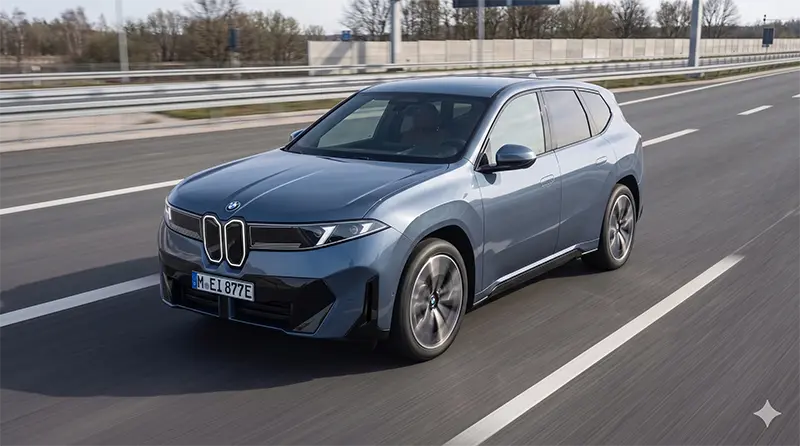
The iX3 ships with a Level 2+ hands-free system BMW calls Highway Assistant.
☑️ When and how it works
On approved controlled-access highways, hands-free driving is enabled at speeds up to 85 mph in US-spec iX3s.
The system stays inactive in conditions it’s not designed for: complex rural roads, heavy urban traffic, or zones with high pedestrian risk.
The hardware stack supporting Highway Assistant includes:
- A heated forward-facing camera mounted behind the windshield (works in foul weather)
- Four surround-view cameras — previously parking-only, now repurposed for lane validation and environmental awareness
- HD map data
- High-precision GPS that locates the car within a few centimeters
☑️ Eye-tracked lane changes
When Highway Assistant is active, you can change lanes using just your gaze and a slight steering input.
Looking at the side mirror, looking toward the lane you want, or gently nudging the wheel all trigger an automatic lane change.
All three methods require your eyes to stay on the road.
A driver-monitoring camera tucked under the rearview mirror tracks your gaze, and if your attention drifts off the road too long, hands-free mode disengages immediately.
The iX3’s ADAS capabilities will continue to evolve through over-the-air (OTA) software updates after launch — meaning the car you take delivery of in 2026 will get smarter throughout your ownership.
9. Global Test Drive Reviews — Praises and Concerns
The international press response to the new iX3 has been remarkably consistent. Here’s what reviewers keep coming back to.
☑️ Top 4 Praises
① Charging Performance
The most-repeated talking point across reviews is the 800V architecture and 400 kW peak DC charging.
The iX3 50 xDrive completes a 10–80% charge in roughly 21 minutes, and a 10-minute splash adds about 230 miles of EPA-equivalent range.
That’s a coffee break, not a meal break — and reviewers have been universally complimentary on this front.
② Long Range and High Efficiency
The 50 xDrive hits 400 miles on the EPA cycle.
Real-world efficiency tracks around 4.1 mi/kWh, which means the actual highway BMW iX3 range stays close to the official numbers — a rarity in this size class.
③ “It Drives Like a BMW”
If reviewers agree on one subjective point, it’s that the iX3 doesn’t feel like a 5,200-pound EV.
The steering and pedal response are light and precise, more like a tuned BMW than a heavy SUV.
Heart of Joy’s unified handling of braking, regen, throttle, and steering shows up in how naturally the car corners and how smoothly it stops.
④ Interior Space
The exterior fits in an X3-sized box, but the cabin feels closer to an X5.
Reviewers consistently call out the flat floor, the 2-cubic-foot frunk, the 30.4 cubic feet of cargo space behind the second row (65 cubic feet folded), and the 4,400-pound towing capacity as proof of what a dedicated EV platform can do.
☑️ Top 3 Concerns
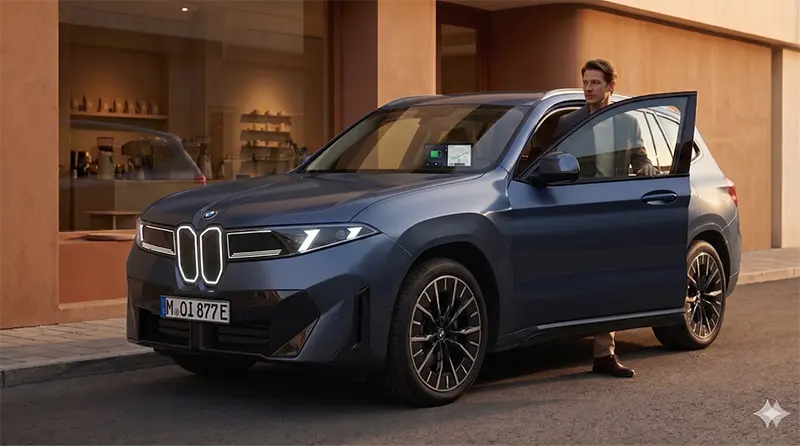
① Ride Quality Is Firmer Than Expected
The most consistent criticism is jitter over rough pavement.
The iX3 launches without adaptive dampers — the kind that auto-adjust stiffness based on road surface — and that’s the biggest point of disappointment.
BMW has confirmed they’ll be available as an option later in 2026.
② Touch Controls Replace Buttons
Most frequently used functions have moved into the touchscreen, including climate vent direction.
The steering wheel uses haptic touch buttons rather than physical ones, which makes accurate inputs while driving harder.
A handful of features also require you to be logged into your BMW account to work, which means there’s a setup step before some functionality is fully available.
③ Polarizing Design
Most reviewers actually like the new look. The redesigned face and the longer, lower silhouette do divide opinion, though.
People who’ve seen the car in person tend to come away more positive than those judging from photos, but “objectively beautiful” isn’t where consensus lands yet.
💡 FAQ
✨ Wrap-Up
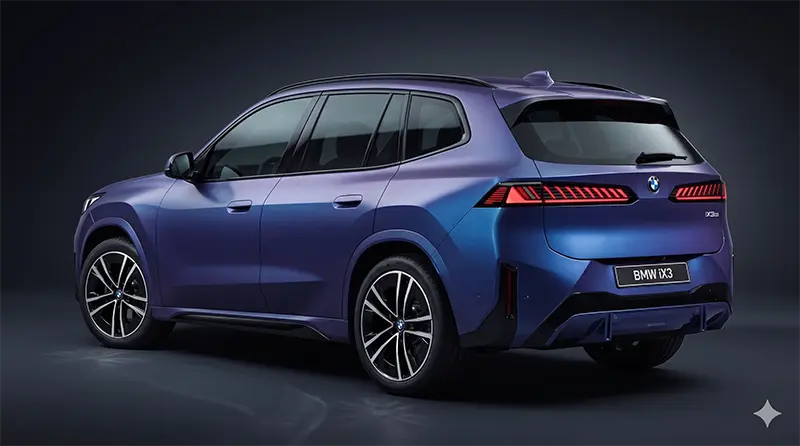
The second-gen BMW iX3 isn’t just a “good electric SUV.”
It’s the car BMW redesigned from the ground up for the first time in 60 years — and the first iX3 ever offered to American buyers.
Neue Klasse platform, 400 kW DC fast charging, native NACS, the Heart of Joy central computer, and four global Car of the Year wins — there’s almost nothing left to question about the product itself.
That said, it’s not the right car for everyone.
If you’ve got a $60,000+ budget, want to be among the first to drive a Neue Klasse model, and need delivery this fall, the iX3 50 xDrive is the most compelling option in the segment right now.
If you want a more value-focused entry, wait for the iX3 40 RWD in 2027 — under $55K, with rear-wheel drive and likely most of the same charging and tech advantages.
This is the car that sets the direction for the entire BMW EV lineup.
Drop your thoughts below — would you put down a deposit on the iX3 50 xDrive, or hold out for the rear-drive version next year? Bookmark this page for launch day pricing updates.
![Split-screen comparison banner featuring Tesla Model Y and Hyundai Ioniq 5 electric SUVs side by side [AI Concept]](https://smartleadertech.com/wp-content/uploads/2026/06/model-y-ioniq-5-comparison-banner-300x169.webp)
![Hyundai IONIQ 5 electric SUV with parametric pixel LED light bar and grille-less front design [AI Concept]](https://smartleadertech.com/wp-content/uploads/2026/06/hyundai-ioniq-5-electric-crossover-marketing-visual-300x169.webp)
![Side-by-side comparison marketing banner featuring Tesla Model Y and BYD Sealion 7 electric SUVs with central VS graphic highlighting their distinct design philosophies [AI Concept]](https://smartleadertech.com/wp-content/uploads/2026/06/tesla-model-y-vs-byd-sealion-7-comparison-300x168.webp)