
It’s been a full month since the Galaxy Buds4 Pro hit shelves, and the verdict is anything but unanimous.
Reddit threads and YouTube comment sections are split right down the middle — you’ll find people calling these the best-sounding earbuds under $300, right next to users who returned theirs over white noise issues.
So is this actually a good buy right now?
We dug into real-world usage data and expert reviews to break down everything you need to know before pulling the trigger — sound quality, ANC, battery life, and the early bugs that might give you pause.
ℹ️ This post contains spec-based informational images and AI-generated concept images. Concept images may differ from the actual product.
📌 TL;DR — For Those in a Hurry
- The sure thing → Sound quality is best-in-class at this price, and the fit is the most comfortable the Buds lineup has ever been — that’s the overwhelming consensus.
- Strong edge → ANC is a massive improvement over the previous generation, and Ambient Mode sounds noticeably more natural.
- Still up in the air → Left-right ANC imbalance, white noise/hiss, and case battery drain have been reported as early issues. Battery life is still shorter than the competition.
- Samsung phone? Go for it. No Samsung phone? Think twice → Most of the flagship Buds4 Pro features are locked to Samsung devices.
- 📌 TL;DR — For Those in a Hurry
- 1. Design & Fit — Samsung Finally Has Its Own Identity
- 2. Sound Quality — "Best in Class at This Price" Isn't an Exaggeration
- 3. ANC & Ambient Mode — Clearly Better, But Not the Best
- 4. Battery Life — Short, But There's a Reason for It
- 5. Samsung Ecosystem Lock-In — Non-Samsung Users, Read This Carefully
- 6. New Features — More Useful Than You'd Expect
- 7. One Month In — What Are the Early Issues?
- 8. Worth Upgrading From the Buds3 Pro?
- 💡 FAQ
- ✨ Final Verdict
1. Design & Fit — Samsung Finally Has Its Own Identity
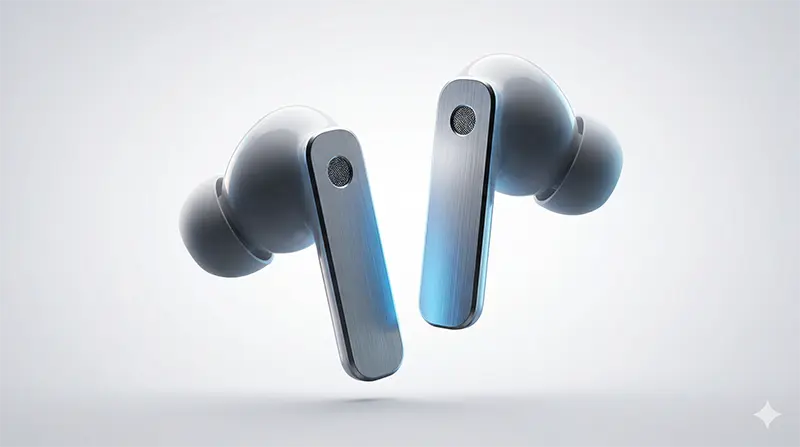
The Buds3 Pro had an angular, triangular stem that drew inevitable AirPods comparisons.
The Galaxy Buds4 Pro take a sharp turn with a flat, rectangular metal plate design on the stem.
The LED light on the stem is gone, and the combination of a transparent case and metal finishes gives these buds a distinct look that reviewers agree stands apart from anything Apple is doing.
Fit is hands down the most praised aspect of this generation.
Samsung says it used data from over 100 million ear scans to redesign the earbud head — making it smaller and more snug.
Each bud weighs just 5.1g, which is impressively light.
Mark Ellis Reviews called them “among the most comfortable earbuds I’ve ever worn,” and online communities echo the sentiment: “they stay put even during runs” and “rock solid at the gym” are common reactions.
That said, you only get three ear tip sizes (S/M/L), so if your ears fall outside that range, you might struggle to get a secure seal.
And the ear tip tearing issue from the Buds3 Pro hasn’t been definitively resolved — Reddit users have reported tips ripping during replacement, so handle them with care.
☑️ The Transparent Case — Looks Great, But Real Life Has Other Plans

The charging case got a structural overhaul too.
The Buds3 Pro used a vertical drop-in design, but the Galaxy Buds4 Pro switch to a clamshell layout where you lay the buds flat and flip the lid open.
The transparent lid lets you see at a glance whether your buds are inside — a nice touch.
Design-wise, it’s a winner. Practically? That’s where things get dicey.
SoundGuys reported that the transparent lid picked up fingerprints and scratches almost immediately at the Unpacked event, and Headphonecheck noted it takes more force than it should to open.
Bottom line: a TPU or silicone case is basically a required accessory.
2. Sound Quality — “Best in Class at This Price” Isn’t an Exaggeration
The driver setup has been revamped.
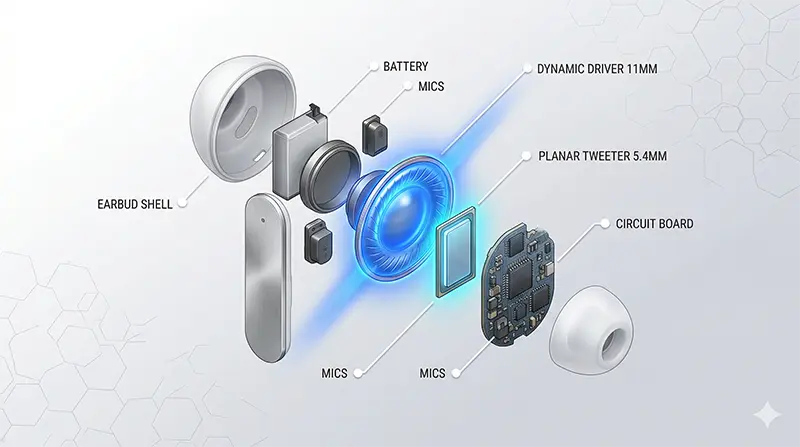
The Samsung Buds4 Pro pack an 11mm dynamic driver (woofer) and a 5.4mm planar magnetic driver (tweeter).
Compared to the previous generation’s 10mm + 6.1mm combo, the bass driver’s diaphragm area has increased by roughly 20%.
The tweeter is actually smaller now, but the overall tonal balance has taken a significant step forward according to reviewers.
Sound quality is the most consistently praised aspect across both professional reviews and user forums.
TechRadar said the Buds4 Pro compete with audiophile-grade triple-driver products, and Headphonecheck praised the bass for being deep and well-controlled while the treble delivers detail without fatigue.
The sharpness in the 1–2kHz mid-range that plagued the previous model has been addressed, so vocals and instruments come through without that piercing edge — even during longer listening sessions.
Reddit users consistently report that UHQ 96kHz mode delivers noticeably cleaner highs and lows, and that it’s a clear upgrade over the Buds3 Pro.
The community consensus isn’t “revolutionary leap” — it’s more like “refined, cleaner, and polished.”
You also get deep sound customization tools.
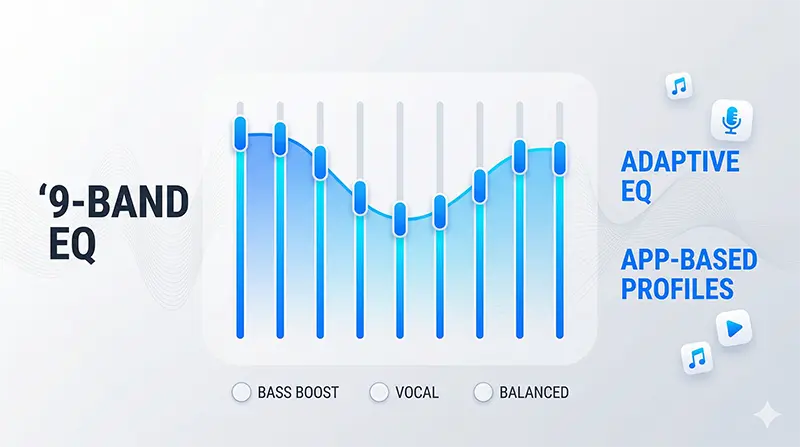
A 9-band equalizer lets you fine-tune things manually, and there are preset EQ profiles for quick adjustments.
Adaptive EQ analyzes your ear shape and automatically optimizes the sound profile.
On One UI 8.5 and above, you can even save different EQ settings per app — bass-heavy for your music player, vocal-focused for YouTube, and so on.
If you’re the type who likes to dial in your sound, it’s a genuinely useful feature.
☑️ Call Quality Got a Serious Upgrade Too
Three high-SNR microphones and a VPU (a sensor that picks up voice vibrations) power HD Voice, and reviewers are putting the mic quality in the same league as the AirPods Pro 3 — best in class.
If you work from home or take a lot of calls throughout the day, you’ll notice a real difference.
☑️ SSC Codec and No LDAC — A Double-Edged Sword
Getting the full sound experience requires a Samsung device.
The SSC UHQ (24-bit/96kHz) codec only activates on Samsung Galaxy S23 and newer.
Non-Samsung devices are limited to AAC/SBC.
According to RecordingNOW, the perceived difference between SSC UHQ and AAC is roughly 5–10% — casual listeners might not notice, but if you listen to music regularly or care about audio fidelity, that gap becomes quite real.
The difference is most noticeable in high-frequency detail and spatial separation, so if you’re on a Samsung phone, it’s worth switching on.
UHQ audio is off by default — head to Earbud settings → Sound quality and effects → Advanced quality options to enable it.
For reference, SSC UHQ is a Bluetooth codec that enhances transmission quality, so even regular streaming sounds a bit cleaner — but pair it with FLAC or other hi-res sources and the improvement is night and day.
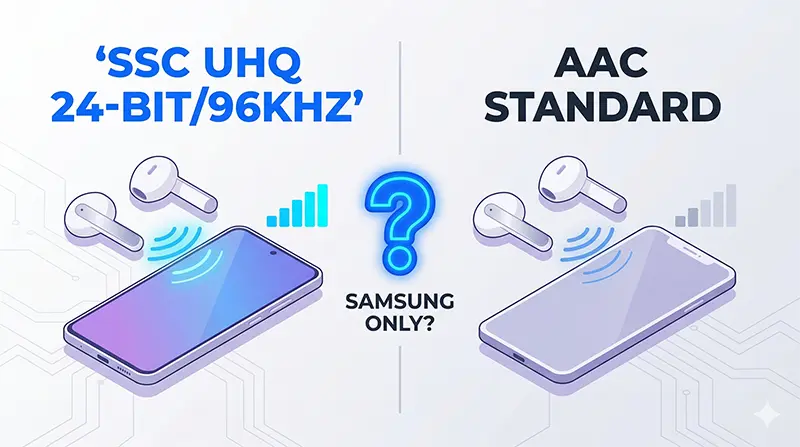
The bigger issue? At $249.99, the Galaxy Buds4 Pro don’t support LDAC, aptX, or any other universal hi-res codec.
This is the most frustrating omission, in our view.
For non-Samsung Android users, there’s simply no path to hi-res audio. That’s a tough pill to swallow at this price point.
3. ANC & Ambient Mode — Clearly Better, But Not the Best
The Buds3 Pro caught a lot of criticism for ANC that felt like a step backward from the Buds2 Pro.
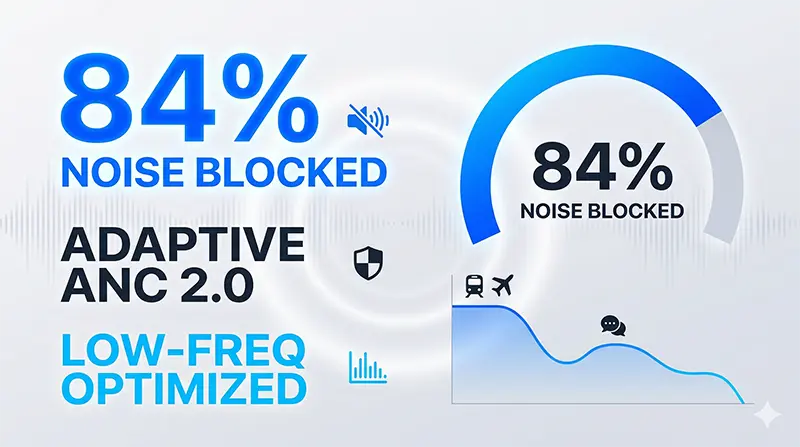
The Samsung Buds4 Pro answer that with Adaptive ANC 2.0, and this time the improvement is unmistakable.
SoundGuys measured an average of 84% noise attenuation across the audible range with ANC maxed out, with especially strong performance against low-frequency noise like subway rumble and airplane engines.
But it’s not at the very top.
In the 500Hz–1.1kHz range (human voices, café chatter, and other mid-range sounds), effectiveness drops off — meaning you won’t fully block out conversations nearby.
Here’s where the Galaxy Buds4 Pro sit relative to the competition:
| Product | ANC Tier |
|---|---|
| Bose QC Ultra Earbuds 2nd Gen | Currently the best |
| AirPods Pro 3 / Sony WF-1000XM6 | Top tier |
| Galaxy Buds4 Pro | Premium tier (just below top) |
| Galaxy Buds3 Pro | Upper-mid tier |
Ambient Mode gets strong marks for sounding natural — like you’re not wearing earbuds at all.
Voice Detect is another welcome convenience.
Start talking while wearing your buds, and they automatically switch to Ambient Mode.
Siren Detect can be enabled to do the same thing when emergency vehicle sirens are detected nearby — it switches to Ambient Mode automatically.
That said, both ANC and Ambient Mode have some early-stage issues that are worth knowing about — we’ll cover those in the bugs section below.
4. Battery Life — Short, But There’s a Reason for It
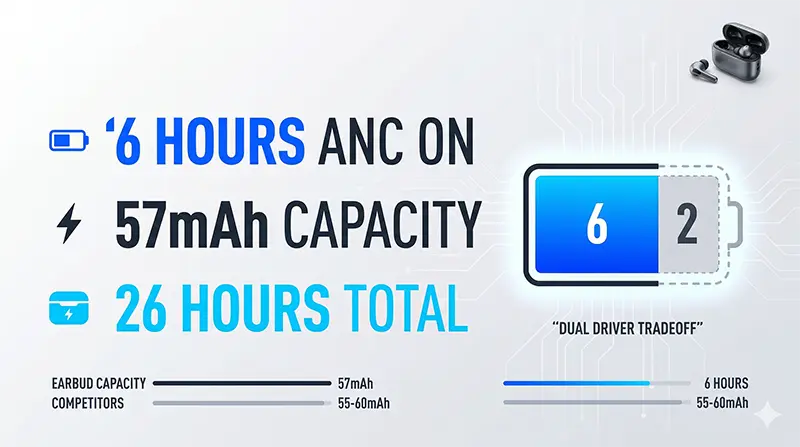
The Samsung Buds4 Pro pack 57mAh (rated) / 61mAh (typical) per earbud, with a 530mAh case — a slight bump from the previous generation.
Official playtime is 6 hours with ANC on, plus 26 hours total with the case.
SoundGuys clocked 6 hours and 1 minute in testing, which almost perfectly matches Samsung’s claim.
Some tests show up to 7 hours at lower volumes.
Compared to the competition, though, you’re looking at roughly 2 fewer hours of listening time:
| Product | ANC ON Playtime | Driver Setup |
|---|---|---|
| AirPods Pro 3 | 8 hours | Single dynamic |
| Sony WF-1000XM6 | 8 hours | Single dynamic |
| Galaxy Buds4 Pro | 6 hours | Dual (dynamic + planar) |
At first glance, that’s a clear disadvantage.
But look at the battery capacity and the picture changes.
The Buds4 Pro’s 57–61mAh is actually slightly larger than the AirPods Pro 3 (56mAh).
Sony and Bose don’t publicly disclose their per-earbud battery capacities, but products in this price range typically use comparable cells.
☑️ The Battery Isn’t Small — The Drivers Are Hungrier
The difference comes down to driver architecture.
Every competitor in this class uses a single dynamic driver.
The Buds4 Pro run dual drivers — an 11mm dynamic for bass and a 5.4mm planar magnetic for highs.
Planar drivers vibrate a thin membrane uniformly across its entire surface, which delivers exceptional high-frequency detail, resolution, and minimal distortion.
That planar driver is the reason virtually every reviewer calls the sound quality a standout — but it draws more power.
So the Buds4 Pro’s 6-hour battery life isn’t a case of “not enough battery.” It’s the trade-off for delivering what many consider the best sound quality at this price point.
It’s a deliberate design choice by Samsung — prioritizing audio performance over runtime.
With SSC UHQ mode enabled, playtime drops to roughly 4.7 hours, so if you regularly listen in hi-res, you’ll want to build a habit of dropping them back in the case between sessions.
Charging options include USB-C wired, Qi wireless charging, and Wireless PowerShare.
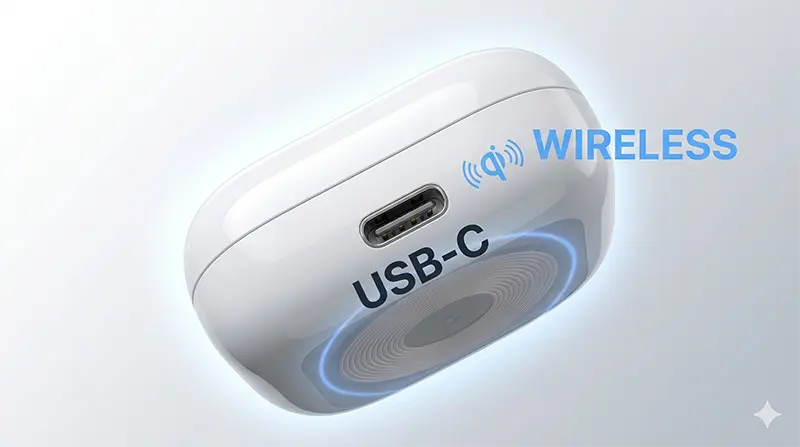
One notable miss: there’s no fast charging.
The Sony WF-1000XM6 gives you 1 hour of playback from just a 5-minute charge.
Given that the Buds4 Pro already have shorter battery life, the lack of fast charging is a real gap.
5. Samsung Ecosystem Lock-In — Non-Samsung Users, Read This Carefully
A significant chunk of Buds4 Pro features are exclusive to Samsung Galaxy devices.
| Device | Supported Features |
|---|---|
| Samsung Galaxy | HD Voice, UHQ Audio, 360 Audio, Bixby/Gemini, Interpreter, Head Gestures, Gaming Mode |
| Non-Samsung Android | ANC, Ambient, Basic EQ, Touch Controls (Galaxy Wearable app required) |
| iOS / PC | Bluetooth connection, Standard calls, ANC, Ambient only |
☑️ No Bluetooth Multipoint Either
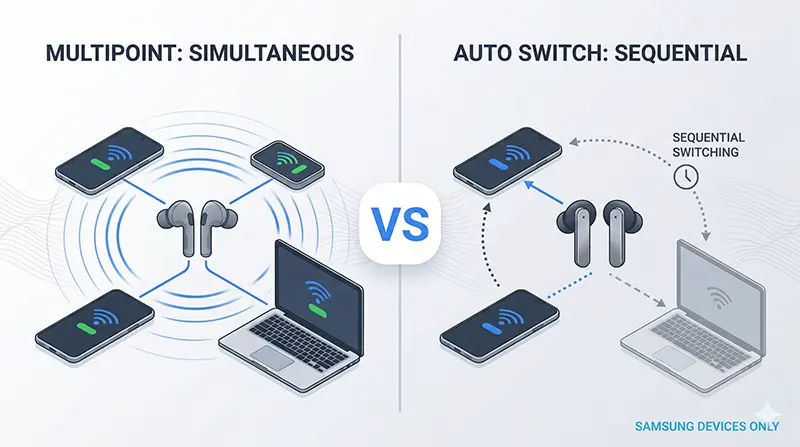
Multipoint lets you stay connected to two or more devices at once and seamlessly switch audio to whichever device is active — no manual reconnection needed.
The Galaxy Buds4 Pro don’t support it.
What you get instead is Auto Switch, which works only between Samsung devices.
The catch: it’s not a simultaneous connection.
It disconnects from one device and reconnects to another, so there’s a brief delay during the switch.
And since it only works between Samsung devices, a combo like a Galaxy phone + a Windows laptop is out of luck.
In 2026, shipping a $249.99 product without multipoint is something virtually every major review outlet has flagged as a significant drawback.
The community take boils down to one line:
“If you’re on Samsung, it’s a no-brainer.
If you’re not, it’s a tough sell.” Honestly, that’s the most accurate summary out there.
6. New Features — More Useful Than You’d Expect
Head Gestures use the motion sensor built into each earbud to detect head movements.
Nod to answer a call, shake your head to decline.
One Reddit user described using it while cooking, grocery shopping, and running — “convenience 10/10, awkwardness 2/10.”
The consensus is that once you start using it in hands-free situations, you reach for it more often than you’d think.
For now, it’s mainly limited to accepting and declining calls, and it requires One UI 8.5 or later plus Bixby enabled.
Live Translate is another feature drawing real praise for practicality.
Pair with a Galaxy S26, and it supports 22 languages.
During phone calls, the other person’s speech is translated and delivered straight to your earbuds.
For face-to-face conversations, their words are translated into your earbuds, and your words are translated and played through your phone’s speaker for them.
It’s more natural than the back-and-forth of holding up a translation app on screen.
Both Head Gestures and Live Translate are genuinely compelling features, but both are Samsung-exclusive and depend on specific OS versions — which is a recurring theme with these buds.
7. One Month In — What Are the Early Issues?
The Galaxy Buds4 Pro have clear strengths, but a month post-launch, the community has surfaced some issues worth flagging.
If you’re considering a purchase, give this section a close read.
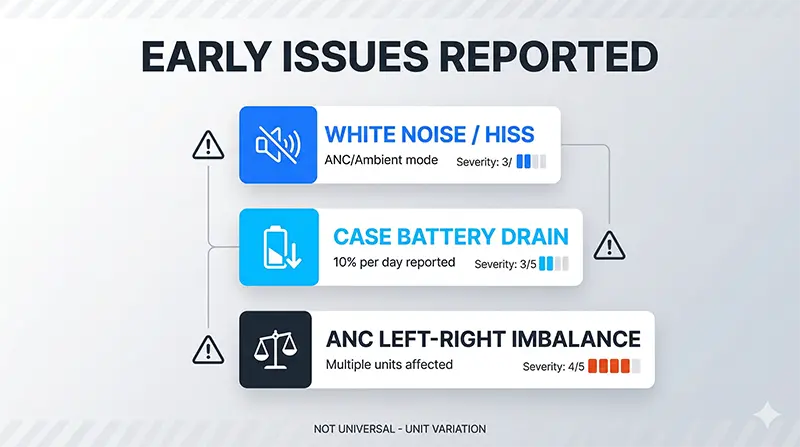
☑️ White Noise / Hiss — The Most Commonly Reported Problem
Reddit threads from March 11 and March 18 repeatedly mention white noise issues.
Users describe a mechanical “hissing” sound when ANC or Ambient Mode is active — it doesn’t seem to occur during music-only playback.
Some users report that toggling off “Ambient sound during calls” in settings helped reduce it, but the results are mixed — some say it worked, others say it didn’t.
It’s likely a unit-by-unit variance or firmware-level issue, so if you buy a pair, make sure to test for it early.
☑️ Case Battery Drain — Reports Exceed Normal Standby Loss
As of a March 27 Reddit thread, users have posted detailed accounts of the case draining battery abnormally fast even when not in use.
Comments report drain rates of roughly 10% per day or 1% per hour during idle.
Some speculate it’s tied to the Find feature constantly broadcasting a Bluetooth signal, while others believe it’s a bug that will be patched in a future update — but the root cause remains unclear.
☑️ ANC Left-Right Imbalance — Reproduced Across Multiple Units
This is the most serious issue reported, documented in detail on Samsung Community.
One user went through four consecutive units with the same defect — ANC on the left earbud was noticeably weaker than the right.
They tried factory resets, ear tip swaps, firmware updates, and microphone cleaning. Nothing fixed it.
For all three issues, there are also users reporting no problems at all, so these don’t appear to be universal defects.
Still, it’s smart to run thorough checks shortly after purchase.
8. Worth Upgrading From the Buds3 Pro?
If you’re currently using the Galaxy Buds3 Pro, this is probably the question on your mind.
Here’s what reviewers and the community are saying:
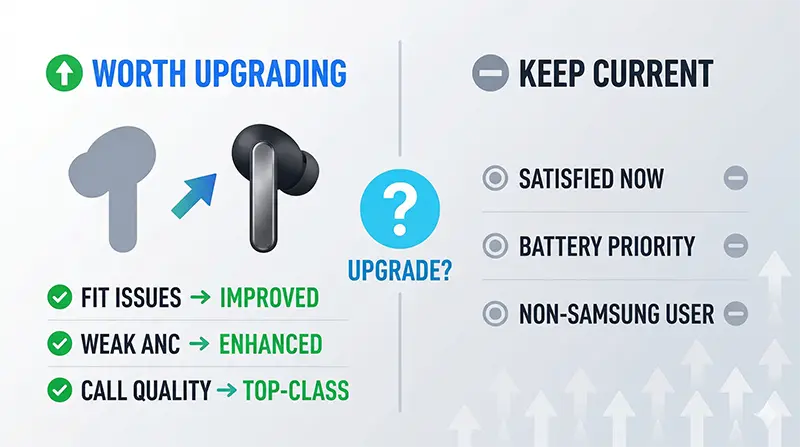
☑️ Upgrade makes sense if:
- You were unhappy with the Buds3 Pro’s fit — the comfort improvement is the most immediately noticeable change
- ANC performance disappointed you — it’s genuinely better this time
- You take a lot of calls and mic quality matters — it’s now class-leading
- You’re excited about Buds4 Pro features like Head Gestures and AI integration
☑️ You can probably skip it if:
- You’re generally happy with your Buds3 Pro
- Battery life improvement is your main reason to upgrade — the difference is minimal
- You’re on a non-Samsung device — most new features won’t be available to you
Let’s talk pricing.
In the U.S., the Samsung Buds4 Pro retail for $249.99 — the same price Samsung charged for the Buds3 Pro. Looking at the full Buds Pro lineage:
| Generation | U.S. Launch Price | Change |
|---|---|---|
| Buds Pro (2021) | $199.99 | — |
| Buds2 Pro (2022) | $229.99 | +$30 |
| Buds3 Pro (2024) | $249.99 | +$20 |
| Buds4 Pro (2026) | $249.99 | No change |
Samsung held the line at $249.99 this time around. Here’s how it stacks up against the competition at U.S. retail prices:
| Product | U.S. MSRP |
|---|---|
| Sony WF-1000XM6 | $329.99 |
| Bose QC Ultra Earbuds 2nd Gen | $299.99 |
| AirPods Pro 3 | $249.00 |
| Galaxy Buds4 Pro | $249.99 |
The Buds4 Pro come in $80 cheaper than the Sony and $50 less than the Bose — and sit essentially neck-and-neck with the AirPods Pro 3 on price.
That said, the Bose offers multipoint connectivity and universal codec support with no OS restrictions.
The Sony brings LDAC and the longest battery life in the group.
So if you’re not on a Samsung phone, those two give you significantly more flexibility for the money.
💡 FAQ
✨ Final Verdict

The Samsung Buds4 Pro are the most polished earbuds the Galaxy Buds lineup has ever produced — sound quality and comfort are at an all-time high.
ANC has clearly made up for last generation’s shortcomings, and call quality now sits at the top of its class.
New features like Head Gestures and Live Translate turn out to be more practical than gimmicky.
That said, white noise, ANC left-right imbalance, and case battery drain remain unresolved early-stage issues, and battery life still falls short of the competition.
As we covered earlier, the battery capacity itself is on par with — or even slightly larger than — competitors.
The shorter runtime is a trade-off driven by the dual-driver architecture that powers the Buds4 Pro’s standout sound quality.
It’s a design trade-off, not a hardware shortcoming. But if you need more than 6 hours of continuous use per day, it’s something to factor in.
And the elephant in the room: most of the best features are locked to Samsung devices.
That’s a deal-breaker you need to weigh before buying.
Here’s the bottom line:
If you’re on a Samsung phone and sound quality and comfort are your top priorities, the Galaxy Buds4 Pro are the most compelling option on the market right now.
If you’re not on Samsung, or if battery life and cross-platform flexibility matter more, the Sony WF-1000XM6 or Bose QC Ultra Earbuds 2nd Gen deserve a hard look first.
Our take? Samsung went all-in on sound quality this time, and it shows.
If the early bugs get patched through firmware updates, the title of “best earbuds for Samsung users” is theirs to lose.
What do you think — drop your thoughts in the comments below.